
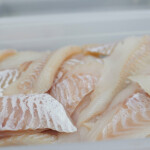





The profile of Alaska pollock among American consumers is rising, according to market research data released by an industry group.
The latest market research findings commissioned by the Genuine Alaska Pollock Producers (GAPP) show the fish is closing in on other whitefish species such as cod, haddock, and tilapia in terms of familiarity and popularity. Among the findings, respondents’ intent to purchase Alaskan pollock within the next 30 days climbed to 31 percent – a 7 percent jump year-over-year and larger than competing whitefish species.
U.S. consumers' overall familiarity with the fish also rose by 2 percentage points to 56 percent, which GAPP said indicates roughly seven million additional consumers know something about pollock when compared to the previous year’s survey.
The fourth annual market research study was conducted by Ketchum – a San Francisco, California, U.S.A.-based public relations and marketing communications consultancy. The firm conducted an online survey of a nationally-representative sample of approximately 1,000 Americans, aiming to measure awareness and familiarity of pollock with consumers.
In terms of awareness among competing whitefish, 2021’s survey found the gap between pollock and cod – the most familiar whitefish – to be 22 percent. This year, Ketchum’s research found that gap to have narrowed by 2 percent.
“While we are growing our awareness, we’re also closing in more on our competitive set and that’s great news,” Ketchum Global Head of Analytics Mary Elizabeth Germaine said during the 2022 Wild Alaska Pollock annual meeting on Monday, 16 October, in Seattle, Washington, U.S.A.. “These are very significant positive trends in terms of what people know about wild Alaska pollock, how they feel, and what they intend to eat.”
Germaine said the data shows a sustained trend of increased familiarity with pollock, which has faced an uphill battle in raising its profile among consumers. The fish is used in McDonald’s Filet-O-Fish sandwich and often inside California sushi rolls, which use pollock-based surimi.
"Our fish is unique and has been, maybe for too long, hidden in plain sight as an ingredient,” GAPP Chief Executive Craig Morris said during the annual meeting.
The research also found 55 percent of respondents were finding more recipes for pollock, and 43 percent said they were finding it easier to find pollock products, which Germaine attributed to recent marketing efforts.
During their presentation, Germaine and Ketchum Director of Analytics Lauren Hasse said there were growing opportunities to raise the profile of surimi.
“Surimi seafood holds a more positive association over imitation crab, despite a lower familiarity,” said Hasse. “When we look at barriers to surimi purchases, there is this perception that it is not a real fish. There is a huge opportunity to educate consumers about what surimi is and what it isn’t.”
While taste and health considerations remain key purchasing drivers for consumers, cost is becoming increasingly important and a main barrier to purchasing Alaska pollock due to rising inflation, according to the report. Sustainability has also become a key factor for consumers, and wild Alaskan pollock has been getting more recognition as a sustainably-caught source of fish researchers found, with an 8 percent increase among respondents compared to 2021, the research found.
Photo courtesy of the Genuine Alaska Pollock Producers
