





Kristiansund, Norway-based C Robotics is working to transform shellfish harvesting and aquaculture operations through a line of underwater remote operated vehicles (ROVs).
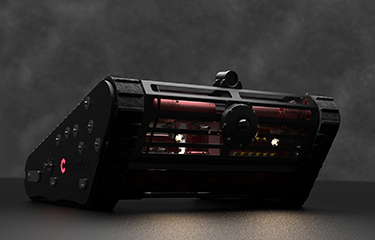
The company, formed in 2017 by a group of professionals who have extensive experience in the subsea oil and gas, maritime, and fishing industries, has dubbed its most recent ROV the BabyBud. The underwater ROV is intended to clean fish cages after harvesting, among other tasks.
The company also has two other vacuum harvesting ROVs in its lineup: the C Disc and the C bud, both of which are undergoing extensive customer trials.
What differentiates the BabyBud from the others in the C Robotics lineup is its effective cleaning abilities, which ensure that fishing activities using the latest ROV contribute toward the company’s overarching goal of attaining a “sustainable and ethical future” in the marine harvesting industry.
“The customer needed an efficient solution to replace divers for collecting dead fish from their fish cages,” CEO Rune Svendsen told SeafoodSource. “The BabyBud is now at work removing dead fish inside customers’ cages by operators following the [process] via a video feed on a screen in an operating room.”
The device is also suitable for seabed cleaning tasks, gentle harvesting of minor bivalves, and monitoring and documentation duties. The size of the custom-built unit is scalable to a customer’s preferences – within reasonable limits – but a typical BabyBud is 100 centimeters wide, 100 centimeters deep, and 60 centimeters high.
The C Disc, meanwhile, is a submersible suction device with an attached hose controlled by a diver, while the C Bud is a remote-controlled ROV with a tracked platform, appearing like a miniature tank, which can direct the hose of the C Disc in place of a diver.
“As we knew before entering the market, our products have a broad range of use and can be customized for a wide range of different tasks, but the purposes of using our products seem to be even broader [than we initially thought],” Svendsen said.
The patented part of the C Disc unique to C Robotics is the submersible suction-generation device. Supplied water – pumped from a boat – discharges from the device and creates a vacuum that pulls in suspended species such as scallops, sea urchins, and sea cucumbers.
A connected hose allows a diver to direct the vacuum toward a congregation of target shellfish, and the entire system eliminates the time required for a diver to send bags of shellfish to the surface.
“The C Disc was sold to a commercial company and will most likely be put to work during the year,” Svendsen said. “Several companies and institutions are testing it or running trials.”
C Robotics has cooperated with various organizations to test and improve the C Disc and C Bud.
Akvaplan-niva – the Norwegian Institute for Water Research, based in Tromsø – conducted a two-day environmental evaluation titled “Environmental impacts of the diver-operated C Disc to harvest sea urchins and for kelp restoration.”
The evaluation found that bycatch accounted for 11 percent to 19 percent of the catch. The C Disc damaged 11 percent of target species urchins, but there was little to no damage observed on the majority of bycatch organisms, except for barnacles and blue mussels.
The Centre for Sustainable Aquatic Resources Fisheries and Marine Institute of Memorial University conducted a separate trial titled “Evaluation of Diver-Assisted Technology for Harvesting Sea Urchins.”
This trial included a side-by-side comparison between a traditional diver and the diver-assisted C Disc to document the catch per unit effort (CPUE) of both processes.
The trial hit a few snags that C Robotics believes are opportunities for future improvement.
When the trial began, a large percentage of the urchins came out of the discharge hose into the vessel damaged, with broken-off spines. C Robotics advised the trial operators not to raise the hose too far above the waterline, as excess head pressure would cause the urchins to tumble in the hose.
The test found that the C Disc captured 4.6 kilograms of urchins per minute, compared with a traditional diver capturing 5.2 kilograms per minute, which was not significantly different. The sizes of urchins were also not significantly different, though slightly in favor of the C Disc at sizes ranging from 37 to 52 millimeters. However, the C Disc damaged more urchins.
Post-harvest, those conducting the test moved the urchins to a holding tank to measure post-harvest mortality because many business models involve feeding the urchins to produce more roe. All died, possibly due to temperature shock during transport.
Though CPUE was not significantly different, the trial provided insights into areas in which the ROV process can improve, giving hope that the C Disc’s CPUE could outperform traditional diving methods with refinements. One suggestion was to use two divers – one swimming ahead and detaching sea urchins and the other sucking them up using the C Disc.
Although both trials presented some kinks to iron out, Svendsen is confident that the full lineup of C Robotics products will, in the long run, represent the future of marine harvesting.
“We think that there are so many advantages to using our harvesting technology compared with using traditional methods, along with other environmental advantages, that it will make it difficult to deny the use of our products,” Svendsen said.
Image courtesy of C Robotics
