




Kalasu, China-based trout farmer Xinjiang Tianyun Organic Agriculture Co. has purchased equipment from Marel to help it develop new processed products to fit market trends prompted by the pandemic.
With the company’s traditional food and beverage-focused business squeezed by COVID-19 lockdowns and labor shortages, Tianyun built a new processing plant to tap online and retail sales for its “Trout Fresh” brand. The firm purchased three Marel machines – a Maja Skinner, an I-Cut 130 PortionCutter, and a Multi-Angle Slicer I-Slice 135 MA.
Requirements set by major retailers Hema Fresh and Meituan were a driver in Tianyun’s investment, according to company CEO Zhan Taorong.
“Requirements for the products sold through these channels demand a high standard of quality, appearance and hygiene, and the weight of the products needs to be very accurate,” Zhan said. “It is difficult to recruit the highly-skilled workers required for such precision portioning and slicing, and it is time-consuming to train them.”
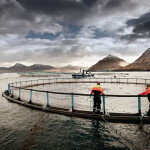
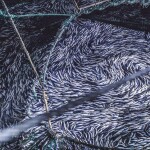
Xinjiang Tianyun Organic Agriculture Co. is one of several Chinese firms producing trout at inland locations like Qinghai, Gansu, and Xinjiang. Tianyun produces 6,000 metric tons (MT) of fish per year and will produce 15,000 MT by 2022, it said in January 2021. It recently achieved Best Aquaculture Practices certification and is seeking to build up its export markets.
Internal data shows orders received in the second quarter of 2021 were at a record level for Marel Fish, Atli Sigurður Kristjánsson told SeafoodSource, adding that reasons similar to those outlined by Zhan appear to be driving a surge in demand for Marel’s machines.
“The pipeline for large projects is building up and conversion into orders is expected to pick up, globally,” Kristjánsson said. “We are seeing a variety of machines being purchased for different species, for example salmon. But the trend we are seeing is that there is a bigger need for automation and digitalization for increased consistency, flexibility, and yield. Furthermore, a big trend is sustainability.”
Kristjánsson declined to share Asia-specific company figures. As for any impact from the pandemic and related labor shortages reported in several economies, Kristjánsson
“Social-distancing requirements during [the] COVID [crisis] exacerbated the challenge of limited access to skilled workers for food processors, and automation continues to help fill this gap,” he said. “Marel has an automated replacement for nearly every manual operation in a processing plant, leading to improved return on investment, as well as increased consistency and yield.”
Photo courtesy of Xinjiang Tianyun Organic Agriculture
