






Russia's seafood industry is looking for ways to reroute its supply chain for modern fishing and processing equipment, which has been disrupted by the global sanctions it faces after its invasion of Ukraine.
The sanctions have halted sales, startup operations, and maintenance procedures in Russia in response to the Russian invasion of Ukraine. Russia’s government is now pushing for an intense import-substitution program it is referring to as “technological sovereignty.”
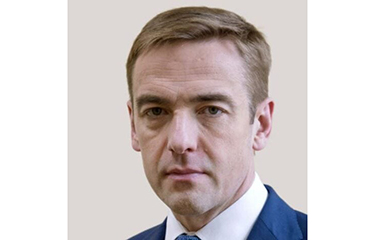
Russia's shipbuilding sector is currently highly reliant on imported technologies, Russian Industry and Trade Deputy Minister Viktor Evtukhov said at a plenary session of the V Global Fishery Forum on 22 September, 2022, with foreign technology making up nearly 60 percent of Russian vessels. The primary reason, Evtukhov said, is that neither Russian shipbuilders nor makers of equipment previously saw fishing vessels as a priority market.
The actions of so-called “unfriendly countries” – an official Russian government list of states that have imposed political and economic sanctions against Russia – left the country’s fishing companies without supplies of equipment, some of which is of critical importance and not available domestically, Russian Federal Agency for Fisheries Head Ilya Shestakov, pointing to fish-processing lines, propulsion systems, and engines as some examples of critical components not produced in Russia.
The sudden loss of foreign equipment suppliers hit as Russia was in the midst of a massive fishing fleet renovation program. Under Russia’s investment-quota program, 105 new ships were to be constructed. Through August 2022, however, only nine ships had been delivered to clients, with 10 more slated for delivery in 2023. The program has been lagging behind schedule due to a lack of domestic shipbuilding capacity and competency, and delays were worsened by the imposition of sanctions. The delays aren’t exclusive to fishing vessels – two new scientific research ships, initially due for delivery next year, have also been delayed.
One of the more painful aspects of the situation for Russia is that it sought to build its fleet's at-sea processing capabilities, a reflection of the prioritization of manufacturing more value-added seafood products. However, the majority of the equipment needed to enhance its processing capabilities is of foreign origin.
In response, Evtukhov said Russia should move to technological sovereignty in fishing vessel construction, prioritizing domestic production of key components in critical industries. Evtukhov said he doesn’t want to end international cooperation and trade but rather to reduce the country's dependence on foreign companies.
In March 2022, the Russian government established a working group to reassess the state of the ships being built as part of the investment-quota program. It was charged with detecting problems with the shipbuilding process and finding alternative suppliers for components no longer readily available to Russian buyers. In an interview with NTV, Shestakov said that some of the equipment in question can be found in so-called “friendly” countries and in Russia itself.
The government has introduced new incentives to encourage a shift in the market. It allocated subsidies worth RUB 7 billion (USD 110 million, EUR 112 million) in 2022 to stimulate ship equipment design and production, including for fishing ships.
Another of the working group’s initiatives is the creation of a platform to connect fishing equipment manufacturers with potential clients from the shipbuilding and seafood industries.
Still, the gap between the sector's needs and its available supply remains wide. All-Russian Association of Fishing Industry (VARPE) President and head of the new working group, German Zverev, said on the association’s social media channels that, during the first half of 2022, Russian fish-catching and -processing companies invested RUB 35.4 billion (USD 554.7 million, EUR 570 million) in new equipment – and only 1.5 percent of the sum was for purchases of Russian-made food-processing equipment. Zverev cited a lack of state support, corporate skepticism about the quality of Russian-made products and aftermarket service, the absence of available domestic turnkey solutions, and the strengthening of the ruble – which makes importing products more attractive – as the primary factors behind the gap.
Photo courtesy of the Russian Department of Industry and Trade
