





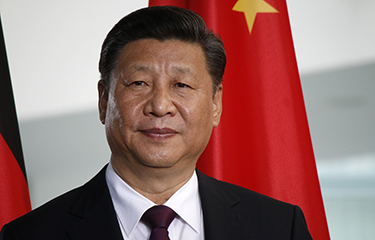
JD.com is cutting some executive salaries up to 20 percent and creating a CNY 1.4 billion (USD 200 million, EUR 189 million) employee benefits fund in an effort to align itself with China President Xi Jinping’s “common prosperity” campaign to reduce inequality.
JD.com is China’s number two online retailer and a major distributor of seafood in China.
A recent memo to staff by JD.com founder and CEO Richard Liu said he hoped the move can “realize the dream of securing a house for all employees who have worked for more than five years, including for our courier and customer service brothers.” Liu also announced he will give CNY 100 million (USD 14.3 million, EUR 13.5 million) of his own money toward staff welfare.
JD.com’s key competitor and China’s largest online retailer, Alibaba Group, has announced it will establish a CNY 10 billion (USD 140 million, EUR 140 million) fund to provide staff with interest-free home loans.
The moves are significant in light of recent regulatory moves by Beijing against key Chinese Internet economy companies, in part to establish state control over data while also curbing monopolistic behavior. The resulting fall in the share price of Chinese tech firms has reduced companies’ room to invest in expanding their sales networks.
JD.com, which has prioritized growth in sales of high-margin items like seafood, has expanded through investments in marketing, as well as logistics and warehouses. The company also partnered with foreign seafood suppliers like Mowi to increase sales of higher-end seafood products like salmon. But Liu, its CEO, said the company will now shift the company’s focus away from commercial expansion.
China’s e-commerce players are in an increasingly fierce battle for market share, with seafood playing an outsized role, but the sector is facing plummeting consumer confidence in China, according to new research by Morning Consult. Chinese consumer confidence dropped sharply in the second half of 2022, according to the research consultancy, amid the country’s abrupt abandonment of its zero-Covid policy. Morning Consult found 70 percent of Chinese adults surveyed in November 2022 said the coronavirus was a “major threat” to their country, up from 52 percent in January 2022.
Further underlining China’s economic fragility, local business magazine Caixin has reported that 2022 property-sector sales will drop over 40 percent from 2021 levels.
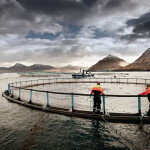
Photo courtesy of 360b/Shutterstock
