




Qatar, a net seafood importer, plans to reduce its import bill and scale up production to meet at least 90 percent of the country’s fish consumption needs by 2023 according to a new report.
Achieving increased local production to replace supplies from countries such as Norway, Pakistan, India, and Turkey, would be through Qatar’s drive to attract investment in the country’s mariculture supported by the recent modernization of the Aquatic Fisheries and Research Centre.
Part of the functions of the center is to ensure annual production and supply of 2.4 million fingerlings to commercial fish farmers under a 50 percent subsidy program.
The Fisheries Department projects a production level of up to 7,000 metric tons (MT) of marine fisheries and shrimps annually if the drive to supply the fingerlings turns out successful.
“Qatar has the potential to be a world leader in marine salt-base aquaculture, which is possible with research and exploration of its natural water resources,” the Research and Markets report said.
The report predicts a 5.1 percent compound annual growth rate (CAGR) of the fishing industry between 2020 and 2025, driven largely by the outcome of previous measures taken to stall continued declines in fishery resources such as enforcing a ban on trawlers, declaring a moratorium on new fishing permits and capping its wild-catch fisheries haul at 14,000 tons annually.
According to Food and Agriculture Organization (FAO), Qatar’s fish production is mainly from activities by capture operations, since its aquaculture sector's output is still “insignificant.”
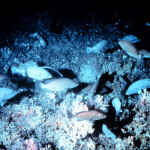
In 2016, Qatar’s total capture was 15,202 MT – mostly of emperorfish, narrow-barred Spanish mackerel, and grouper – “which are a highly valuable but overexploited resource,” according to the FAO.
But the future of the growth of Qatar’s fishing industry would likely hinge on how the country address some emerging challenges such as an increasing fishing effort which is still unmeasured, the impacts of land reclamation and dredging, and also the apparent lack of monitoring and control of recreational fishing.
Despite these challenges, Qatar’s fishing industry is likely to grow due to the country’s limited land for agriculture enabling the government to focus more on developing the national seafood market.
In addition, the research and development to be carried out by Aquatic Fisheries and Research Centre, particularly on marine finfish and shrimp production, including seed production, is likely to encourage growth of Qatar’s mariculture in the long-term, according to the report.
Photo courtesy of Fitria Ramli/Shutterstock
