





A weak social auditing process, including heavy reliance on self-assessments, allowed the presence of Uyghurs in Chinese seafood processing facilities to go undetected by seafood certification nonprofits including the Marine Stewardship Council, the Aquaculture Stewardship Council, and the British Retail Consortium, according to a report from The Outlaw Ocean Project.
The independent journalism group published a report in The New Yorker on 9 October outlining its investigation into the use of state-sponsored forced labor, as defined by the U.S. Uyghur Forced Labor Protection Act of 2021, in 11 Chinese seafood processing plants, most of which carried the joint MSC/ASC chain of custody certification.
Many retailers have enacted their own sourcing requirements that have a social component, typically including language barring the purchase of any item produced with forced labor. Additionally, certification organizations such as the British Retail Consortium Global Standard, the Aquaculture Stewardship Council, the Marine Stewardship Council, and Best Aquaculture Practices contain social components prohibiting the use of forced labor.
The MSC introduced requirements designed to address concerns over the use of forced and child labor into its chain of custody standard in 2019, requiring an independent third-party audit. The audits were required as a means of assessing the level or exposure a company’s supply chain has to risk of labor violations during processing, packing, repacking, and manual loading or offloading of seafood. MSC also introduced a zero-tolerance policy toward forced labor in its latest chain of custody standard, and in August 2018, MSC moved to require companies certified to its fisheries standard to submit a statement declaring they did not employ forced labor or child labor.
The Aquaculture Stewardship Council has adopted MSC’s chain of custody standard rules on forced labor, and its forthcoming farm standard is aligned with ILO Declaration on Fundamental Principles and Rights at Work, which prohibits the use of forced or compulsory labor.
The three Sustainable Supply Chain Initiative-approved audits approved for MSC-ASC chain of custody certification were the Amfori Business Social Compliance Initiative audit; the Sedex Members Ethical Trade Audit (SMETA), or the SA8000 Certification from Social Accountability International. Of the three approved audits, Sedex’s SMETA audit was the most-popular choice of the Chinese processing plants identified as using Uyghur labor.
The Outlaw Ocean Project sought out comment from MSC and ASC regarding the efficacy of these audits, and MSC Senior Public Relations Manager Jackie Marks responded by saying her organization was taking the matter “extremely seriously.”
“To improve transparency, MSC fisheries and at-sea supply chain businesses have had to publicly report on their labor practices since 2019. Certified supply chain businesses that undertake processing, packing and manual off-load must undergo an independent assessment report to MSC and allow MSC to commission its own independent audit,” Marks said, per the Outlaw Ocean Project’s open-sourced graphic on its communications with hundreds of companies and organizations linked to the Chinese companies in question. “The audits MSC recognizes (SMETA, BSCI, SA8000 BRCGS) are all designed to consider all workers regardless of it if they are local, or if they are migrants. In recognition of the particular vulnerabilities that migrants might face, the standards and audit programs include special consideration of efforts to mitigate risk to migrants regardless of their country and place of operation.”
Asked for access to more information about the audits of the Chinese processing firms and their findings, Marks deferred.
“In developing our program for certified sustainable seafood, the MSC includes high levels of transparency, particularly in the assessment of fisheries, publishing all assessments, certification reports and audits. We recognize the importance of stakeholder consultation and allowing the open scrutiny of assessments. Our labor eligibility requirements for fisheries at sea require them to complete self-declarations on forced labor, which are also publicly available,” she said. “However, for supply chain operations certified to our [chain of custody] standard, assessments include commercially sensitive information about details such as supplier contracts. Therefore, to ensure respect for the rights of certificate holders to confidentiality of their commercial information, and market support for sustainable fishing, the details of these reports are confidential. Additionally, we do not legally own the reports from third party labor audits and therefore are unable to share the data contained in them. Details within these reports are owned by the companies which commissioned them.”
Marks said MSC would revoke its certification of any company found through an audit to be using forced labor “on a case by case basis.”
“The conformity assessment bodies (CABs) responsible for certifying companies to our standards can suspend certificates if there is evidence that the company no longer complies with the MSC’s requirements or when directed to do so by the MSC as a result of unacceptable conduct. Following an investigation and the opportunity for those involved to respond, the course of action taken by CABs and the MSC would be determined on a case by case basis depending on the strength of evidence and the gravity of the issues involved,” she said.
After being contacted by The Outlaw Ocean Project, ASC Global Press and Public Relations Manager Desirée Pesci called the report’s findings “concerning.”
“[ASC was] not aware of the extent to which the Xinjiang labor transfer program expanded outside of the Xinjiang Region and the risks that this presents to employees of seafood operations in other provinces across China, until your investigation brought this to our attention,” Pesci said.
Pesci said ASC condemns all forms of forced labor and has “a robust and rapidly developing human rights program.” Pesci confirmed the Chinese processing plants mentioned in the Outlaw Ocean report that carried MSC/ASC chain of custody certification had all undergone SMETA audits between December 2021 and July 2022, and had additional audits within the 14 months.
“No business-critical issues were raised in any of these audits, but we do not have access to further details on the labor audits. All the six companies have had their last CoC audit between July 2022 and April 2023,” she said.
She said the chain of custody certification was updated in 2022, with the changes coming into effect May 2023, and that those changes incorporated the context of U.S. law, which included the U.S. Uyghur Forced Labor Protection Act.
Used mainly by retailers in the U.K., the British Retail Consortium Global Standard (BRCGS) certification also does not allow forced labor, and requires a remote risk assessment to be conducted by an independent auditor.
BRC Sustainability Policy Advisor Sophie De Salis told The Outlaw Ocean Project that “protecting the welfare of people and communities in supply chains is fundamental to our members’ sourcing practices.”
“Forced labor has no place in our retailers’ supply chains, and any practices that fall short of our high standards will not be tolerated,” De Salis said.
British Retail Consortium Senior Communications Executive Lara Conradie said the BRC “does not carry out its own inquiries but encourage[s] retailers to use third-party researchers or NGOs to investigate” any potential issues with forced labor.
“BRC supports its members by convening retailers when issues occur and work collaboratively to find industry solutions, such as the need for industry action e.g. investigation or government action,” Conradie said.
Several of the conformity assessment bodies that conducted the SMETA audits of the Chinese facilities, including Bureau Vertias and Lloyd’s, did not respond to requests from The Outlaw Ocean Project for comment.
SGS Global Head of Corporate Affairs Megali Dauwalder said its “traceability audits are not social audits” and they don’t cover working conditions.
SGS Global Head of Corporate Communications John Coolican confirmed SGS conducted SMETA audits at some of the locations mentioned in the report “not in the context of MSC certifications but on the request of Sedex members.”
“We would like to highlight that SGS conducts social audits strictly following the requirements as they are defined by the audit schemes/client programs for which our organization is formally approved,” it said. “The information to be collected during an audit (which provides a snapshot in time) and therefore the way they are reported, is also pre-determined as SGS is using the template provided by the scheme owners and/or the clients.”
Coolican said SGS was “not at liberty to publicly release specific details of audit report results.”
Human rights groups have criticized the MSC/ASC and BRC standards for years, warning the three approved audits, including the SMETA audit, are not effective at catching labor rights abuses.
“They have proven to be ineffective in other supply-chain industries, such as apparel, palm oil, and cocoa, in some cases with tragic results,” a 2019 joint statement from 13 groups, including Human Rights Watch, Greenpeace, Freedom Fund, and the International Labor Rights Forum, said. “While we understand that this was MSC’s first step in an effort to address labor abuse in seafood supply chains, we are deeply disappointed by the standard put forward. Indeed, a low-bar approach such as this one is a missed opportunity and a poor model for other sustainability programs seeking to address the rights and well-being of seafood workers.”
Over the past week, Several reatilers and seafood companies cut ties with Chinese processors named in the report, including High Liner Foods, Albertsons, Nissui subsidiary Cité Marine, PAFCO, and Lund's Fisheries.
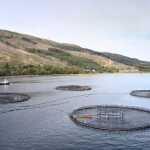
Photo courtesy of rasid aslim/Shutterstock
