


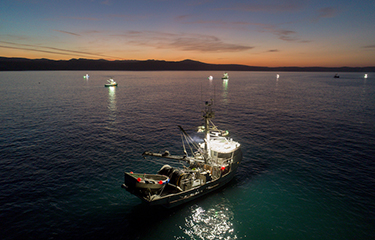
Cape May, New Jersey, U.S.A.-based Lund’s Fisheries has ceased its business relationship with a Chinese supplier in the wake of a report by the Outlaw Ocean Project on the use of Uyghur laborers at seafood companies in China.
Lund’s Fisheries, in a statement released on 13 October, said that upon hearing questions and criticisms about Rongcheng Haibo – one of several Chinese companies named by the Outlaw Ocean Project in its report – it initiated an internal investigation and “resolved not to renew existing contracts with Rongcheng Haibo until that work was complete.” Now, although the company said it did not find any evidence of illegal activity or forced labor at Rongcheng Haibo, the company will continue to maintain the cessation of new business “pending further investigation.”
In its statement, Lund’s Fisheries also condemned illegal, unreported, and unregulated (IUU) fishing and human rights violations.
“Lund's Fisheries takes allegations of this type seriously, which is why we engaged in numerous productive discussions with Ian Urbina and the staff of the Outlaw Ocean Project beginning in January 2023,” the company said.
Conversations between the Outlaw Ocean Project and Lund’s Fisheries began on 10 January, per the Outlaw Ocean Project’s open-sourced graphic on its communications with hundreds of companies. The inquiry referenced a squid jigger owned by Rongcheng Wangdao, which the Outlaw Ocean project said had multiple indications of forced labor on board. Rongcheng Wangdao had worked with Chishan Group Co., a reefer company that transshipped products with the ship in question.
Lund’s President Wayne Reichle replied with details of the certifications the company uses to keep track of its supply chain and vet its supplier and supplied materials, and the details of the supplier declarations required of their squid suppliers. The company also said that squid they received from Chishan was only sourced from Spanish- or Argentinian-flagged vessels.
After the Outlaw Ocean project followed up with additional findings from its squid investigation, Reichle again offered up “detailed answers” to the questions and requested more details of the investigation regarding suspected transshipments between Chishan and Rongcheng.
Later on, the Outlaw Ocean project brought up details of alleged Uyghuyr labor at Rongcheng Haibo, one of Lund’s suppliers. Reichle said it was difficult to comment without “any factual information being supplied from your investigation.” The Outlaw Ocean project said it “was not in a position to provide documentation,” as it runs the risk of alerting the relevant authorities tied to the Chinese state and could alter or remove the evidence of the investigation, but then requested further information on the company’s SMETA audits of Haibo.
Following further correspondence with The New Yorker – which published the final report – Lund’s said that it took steps to research a thorough and accurate response.
“Lund’s fisheries has worked with Rongcheng Haibo for ten years, and the firm has consistently passed required SMETA audits. Our investigation did not find any evidence of illegal activity or forced labor in the operations of Rongcheng Haibo,” the Lund’s statement said.
In response, the Outlaw Ocean project provided an array of evidence, including newsletters from the Chishan Group and Rongcheng Haibo celebrating the arrival of workers from Xinjiang, and photos of the workers.
Under the U.S. Uyghur Forced Labor Prevention Act of 2021 – created to prevent goods produced in the Xinjiang Uyghur Autonomous Region (XUAR) of China – goods from the XUAR or made by labor from the region is illegal in U.S. markets. The act also required the U.S. interagency Forced Labor Enforcement Task Force to develop a strategy on preventing the import of goods made with labor from XUAR, and issue guidance to importers – including instructions on how to conduct due diligence and supply chain tracing.
Lund’s said it has engaged in due diligence and requires a Sedex Members Ethical Trade Audit (SMETA) from all of its foreign suppliers – one of the most widely used audits in assessing labor standards.
“In addition, we also engage with each supplier, requiring that they sign a supplier declaration agreement, wherein they must agree to not employ forced labor,” Lund’s said. “We analyze and evaluate all the documentation they provide to us, including their SMETA audit reports, annually, to verify the results.”
The company said as a member of the Sustainable Fisheries Partnership’s Global Squid Supply Chain Roundtable, it “is committed to working towards sustainable fisheries and combatting IUU fishing and human rights violations globally.”
Lund’s is just one of dozens of companies in the U.S. listed in the Outlaw Ocean Project report. When approached by the project with evidence of Uyghur labor in their respective supply chains, the reaction from companies was mixed.
The Town Dock, another supplier implicated in a relationship with Rongcheng Wangdao, said that it did not have a relationship with the Chinese squid jigger or the processing plant. After the Outlaw Ocean Project said it received confirmation from a processor that it was supplying the Town Dock with squid, the company didn’t respond.
Some, like the Pacific American Fish Co., cut ties with Chinese suppliers. On 28 September, PAFCO President Peter Huh said the company “decided to terminate” its relationship with Shandong Haidu Ocean Product CO. and Rongcheng Haibo Seafood. Another supplier, Asian product e-market Weee!, said it had stop offering products provided by the vendors in question.
“We have a strict supply code of conduct,” a communications agent representing the company, Monica Wallace of Ruderfinn, said. “If we find that any of our suppliers are in violation, we take immediate steps to address the concerns and/or stop selling the products in question.”
Many other companies did not respond at all. Aqua Star, Beaver Street, Bornstein Seafoods, C&D International Fishery, Fortuna Sea Products, Eastern Fish, Channel Fish Processing, Endeavor Seafood, Ocean Beauty Seafood, OBI Seafoods, and Southstream Seafoods did not respond to the Outlaw Ocean Project’s messages.
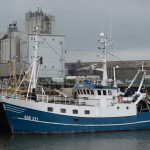
Photo courtesy of Lund's Fisheries
