






Impediments to the use of the Panama Canal and the Suez Canal are having an impact on global trade, but the impact on cargo rates and the seafood industry is still less than it was during the heights of the Covid-19 pandemic.
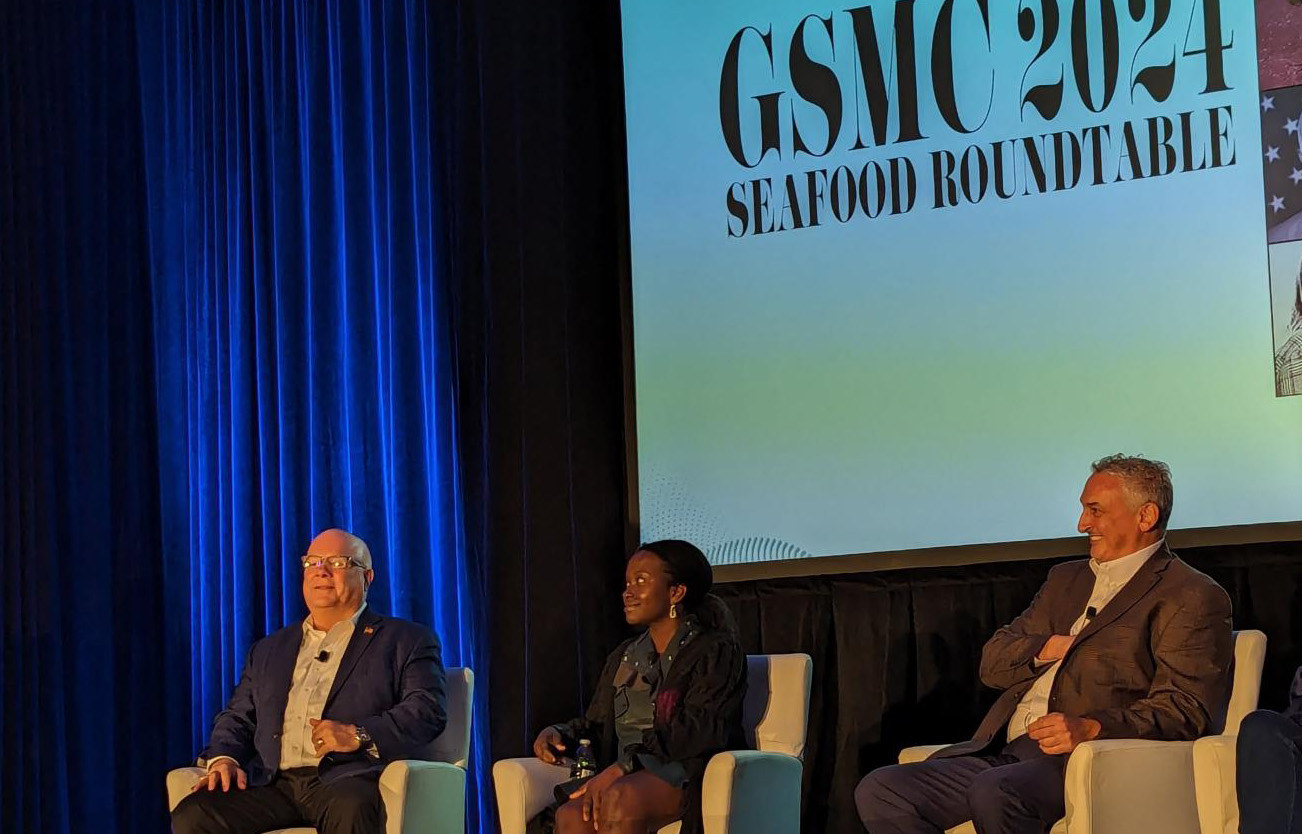
A panel of experts, speaking during the Global Seafood Market Conference in Orlando, Florida, U.S.A. on 23 January, said the ongoing struggles for both pivotal trade routes have had a lower impact on the shipping industry than what happened during the pandemic, when high material and transport rates caused costs to jump.
Use of the Panama Canal has been hindered by low water levels that have reduced the amount of container traffic the canal can handle, driving some shipping companies to detour around South America.
According to William Duggan of Eskesen Advisory – a supply chain expert with over three decades of experience in logistics, including a stint at Maersk – the impacts on the canal have been minimized for the seafood industry as container ships are still able to make the journey through the canal.
“The vessels with tanks and product vessels are going around Chile and Argentina, where the container ships are still going through, but they have to significantly reduce their [loads] by about a third,” Duggan said. “The massive container ships, they have to reduce somewhere around 2,000 containers off the ship.”
What’s happening, Duggan said, is those ships that need to offload containers do so to a rail service that then transports the containers across the isthmus, where they get picked back up on the other side.
While the cargo is still moving, the costs have gone up and have been going up quite fast.
Slade Gorton Vice President of Seafood Sales James Berger said the increases have been palpable for importers but are still more manageable than they were during the Covid-19 pandemic.
“I don’t know if you all remember a few years ago when freight was like USD 35,000 [EUR 32,300] per container, and we didn’t know what to do. It’s not there,” Berger said.
While Berger said the container rates aren’t quite as high as during the pandemic, the industry is still having to adapt to elevated freight rates and the potential of further hikes – especially with the recent developments in the Red Sea potentially driving costs up further.
“We’re seeing that our customers are extending container load expectations by two weeks, but I don’t see pricing necessarily being affected too much – yet. But it’s coming,” Berger said.
The recent changes surrounding the Suez Canal could have a bigger impact, Duggan said, as 60 percent to 70 percent of ships are now taking detours around the Cape of Good Hope. The rates for dry containers, he said, are now around USD 5,000 (EUR 4,615) rather than USD 3,000 (EUR 2,769). Reefer containers have maintained a steady rate, but as costs for dry containers go up, that could bleed into reefers.
“While the reefer rates don’t go up as much – they didn’t during the pandemic, either – the equipment itself, when you run out of dry boxes, they’ll go right to a reefer if the yields are better for the carrier,” Duggan said.
Container companies would rather run a nonoperational reefer container as a normal dry container, which then tightens the supply for reefers and drives up costs.
Duggan said it’s still premature to guess what will happen with container rates due to the impacts from the conflict in the Red Sea.
“We’ll see what happens with the escalation on the military side putting down the problems we’re seeing in Yemen, but it’s all connected together. Rates are not going to go up, in my opinion, anywhere near where they were during the Covid years,” Duggan said.
In the U.S., Duggan said, the industry has multiple options for moving cargo from one side of the country to the other, and in some places, demand for rail has increased as it begins to make more sense than trying to go through the Panama Canal.
Another key factor is that the overall market, compared to the heights of the pandemic, is still down – which means demand for containers hasn’t caused a massive price increase.
Looking forward, one of the biggest potential disruptions on the horizon are International Longshoremen's Association (ILA) union negotiations on the U.S. East Coast. The ILA contract is up for negotiation in September.
“If you have an outlier in 2024 for labor, that’s going to be it,” Duggan said.
Photo by Chris Chase/SeafoodSource
