

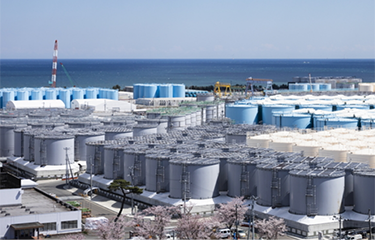
The Tokyo Electric Power Company (TEPCO), the operator of the Fukushima Daiichi nuclear power plant that controversially released treated wastewater into the ocean in late August, began accepting applications for compensation from fishermen and businesses that have suffered reputational damage about the water release.
By offering compensation for reputational damage, TEPCO is fulfilling a promise made right before the water release on 22 August, when Japanese Prime Minister Fumio Kishida assured the seafood industry that TEPCO would compensate those who experienced subsequent dips in revenue due to price declines or buyers refraining from purchasing.
“We will fulfill our responsibilities with a strong determination not to cause reputational damage, and we will firmly prepare a system,” TEPCO President Tomoaki Kobayakawa said, solidifying Kishida’s promise on the same day.
While the company appears to be following through with the system it promised, the amount of compensation that it grants may be more than it originally expected.
As a result of the water release China implemented a complete ban on seafood from Japan. Russia has also announced a complete ban on Japanese seafood, and South Korea maintained its ban on seafood products from eight Japanese prefectures.
The bans and overall wariness from importers have led to Japan’s top exported seafood product – scallops – along with sea cucumber, another big export, being affected by reputational damage.
In 2022, the value of scallop exports reached a record high of JPY 91 billion (USD 607 million, EUR 574 million), with 51.3 percent of that product going to China. The loss of the massive market has led to severe price slides.
Japan’s Fisheries Agency surveyed prices at local fish wholesale markets to find which items had suffered large price drops following the wastewater release and found that scallop prices fell between 11 percent and 27 percent in Hokkaido, Aomori, Iwate, and Miyazaki prefectures, according to an Asahi Shimbun newspaper report. The price of shell-on scallops fell from JPY 200 to 210 (USD 1.33 to 1.40, EUR 1.26 to 1.32) per kilogram from JPY 250 (USD 1.67, EUR 1.57) at the same time last year.
Sea cucumber prices similarly dropped from JPY 4,500 (USD 30, EUR 28.38) per kilogram in August of 2022 to JPY 4,000 (USD 26.67, EUR 25.22) in August 2023 in Hokkaido; 80 percent of Japan’s sea cucumber exports went to either China or Hong Kong last year. Farmed yellowtail from Miyazaki and Kagoshima prefectures and cultured bluefin tuna from Nagasaki prefecture also suffered from falling prices.
TEPCO’s compensation will solely go to businesses that were active before the release – mainly comprising organizations in the fisheries, agriculture, seafood processing and wholesaling, and tourism industries.
The company plans to define a prefecture as “affected by reputational damage” if the average wholesale price of all seafood species caught in the prefecture falls more than, or rises less than, the national average from the base year of 2022. In “affected” prefectures, TEPCO will calculate the amount of damage on an individual business operator basis.
Even in prefectures where the wholesale price falls less than the national average, TEPCO may decide to pay compensation after confirming details of damage suffered by a business operator. To secure the money needed to pay affected individuals and businesses, the national government will lend the compensation money to TEPCO through the Nuclear Damage Compensation and Decommissioning Facilitation Organization using government bonds issued as a source of funds.
TEPCO will start sending the necessary documents to applicants on 20 November.
Luckily for some producers, not all seafood products were heavily affected by the wastewater release.
An item that took a beating in the market following the initial 2011 disaster was flounder from the Joban region. Due to the proximity of Fukushima to Tokyo, live flounder from the region had commanded good prices in the capital before the meltdown, but Tokyoites became cautious about buying it after supply resumed, resulting in sellers accepting lower prices to move the product. As radiation testing over a long period showed that the flounder was safe, the domestic market recovered and seems to have escaped relatively unscathed from the current situation, with no widespread reputational damage in the domestic market, according to a Mainichi Shimbun newspaper report.
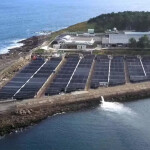
Photo courtesy of the Tokyo Electric Power Company
