





Uganda received new fishing industry guidelines at the beginning of the month, which were developed under the Commonwealth Standards Network (CSN) Program and supported by the U.K. Department for International Development.
The CSN Program was unveiled by outgoing U.K. Prime Minister Theresa May in May 2018 and was implemented by the British Standards Institution (BSI) in collaboration with national standards agencies in select countries.
Uganda and Zambia are the only countries selected from Africa to benefit from the program, which, among other objectives, facilitates “the growth of global value chains in the Commonwealth developing economies, particularly in supported sectors and also increases the volume of products and services exported from Commonwealth developing economies, that meet international standards.”
Uganda and Zambia fishing industry standards have been developed separately in collaboration with the Uganda National Bureau of Standards (UNBS) for Uganda and Zambia Standards Bureau (ZSB) for Zambia to support “agricultural and other value chains comply with international best practices,” UNBS said.
“The Program will support finalization of the National Standardization Strategy and will provide targeted technical assistance in improving the core UNBS functions – such as testing, certification and inspections,” explained UNBS when the development of the new guidelines kicked off in October 2018.
“It also aims to raise awareness of product requirements and commitment to quality in a number of agricultural and related value chains where difficulties are being experienced in exporting fruit, vegetables, fish and other commodities,” UNBS added.
Uganda’s Department of Fisheries received the new guidelines on 5 July, which outlined the right fishing gear, globally recommended fish handling procedures, and internationally competitive methods for storage and preservation of fish under the program.
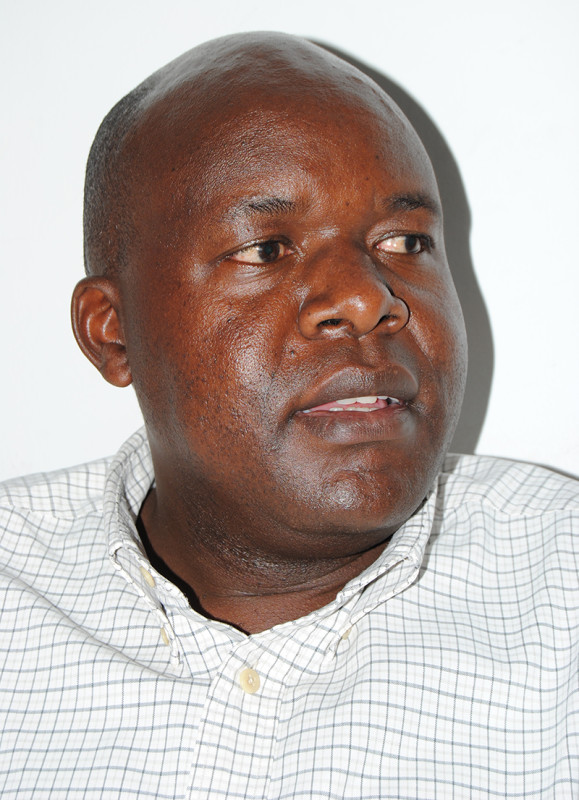
Graham Holloway, the Commonwealth Standards Network leader for Africa, delivered the guidelines to Patricia Ejalu, the UNBS deputy executive director in charge of standards, who received them on behalf of Uganda. The standards were translated into local languages for maximum impact on fishing communities.
“As UNBS, we want to improve on the quality of products in Uganda, especially fish. Much as we are focusing on the export market, we must make sure that what the standard in Uganda meets both national and international market (requirements),” Ejalu said upon receipt of the guidelines.
Holloway clarified on 5 June that the new guidelines for Uganda and Zambia are not Commonwealth standards, but exist to encourage “Commonwealth countries to train themselves how to produce quality by learning more on how to use standards…that's why we partnered with UNBS.”
“We wanted to assist real people with real problems of getting their products to market, getting good price for their products which comes with quality," said Holloway.
For Uganda, the new guidelines come at a time when the landlocked East African country is experiencing falling fish prices that have posed a threat to fish processing businesses, which rely on Lake Victoria for fish supply.
“There has been increased catches of tilapia following fishing methods as a result of improved enforcement activities (with) the increased supply naturally leading to the decline of fish prices following the law of demand and supply,” said Uganda’s Minister for Agriculture, Animal Industry, and Fisheries Bamulangaki Ssempijja in a statement to parliament last March.
Ssempijja also noted that the price of Nile perch is dictated by trends in the international market and “currently, the orders in the international market have reduced and so have prices per a kilogram.”
Uganda’s capture fisheries for 2018 tallied around 345,802 tons, a decline from both the 398,000 tons seen in 2017 and the 461,000 tons for 2016, according to Ssempijja.
“While exports to the international market rose from 4,751 tons worth [USD 5.3 million, EUR 4.7 million] in 1991 and peaked at 36,616 tons valued at [USD 143.6 million, EUR 127.3 million] in 2005, the export revenues have declined because of declining fish catches,” he said.
Ssempijja said at the beginning of 2018, Uganda’s Nile perch attracted USD 4.5 (EUR 3.9) per a kilogram in the international market, but the price has dipped “with the average falling as low as USD 2.94 [EUR 2.60] per a kilogram in 2019.”
Image courtesy of Wikipedia
