



With raw material supply becoming increasingly constrained across several important species, the seafood sector has been progressively stepping up its pursuit of 100 percent fish utilization and transforming processing side streams into strategic sources of value.
As that movement gains momentum, there have been growing calls to turn the dial further toward full biomass optimization.
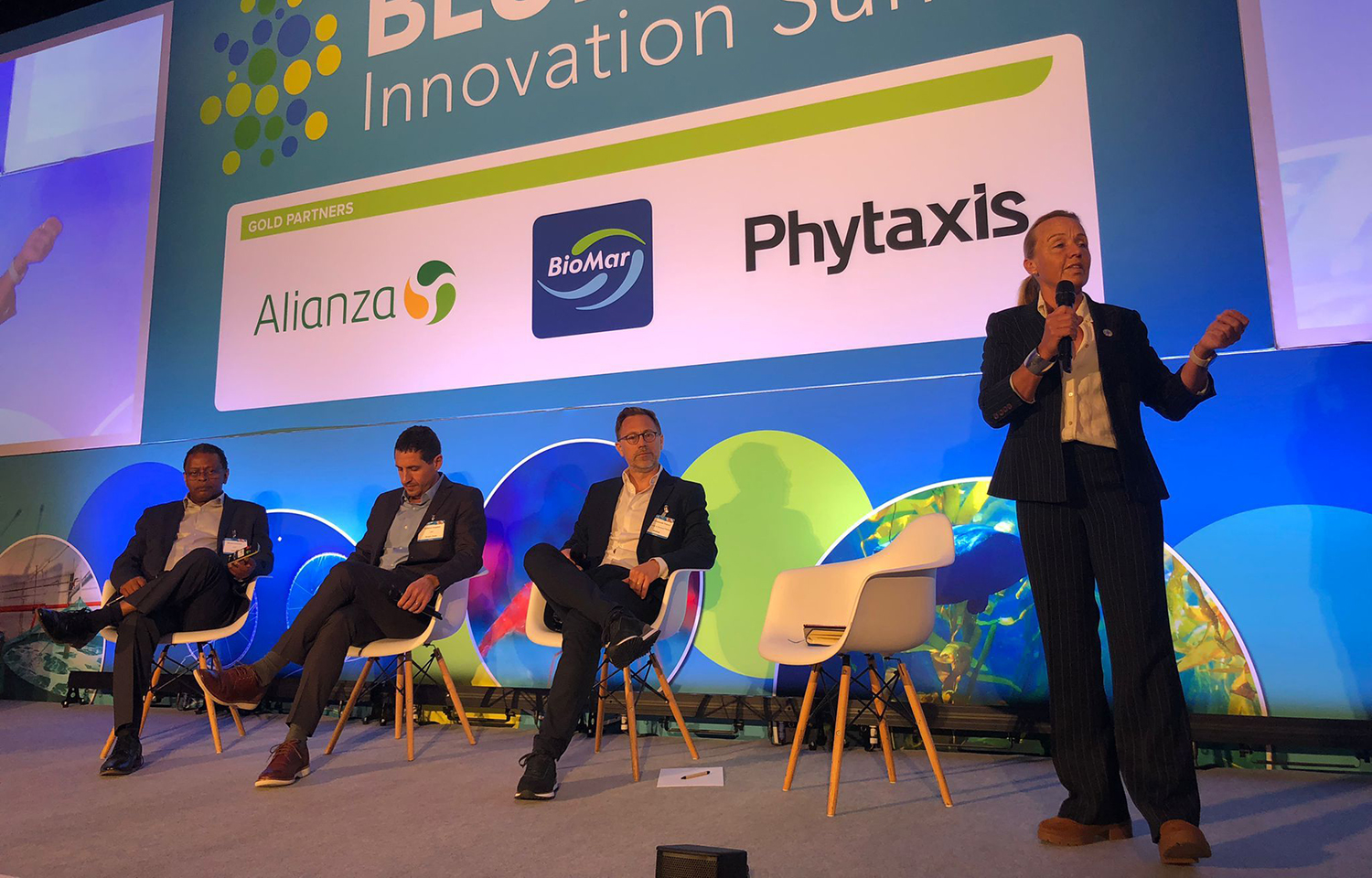
At the recently held Blue Food Innovation Summit in London, U.K., panelists from seafood catching and processing, biotechnology, and investment backgrounds outlined how an industry that still discards or undervalues large volumes of product can unlock significantly greater economic and environmental returns.
Global Seafood Alliance Director of Strategic Engagement Melanie Siggs pointed to estimates that between 30 percent and 50 percent of globally harvested fish biomass is lost at the point of first processing.
“This is fish that we've produced, fish that we've found, and fish that we take out of the ocean, which is really crazy,” she said.
Siggs said the issue is equally prevalent in shrimp processing, where heads and shells are widely treated as waste despite containing valuable proteins, oils, and bioactive compounds.
"In a report that was released in January, we estimate that somewhere between 800,000 and 1 million tons of shells and heads are deemed as waste every year," she said.
According to the panel, which also comprised Michel Lockhart, the CEO of Canadian biotechnology company ChitoLytic; Federico Angeleri, the CEO of Argentinian seafood firm Grupo Veraz; and Jean-Francois Trecco, the co-founder and general partner at ocean biotech investment firm BluKap, the challenge is no longer about reducing waste. Instead, it’s about extracting the highest possible worth out of byproducts.
Noting that the concept of 100 percent utilization has gained good traction across both wild-capture and aquaculture operations, Trecco argued that it should now be considered the minimum expectation.
“100 percent utilization for me is kind of a no-brainer. It should be the norm,” he said, explaining that the real challenge is maximizing the value extracted from every component of the biomass.
Describing how shrimp processing residues can be turned into multiple high-value products rather than being discarded, Lockhart suggested that nature itself provides an ideal model for the industry to mimic.
"Biomimicry is now an ever-growing field of looking at nature, observing nature, and learning from nature as to how to solve some of our more pressing problems," he said. "Coupled with that is the fact that nature wastes nothing."
To that end, he explained that protein-rich shrimp heads can be converted into digestible proteins and meals, while oils rich in fatty acids and astaxanthin provide additional value streams. The shells themselves also contain chitin, which can be converted into chitosan – a biopolymer with applications spanning industrial, food, and medical sectors.
"Presently, there are about 400 different applications for chitosan," he said, noting that chitosan values can range from around USD 20 to USD 30 (EUR 17.21 to EUR 25.82) per kilogram in industrial wastewater treatment applications to as much as USD 30,000 to USD 40,000 (EUR 25,828 to EUR 34,438) per kilogram in specialized medical applications.
One such specialized application Lockhart highlighted was a medical adhesive inspired by barnacles that has been developed to seal perforated organs and tissues in emergency medicine operations.
For Angeleri and his family-owned company, which operates seven fishing vessels and two processing plants in Patagonian Argentina, innovative utilization has emerged from economic necessity.
He explained that while Argentina's shrimp industry has expanded from around 45,000 metric tons (MT) of landings to more than 220,000 MT over the past two decades, investment has largely concentrated on increasing production rather than finding uses for processing byproducts.
"Nobody has cared about what to do with this side stream," Angeleri said.
However, as profitability across the sector has tightened, the economics of biomass disposal has become increasingly difficult to ignore.
"In our case, we started looking at what we were doing, where, and what could be improved in our cost base in order to have better profitability," he said. "Then, we realized we were basically dumping 50 percent of the raw material we were purchasing."
Grupo Veraz is now pursuing plans to build a hydrolyzed fishmeal facility that would produce fish protein concentrates and fish oil from side streams while potentially serving neighboring processors within a 200- to 250-kilometer radius.
"We are now entering a new market in a new industry," Angeleri said.
Giving an investor’s perspective, Trecco said he thinks side streams should be viewed by the industry as a strategic asset rather than a waste management challenge.
Trecco pointed to Norway's longstanding development of fishmeal, fish oil, and nutraceutical markets as evidence that value creation can progress through successive stages. Looking forward, he said he believes the next opportunity lies further up the value chain, particularly in pharmaceuticals and specialized healthcare products.
Acknowledging that terrestrial biodiversity has historically been the sector supplying the pharmaceutical sector, Trecco stressed that around 80 percent of the planet’s biodiversity exists in the ocean.
"What they are looking [for] is really sustainable, traceable, and completely reliable resources," he said, adding that commercialization remains the key challenge. "You don't grow at scale without being able to ensure that you have demand. You start with what the client wants."
For firms looking to explore such opportunities, Lockhart suggested they first understand the science behind their raw materials before investing in processing infrastructure and then engage potential customers early in the process, transforming utilization projects from speculative ventures into commercially grounded opportunities.
"Scour the existing scientific data. So much is there already," he said. "You start moving from a faith-based exercise to being evidence-based.”
