






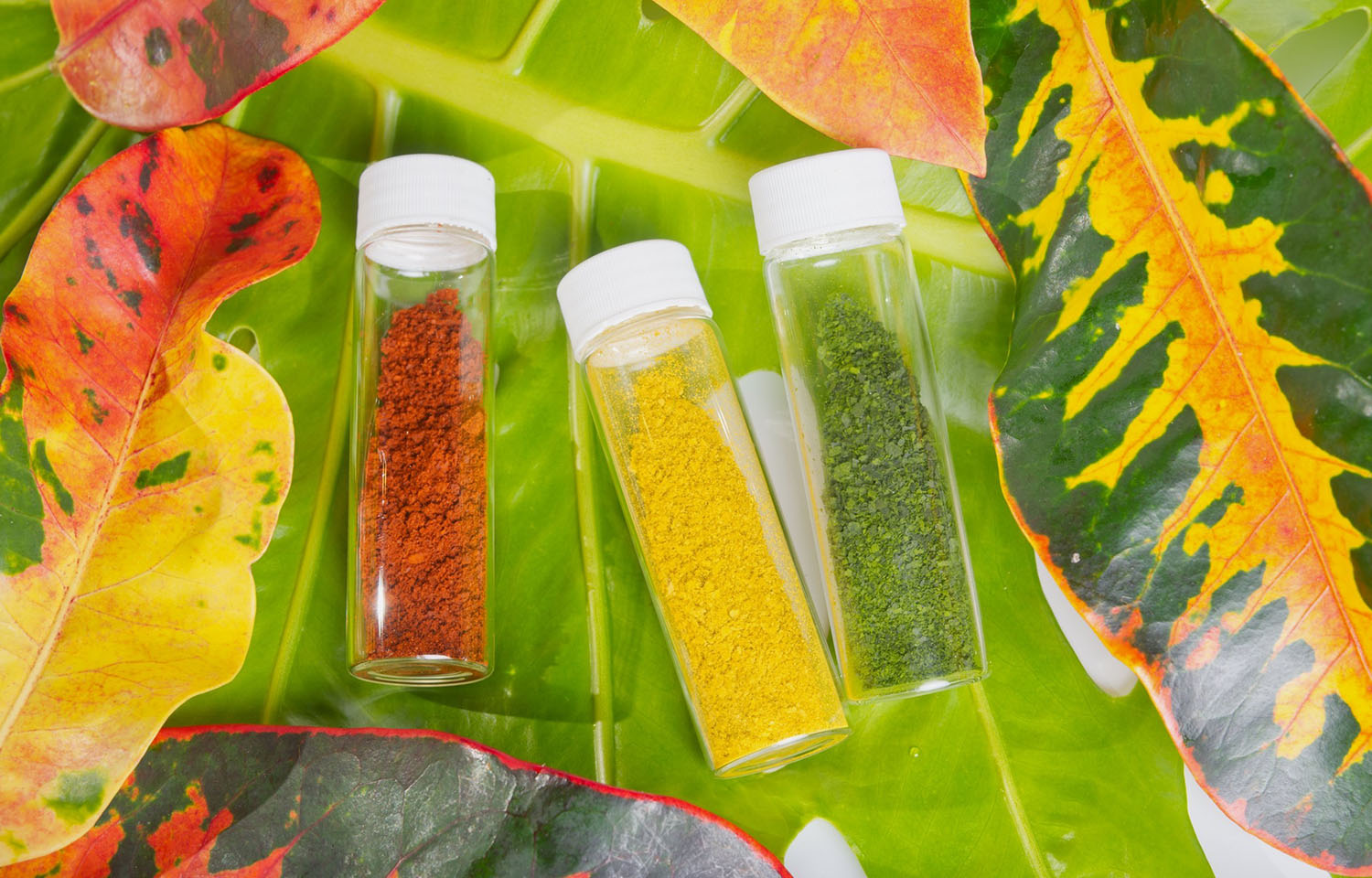
Honolulu, Hawaii, U.S.A.-based Kuehnle AgroSystems (KAS) has developed a method to produce naturally derived algae astaxanthin at commercial scale. It recently received USD 3.2 million (EUR 3 million) from S2G Ventures to help it expand. Astaxanthin is a carotenoid with antioxidant properties that is used in aquafeed to give salmonids and shrimp a reddish coloration. Previous KAS funders include Aqua-Spark, Hatch, and Cavallo Ventures, which participated in the company’s Series A fundraising campaign that closed in April 2022.
In an interview with SeafoodSource, KAS CEO Claude Kaplan confirmed his company is preparing to expand into Northern Europe and said the industry is underestimating the benefits of switching from synthetic astaxanthin to product naturally derived from algae.
SeafoodSource: Where does KAS see itself fitting into the industry?
Kaplan: The challenge we have is the same probably for every novel feeding company, which is the ability to produce at a scale and a competitive price point. That's really what our new funding is focused on – purely about increasing our scale of production. Our aim is not to get to the same price point as mainstream ingredients, as that’s not realistic and creates a race to the bottom. All we want to do is to produce a product which is closer in price to the synthetic than the current natural alternative … and make it easier for farmers who want a premium, more sustainable product to use it because there is such a big differential in price at the moment.
That’s what this funding is focused on – increasing our scale of production. Our production at the moment is through third parties, and this funding will enable us to fund those parties to produce the volumes which can service the aqua industries because their volume demands are pretty large.
But, it's currently too expensive for a lot of farmers outside of organic and certain markets like Scotland, so we want to make it easier, and we think that we can get the price much closer so farmers who want a more premium product or have something that’s more sustainable will have an easier decision.
SeafoodSource: How are you going to achieve that? Is that through scale or better technology or processes?
Kaplan: Both. For us, we’re starting with a very well-established product that has been produced for 30 to 40 years, but because it's been so expensive, it's nearly all gone into human nutraceuticals because the production process takes four to six weeks. We've developed the ability to take that algae and grow them in four days using industrial fermentation equipment, which allows us to get the scale to get the price down. It’s the technology and the scale together that's going to allow us to be much more price-competitive.
SeafoodSource: Are your current facilities adequate for that growth, or are you looking to expand your physical plant?
Kaplan: We will expand physically. We’re growing to have enough product to do large field trials with key customers, get some key customers on board, and then prove the product works. To really be able to supply to the industry, we’ll need a dedicated facility.
SeafoodSource: Will that new facility be in Hawaii?
Kaplan: It’s not going to be in Hawaii because everything in Hawaii is twice as expensive. Our roots lie in Hawaii, and it’s where we do our [research and development], but the new plant is probably going to be within Europe to build closest to our customers. Our process is just fermentation. It’s like brewing beer; you can do anywhere, so we're not limited by access to seawater or freshwater or anything like that. All we need is the best place to put a property, and Northern Europe seems to be closest to market.
SeafoodSource: Is astaxanthin just used to make salmon look more aesthetically pleasing to customers, or is there more to it than that?
Kaplan: At the moment, it’s used primarily as a colorant because the flesh of salmon would be grayish if you farmed them without it. But, that's not why fish have astaxanthin. They have it because it's the most powerful natural antioxidant we know, and it protects their tissues, particularly when they’re spawning or going through sexual maturity.
The issue this industry has with it at the moment is farmers are used to synthetic because it's cheap; it doesn't have that antioxidant strength that the natural algal version does. Therefore, they’re not getting the benefits in terms of fish health and disease resistance that results in more robust fish.
So, what we want is a product which is quite competitive but actually also is better for the fish and the farmers because then, it reduces mortality and losses. Yes, it’s a colorant, but it's so much more than that; at the moment, the industry is not really seeing all its benefits.
SeafoodSource: In the novel or alternative aquafeed ingredients space, there are protein makers, astaxanthin makers like yourself, and makers of omega-3s. Is there a chance to roll all these up at all?
Kaplan: There's definitely opportunity for synergies. From a farmer's perspective, they want to mix and match ingredients, but at the moment, they have very limited choices for all these alternatives. As an industry, the more alternatives we give them, the more it will encourage the industry and also give farmers the ability to choose what's right for their particular market, their particular growing environment, or whatever their specific challenges are. I think there may be some consolidation, but I'm not sure we're quite at that point yet.
SeafoodSource: Have you had direct conversations with aquafeed companies? What are they saying right now as to where their thinking is regarding KAS’s product?
Kaplan: Everybody loves the idea of having algal astaxanthin because that is what the fish eat. But, it's too expensive.
Everybody says they love what we're doing, but now we’ve got to show we can do it at scale. We've showed from salmon to trout to shrimp, we get nice coloration but all at a small scale. We have a lot of support and goodwill from the industry. Now, the onus is on us to actually show delivery at scale.
Then, our next job is persuading people to try it, to test it, to validate it, and to use it. In some ways, that will be easier, but at least we're on that pathway of going from a technology company to a product company, and that's really where this new money comes in because it's about scaling up the technology and turning it into a high-quality, mass-produced product.
SeafoodSource: How much more time and money does KAS need before its astaxanthin is commercially viable?
Kaplan: The time part is actually harder than the money part. Because we’re using third-party manufacturing, our costs are actually pretty reasonable. We’re not TerraVia, building a big facility in Brazil.
Each step of our growth takes a number of iterations and working through a number of different variables to get our product performing at the same quality it did at a smaller scale. Our plan is to be able to have industrial production this year. That will still be quite small-scale, but it will allow us to start doing bigger trials and tests. In terms of industrial scale, that's going to be a couple of years in building that up.
SeafoodSource: Does the money you have right now get you all the way to industrial scale?
Kaplan: Yes. It will allow us to be able to produce a reasonable volume of material. Some of that will be used for nutraceuticals, and some will be used for aquafeed trials over a number of years while we scale up. So, hopefully, in a few years, we will have both the proven track record of full grow-out of salmon and actually have the volume to support these customers.
SeafoodSource: Are you working with any salmon-farming or aquaculture companies directly?
Kaplan: We've talked to a lot of salmon-farming companies, the major feed integrators, and also the feed-supplement suppliers, and we would like to work with all of them.
At the end of day, this is a product which is not about exclusivity but, rather, about giving choices to farmers. Some are going to say, "Well, I want to use this method because it's the cheapest," but others may want to use a more expensive but higher-quality ingredient that’s better for the fish. Our product is not something that’s going to be exclusively for one farm or integrator.
SeafoodSource: Are the aquafeed and salmon-farming companies you’re talking with largely open to adopting new methods and technology? Or, are they reluctant to engage?
Kaplan: There is a balance between innovation and tradition in salmon farming. The doors are very open; people are very happy to have a conversation, and everybody recognizes these challenges we’re trying to tackle. However, to make that decision to switch is very difficult for them because they change their feed formulation and only in two or three years do you see the result. That makes it a high-risk decision. To actually buy, they want a lot of a lot of evidence – much more than other industries – because the risks are too high.
SeafoodSource: What's the state of play with alternative ingredients as a whole?
Kaplan: There’s definitely more work that needs to be done. There are lots alternatives being developed, and everybody is recognizing the potential opportunity as the industry looks for alternatives, but there are very few of us who've gotten to scale yet - probably only the omega-3 players have got there yet. But, they have shown a pathway, and I think more companies will get there. Some of us will not make it. Without the likes of S2G, Aqua-Spark, and Hatch, which are willing to invest that high-risk money, the progress would be much slower and harder to gain because, in reality, the big aquafeed companies are not really going to put the funding into it because it's sort of like they would be eating their own lunch.
SeafoodSource: It seems like all these feed-alternative technologies need more investment on their own to be perfected and commercialized. But, it also seems like the products they’re creating need to be commercially marketable to get significant funding. Have you encountered that conundrum at all?
Kaplan: It’s a real chicken-and-egg situation; you need the investment to be able to get the scale, but to get that investment, you have to show the promise of what you’re creating. What the omega-3 guys have shown is it's a hard journey, but when you get there, you can do something which adds value. Particularly looking at the journey Corbion went through, there were a lot of dark nights, and only a few years ago, people were saying it would never work. There is a binary in this field where you're struggling to prove you can do it, and that requires an investment; once you prove it, though, everybody's your friend.
SeafoodSource: Is the funding that is coming into the sector due to new opportunities available in the space, or is it helping to incubate these opportunities?
Kaplan: It’s a bit of both; certainly, success follows success. Aqua-Spark built a successful fund, and Hatch emphasized a different part of that supply chain. Now, we’ve gotten funding from S2G, so we’ve gotten experience with a lot of the bigger names investing in novel ingredient makers. At the end of the day, these are impact investors, so they're looking at making a difference not necessarily based on a financial return.
The more we get good stories like eFishery, as an example, other vessels are going to put more money into wind turbines or solar power or aquaculture, where their money is going to make money while making an impact. So, I think it's really incumbent upon all of us just to get those stories out there and also talk about the benefits aquaculture brings to the world to help drive investment there, as well. Aquaculture is still so small compared to other investment areas.
