






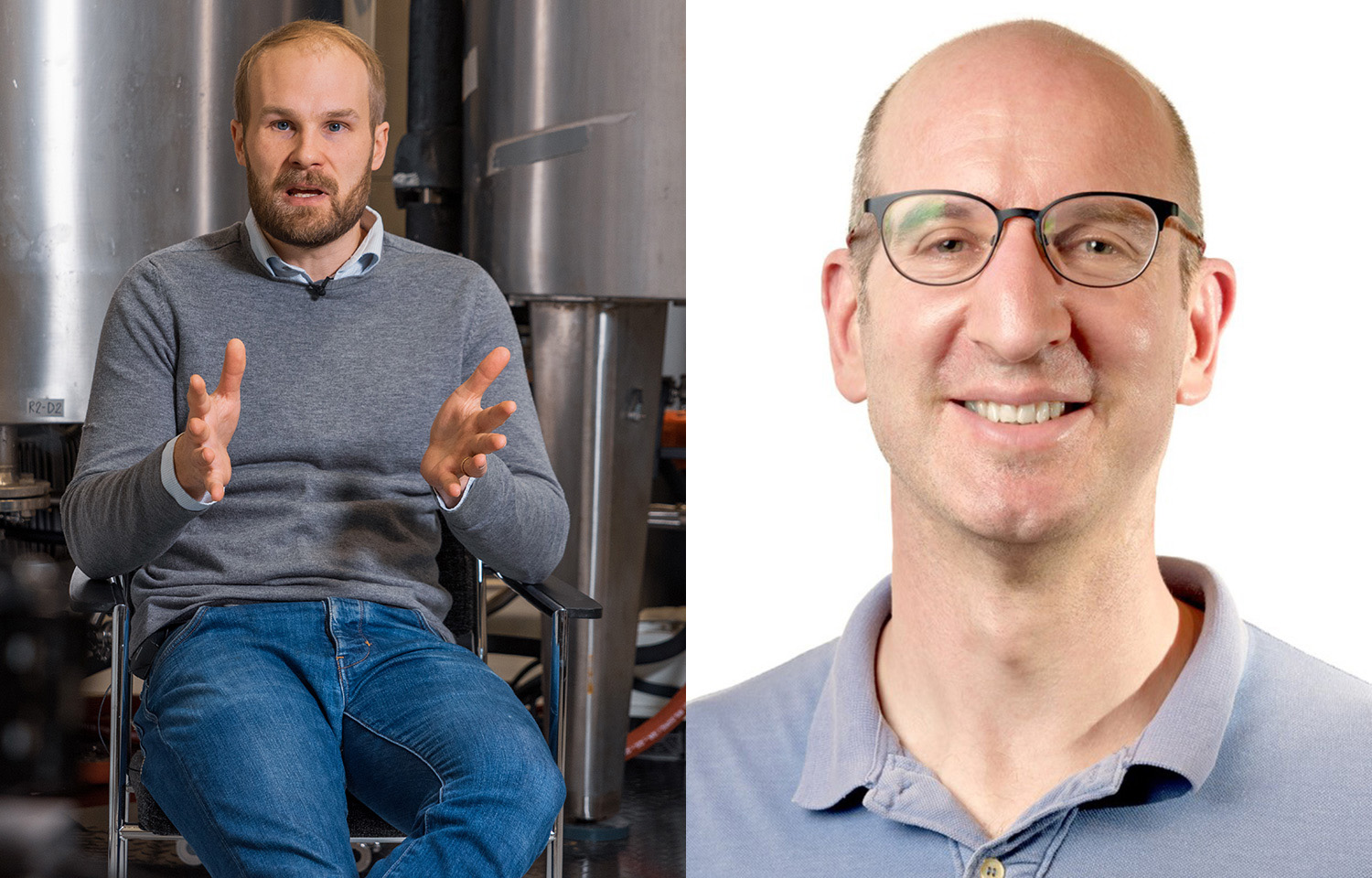
Having attracted significant new funding, Enifer and Kuehnle AgroSystems are aiming to play larger roles in the aquafeed alternatives sector.
Espoo, Finland-based Enifer, a biotech firm concentrating on producing its PEKILO fungi-based protein product for aquafeed and other uses, recently received EUR 36 million (USD 33.5 million) in investments, including a EUR 15 million (USD 14 million) Series B equity funding round with participation from Taaleri Bioindustry Fund I, Nordic Foodtech VC, Voima Ventures, Valio, and Laine Holding. Enifer also received a EUR 7 million (USD 6.5 million) investment from the Finnish Climate Fund and a EUR 2 million (USD 1.9 million) climate and environmental loan from Finnvea. Combined with a previous EUR 12 million (USD 11.2 million) grant from Business Finland, Enifer has now raised enough to fully cover the EUR 33 million (USD 30.7 million) cost of its new facility, to be built in Kirkkonummi, Finland, by the end of 2025.
“We are very happy to start cooperation with Enifer,” Taaleri Bioindustry Managing Director Tero Saarno. “We believe that there is an increased need for alternative proteins as the global population grows. Demand is also supported globally by environmental and ethical considerations. Taaleri Bioindustry Fund’s investment enables commercial-scale production. We are confident in Enifer’s opportunities to expand.”
Enifer Co-Founder and CEO Simo Ellilä said the aquafeed market is a primary target for the company because aquatic organisms are pickier eaters than pigs and chickens, making their feed ingredients a premium in the marketplace. Recent trials of the product on salmon, trout, and shrimp by Norwegian researchers, led by Margareth Overland at NBMU University, showed demonstrable health and growth gains.
“Mycoprotein is the missing ingredient for a more sustainable food chain,” Ellilä told SeafoodSource. “The facility in Kantvik serves as a key stepping stone on our path to making mycoprotein a cornerstone of protein supply, with several future factories already being planned.”
Enifer’s new plant, slated to have a 3,000-ton annual production capacity when finished, will be the world's first commercial venture to produce mycoprotein from upcycled food industry raw material waste. The company is filing for a European Commission Novel Foods listing of the ingredient to allow it to be placed in products intended for human consumption and expects to receive approval in 2026.
“This will be what we’re calling an intermediate-sized plant, but once we get that approval, we expect to be a profitable commercial factory in that application,” Ellilä said. “The factory serves two additional important purposes. One is acting as a general technical demonstration of our process … to help us in our pursut of building several dedicated feed factories. The other is in testing other byproducts, such as from the pulp and biofuel industries, which have huge volumes of side streams, to either license our technology or work together as a joint venture to build a plant. They can come and see the factory and the processing operation, and that will provide validation that the solution works.”
Ellilä said he’s not aware of any other companies doing work similar to Enifer’s, adding that the company hopes to be producing “very significant volumes” of aquafeed additives within a five-year time frame.
“We’re definitely the first of our kind to build a facility at this scale, and there’s nothing stopping us from scaling besides getting investment to build the factories,” he said. “That’s what we hope to achieve in the next few years.”
Ellilä said he’s hoping to broker a partnership with aquafeed or aquaculture firms to help in the scaling-up process.
“We’ve been talking to the aquaculture sector since the beginning,” he said. “The aquaculture market is very price-driven, and their margins are very thin. So, it's not like they have a lot of margins to splurge on expensive ingredients, but I think there's more willingness on the side of the aquaculture companies to get involved. They're starting to realize these novel ingredients are not going to make it to market if everyone doesn't do their part. You need to have first market openings to show that traction that will enable us to finance our future.”
Honolulu, Hawaii, U.S.A.-based Kuehnle AgroSystems (KAS), which is developing a method to produce naturally derived algae astaxanthin at commercial scale, also recently received additional funding to help it expand. Astaxanthin is a carotenoid with antioxidant properties that is used in aquafeed to give salmonids and shrimp a reddish coloration. The market for astaxanthin, which is also used in nutraceuticals, has an estimated value of USD 2.34 billion (EUR 2.19 billion) annually, but currently, 95 percent of astaxanthin used in aquaculture feed is synthetic and derived from petrochemicals.
“Everybody loves the idea of having algal astaxanthin, because that is what the fish eat. But, it's too expensive,” KAS CEO Claude Kaplan told SeafoodSource. “Everybody says they love what we're doing, but now we’ve got to show we can do it at scale.”
In March, KAS raised USD 3 million (EUR 2.8 million) in a Series A2 funding round led by S2G Ventures, following up previous funding from Aqua-Spark, Hatch, and Cavallo Ventures.
“All we want is to produce a product which is closer to the synthetic in price than the current natural alternative … and make it easier for farmers who want a premium, more sustainable product to use it because there is such a big differential in price at the moment. The challenge right now for every novel feed ingredient firm is the ability to produce at a scale and a price point where you are competitive with mainstream products. That’s what this funding is focused on – increasing our scale of production,” Kaplan said. “Our production at the moment is through third parties, and this funding will enable us to fund those third parties to produce the volumes which can service the aqua industries because their volume demands are pretty large.”
Kaplan described the state of play in the aquafeed alternatives market as somewhat stuck between needing investment to get to scale and getting pricing low enough to obtain large, long-term supply contracts.
“It’s a real chicken-and-egg situation; you need the investment to be able to get the scale, but to get that investment, you have to show the promise of what you’re creating.”
According to Kaplan, alternative omega-3 providers such as Veramaris and Corbion are leading the way forward in the alternative aquafeed ingredient space.
“What the omega-3 guys have shown is it's a hard journey, but when you get there, you can do something which adds value. Particularly looking at the journey Corbion went through, there were a lot of dark nights, and only a few years ago, people were saying it's never going to work," he said. "There is a binary in this field where you're struggling to prove you can do it, and that requires an investment; once you prove it, everybody's your friend.”
Kaplan said consolidation may eventually come for the alternative ingredients market – but not soon.
“There's definitely opportunity for synergies. From a farmer's perspective, they want to mix and match ingredients, but at the moment, they have very limited choices for all these alternatives, and I think that's something as an industry, the more alternatives we give them, the more it will encourage the industry and also give farmers the ability to choose what's right for their particular market, their particular growing environment, or whatever their specific challenges are,” Kaplan said. “I think there may be some consolidation, but I'm not sure we're quite at that point yet.”
In the short term, the shaking-out process for the alternative ingredients sector will much more likely involve bankruptcies and insolvencies than buyouts and roll-ups, according to Kaplan.
“Some of us will not make it,” he said. “Without the likes of S2G, Aqua-Spark, and Hatch, which are willing to invest that high-risk money, the progress would be much slower and harder to gain because in reality, the big aquafeed companies are not really going to put the funding into it because it's sort of like they would be eating their own lunch.”
