



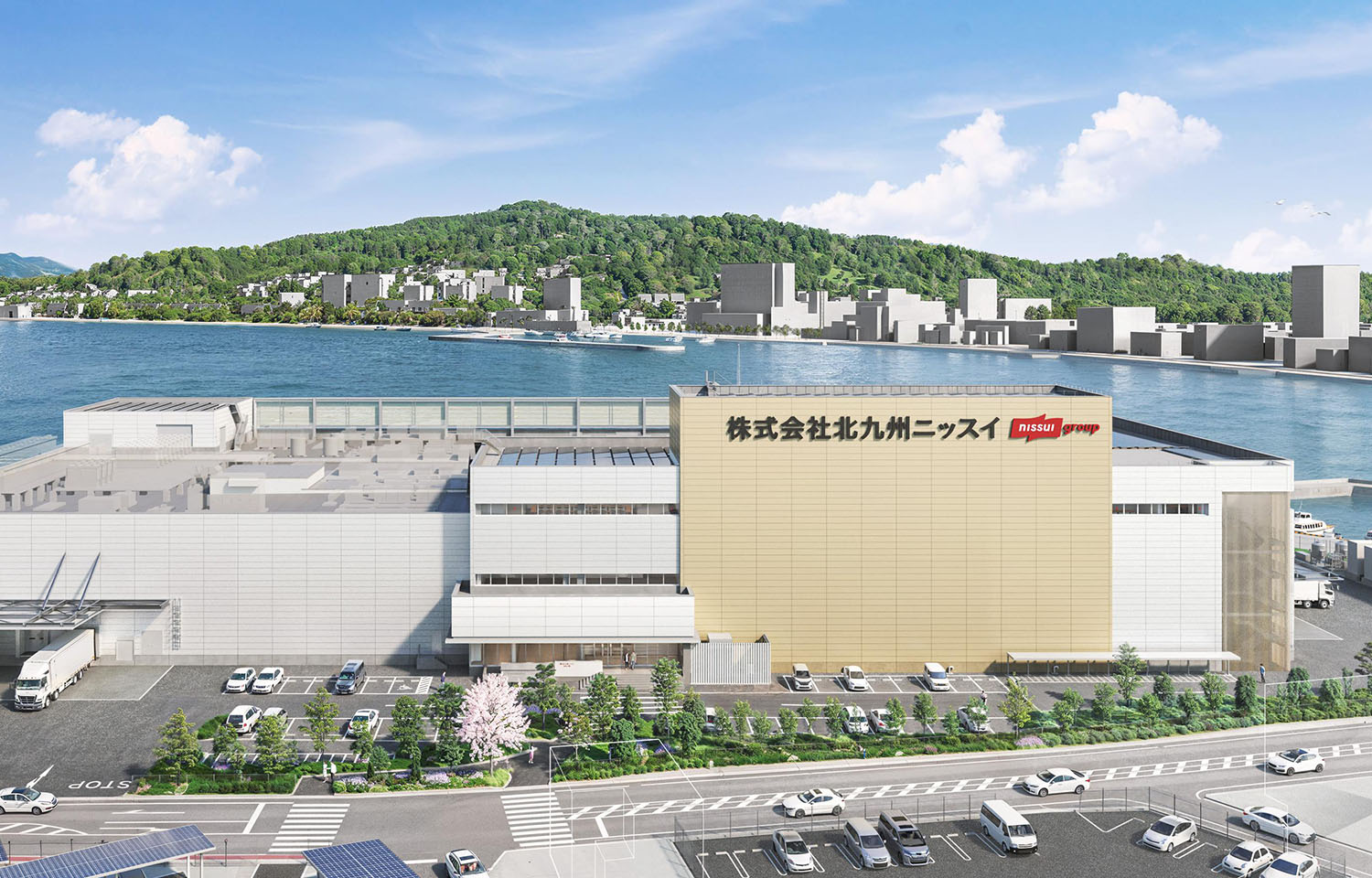
Japanese seafood company Nissui is on the cusp of breaking ground on a new production facility as the company pursues a 50 percent increase in its sales by fiscal year 2030.
The new facility, to be located in Kitakyushu, will utilize the site of a former frozen food factory operated by the company until 2021, when the facility burned down. The company said that it plans to break ground on the new factory on 7 August, with a projected completion date of December 2026.
Nissui recently appointed Teru Tanaka as its CEO as the company worked to implement its FY 2025 financial plan dubbed “Good Foods Recipe 2.” That plan builds on another strategic plan it released dubbed “Good Foods 2030,” which outlined a number of stages. The company recently completed Stage 1 of the plan and is now working to expand the reach of its products globally.
The company's overall goal is to increase its sales by 50 percent to JPY 209 billion (USD 1.39 billion, EUR 1.22 billion) by 2030.
One of the focuses of Good Foods Recipe 2, which launched in April, is increased supply chain resilience, and the new facility will aid that process by replacing older production plants.
In a press release, Nissui said its Nissui Tobata Factory and Kitakyushu Nissui Factory No. 2, which both produce processed foods, are both aging and are now over 65 years old. Once the new facility is complete, functions performed by the two older facilities will be transferred to the new factory and its Ube factory, and the two older facilities will be closed.
“The new factory will pass on the manufacturing technology and know-how accumulated over the years to future generations, fulfilling its mission of delivering even more advanced, high-quality, and delicious products to customers for decades to come,” Nissui said.
Nissui said it has dubbed the new facility “Nissui Smart Factory” and that it will serve as a model for increasing the company’s corporate value.
The facility will use a number of new technologies, including digitalization and AI to complement a high degree of automation, which will allow for predictive maintenance, a facial recognition access system, reduced environmental impact – including lower power consumption and utilizing non-fossil fuel energy sources – and removing strenuous or dangerous work in the facility.
Another key way in which the facility will help the firm increase its value will be its higher production rate. The company said it plans to increase productivity of its value-added products by over 150 percent compared to its existing processing lines.
The new facility will be located in Tobata Ward, a portion of Kitakyushu that Nissui said once served as a base of its operations for trawl fishing and food processing. The company said it is now in discussions with Kitakyushu to reach an agreement to “maintain ties with the local community.”
“Nissui will continue to grow its business and deliver new food by responding to changing customer and market needs through the realization of its long-term vision, ‘GOOD FOODS 2030,’" Nissui said.
The company did not reveal what the cost of the new facility will be.
