


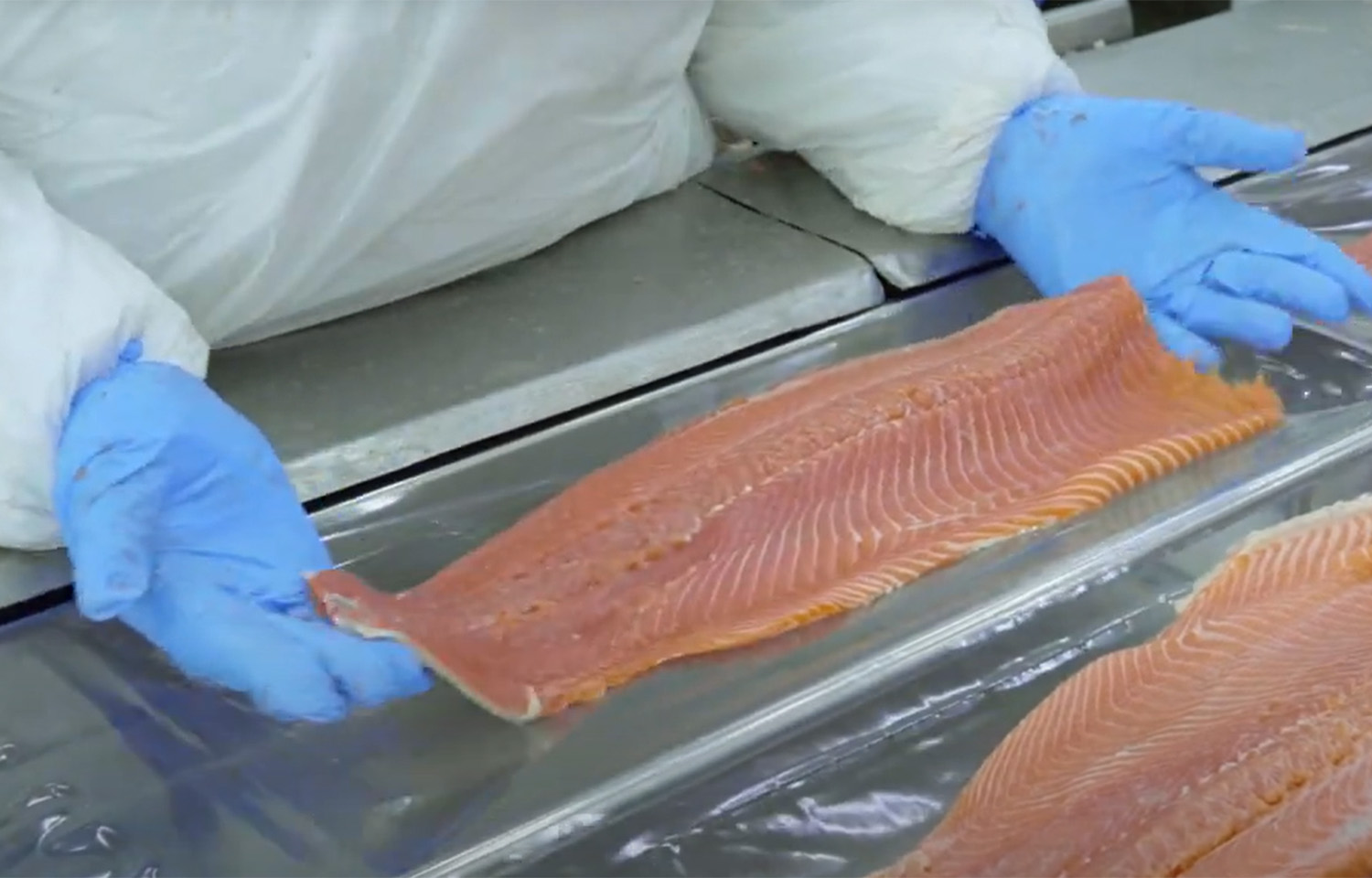
Chilean salmon and trout farmer Salmones Antártica has submitted a proposal to Chile’s Environmental Impact Assessment System (SEIA) for a USD 6 million (EUR 5.1 million) expansion of its salmon processing plant located in Chonchi, on the island of Chiloé in the south of the country.
The company’s plan is to increase production to 51,400 metric tons (MT) per year of finished product from the current 30,000 MT a year, for which Salmones Antártica would increase biomass input from 40,000 MT to 72,000 MT per year.
Salmones Antártica’s proposal to the environmental assessment system said it would perform the expansion by optimizing different internal processes and incorporating equipment that improves processing efficiency, without expanding the existing infrastructure. Modifications would include new automatic evisceration equipment, an additional deheading system, the installation of a new dissolved air flotation system in the wastewater treatment plant, and the installation of new generators and transformers to increase installed power.
The company proposes works to begin in January 2026, with a projected completion date sometime in May.
Owned by the Japanese holding company Nissui, Salmones Antártica announced in April 2025 that it had received certification from the Aquaculture Stewardship Council (ASC) for its feed plant, making it one of the first integrated companies to certify 100 percent of its production chain under the standard.
It was building a USD 17 million (EUR 14.6 million) fish farm called Los Ciruelos in southern Chile’s Los Lagos region, for which it had environmental permission dating from 2008 that was revalidated in 2016, but an environmental court ordered a full work stoppage on the farm owing to concern over possible irreversible impacts associated with the farm.
In December, Nissui announced that it would fully acquire all shares of Chilean salmon-farming firm Pesquera Yadrán via its subsidiary Salmones Antartica in a USD 133 million (EUR 113 million) deal.
