






A Chilean environmental court has ordered a full work stoppage on Salmones Antártica’s USD 17 million (EUR 14.6 million) fish farm being built on the San Pedro River in the southern Los Ríos region of the country.
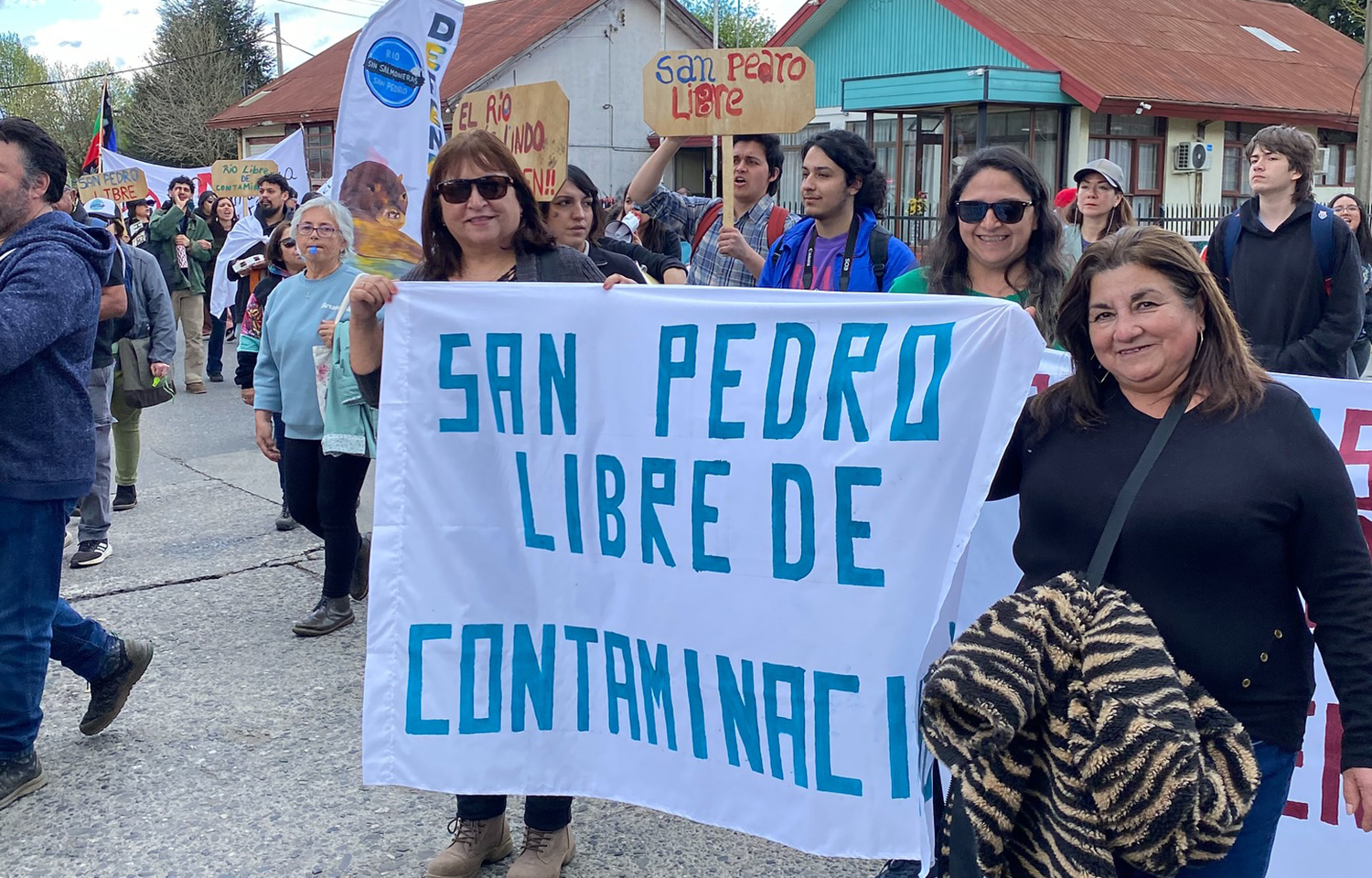
The decision came after the court admitted a claim from the Río San Pedro sin Salmoneras conservation movement, which expressed concern over possible irreversible impacts associated with the farm. After reviewing the claim, the court suspended the farm’s environmental permit and subsequently ordered the work stoppage.
The project in question, which Salmones Antártica originally submitted for approval in 2007, includes a fish-farming facility for raising salmon roe, fries, and smolts in 400 incubation platforms and 300 grow-out tanks using water from the San Pedro River. According to the company, once fully operational, production estimates total around 11 million salmon over a five-year period, which would result in more than 800,000 metric tons (MT) of salmonids.
The Los Ríos Regional Environmental Committee approved the project in March 2008 and issued the environmental permit. However, the project’s works remained on hold for nearly two decades until January 2025, when the Los Lagos Municipal Directorate of Works granted a building permit for the farm.
Salmones Antártica has reportedly said the 17-year delay was due to several external factors, such as a legal dispute with another company over water rights, which it said was resolved in its favor in 2015. Additionally, the process to register the proposed farm in Chile’s National Aquaculture Registry took nearly 11 years and was finally granted in 2022 by the National Fisheries Service (Sernapesca). Only after obtaining that registry could the company apply for other required permits and call tenders for the plant’s construction. Building began after the January permit was issued.
However, after clearing several regulatory hurdles, the next roadblock for the project came in the form of public backlash when the Municipality of Los Lagos organized a public meeting about the project in November 2024.
“We went as any normal resident, and they told us that this Japanese company [Japanese holding company Nissui has owned Salmones Antártica since 1988] wanted to reactivate a project whose environmental permit dated from 2008. When we saw what was included under the permit and the magnitude of what was approved, we organized ourselves immediately after the meeting,” lawyer and Río San Pedro sin Salmoneras spokesperson Ornella De Pablo told local paper Diario Financiero. “That’s how the movement was born.”
The Río San Pedro sin Salmoneras movement argues that the environmental assessment for the proposed farm is outdated and fails to consider essential variables that have changed over the past two decades, such as the effects of climate change, cultural heritage, and the current water situation in the area.
“What we consider most serious is that this [project] was approved under legislation that is no longer valid. The territorial rules are obsolete and no longer meet modern standards. If you look at the 2008 approval under the lens of today’s regulations, [the project] wouldn’t pass,” De Pablo said. “We’re asking for the permit to be revoked, or at least reviewed. Companies should not be allowed to execute a project 20 years later without re-evaluation.”
For its part, Salmones Antártica argues that despite the length of time that has passed since it received the environmental permit for the project, the company complies with standing environmental legislation, with a commitment to respecting and keeping up to date with regulatory changes. It also said the San Pedro River has characteristics similar to other successful aquaculture sites between the Biobío and Aysén regions where it operates.
Those arguments have failed to convince many local stakeholders.
In February of this year, the Association of Municipalities for the Conservation of Biodiversity of Los Ríos – including the cities of Panguipulli, Los Lagos, Máfil, and Valdivia – issued a public statement opposing the project, saying it contradicts their strategies to promote the river as a hub for tourism, conservation, and local production.
Following that statement, in March of this year, with support from NGO Defensoria Ambiental, the Río San Pedro sin Salmoneras movement filed a legal challenge against the building permit issued for the farm.
“Ideally, we would have challenged the 2008 environmental permit directly, but the legislation does not provide clear tools to do that given how old it is,” De Pablo said. “So, we attacked the building permit.”
This challenge led to the recently issued work stoppage, which took into consideration the amount of time elapsed between the attainment of the environmental permit and the effective start of construction, as well as more recent events, such as reported damage to paleontological heritage at the construction site in July.
Protesters have also expressed concern about Salmones Antártica’s non-consumptive water rights for the project, which require the company to return the water it uses to the river. This, protesters have said, may result in waste from the proposed fish farm – including antibiotics, detergents, feces, and even dead fish – being released into the river, which many communities rely on as their main source of drinking water.
“Installing a fish farm means risk of water shortage, contamination, and bad odors,” De Pablo said.
Los Ríos Senator Alfonso de Urresti, who is also a member of the Chilean Senate Environment Committee, celebrated the environmental court’s work stoppage order.
“What has happened is a clear sign: Territories must be respected, and environmental decisions cannot be imposed without considering the feelings of the communities and the protection of our ecosystems,” he said in an Instagram post. “We will remain vigilant and committed to safeguarding the San Pedro River and the right of citizens to live in a healthy environment.”
Meanwhile, the Río San Pedro sin Salmoneras movement pledged it will continue with surveillance and citizen participation efforts in opposing the project, saying the group is preparing the next arguments to present to the court while celebrating the latest court ruling as “a triumph for the community and the defense of the territory.”
