

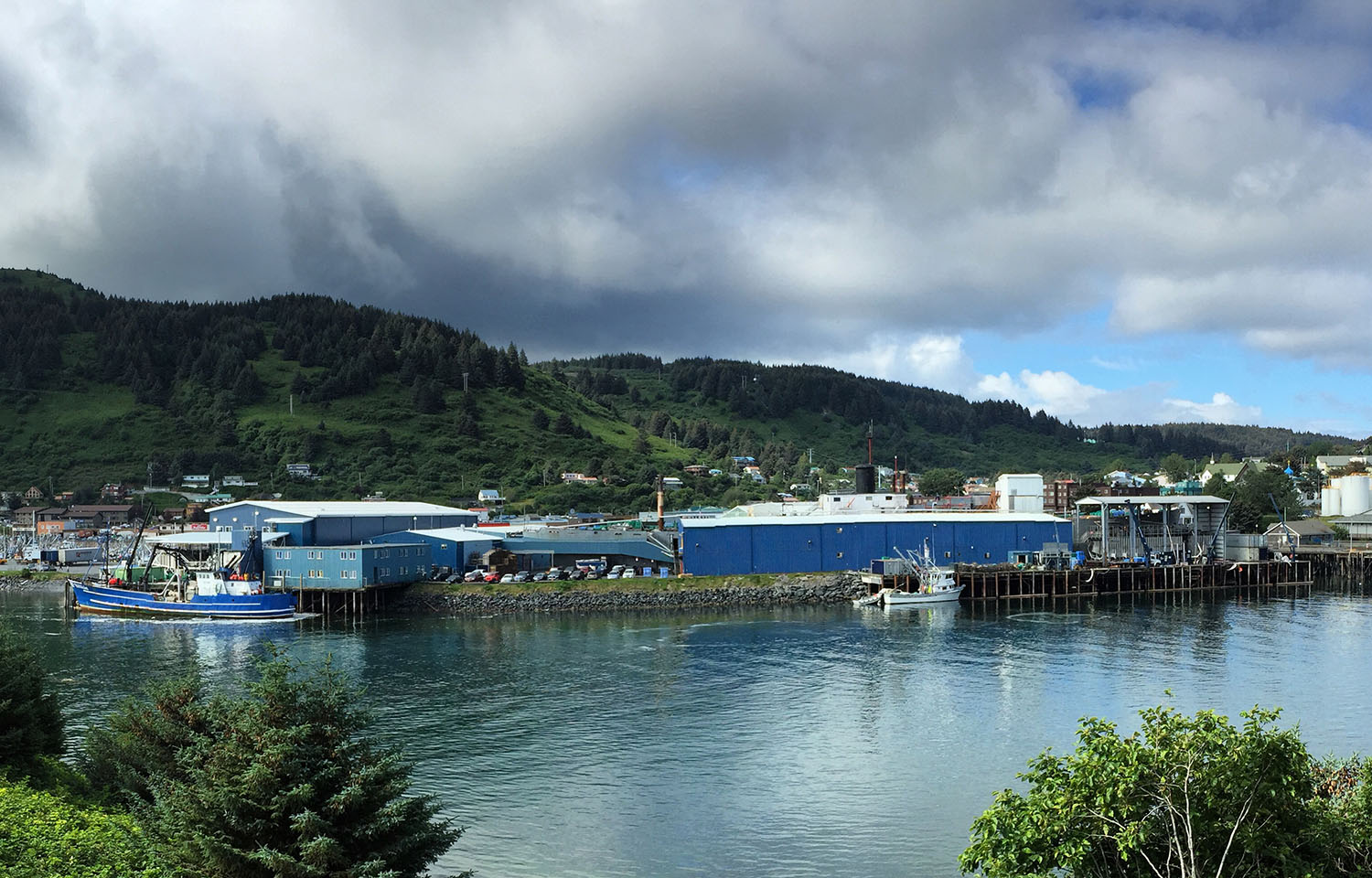
Trident Seafoods is selling its seafood-processing plant in Kodiak, Alaska, U.S.A. to Pacific Seafoods.
Seattle, Washington, U.S.A.-based Trident has been seeking a buyer for its Kodiak plant since December 2023, when it announced a broader pullback from operating in Alaska. It subsequently sold off its processing facilities in Petersburg, Ketchikan, and False Pass, and in May 2024, it said it had advanced negotiations on the sale of its Kodiak plant.
The Kodiak plant processes pollock, salmon, Pacific cod, halibut, flatfish, rockfish, crab, and herring. Clackamas, Oregon, U.S.A.-headquartered Pacific Seafood has existing operations in Kodiak and preexisting ties to the Kodiak fleet, according to a press release from both companies.
“Pacific Seafood’s expertise, value-added capabilities, and robust distribution infrastructure position them well to bring immediate value to the wide variety of species harvested in Kodiak,” Trident Seafoods CEO Joe Bundrant said.
Located on Kodiak Island’s northwest corner, the plant is equipped with a fully automated heading and gutting production line for Alaska pollock and salmon, with a daily capacity of 1.5 million pounds of pollock.
The sale is pending due diligence but is expected to be finalized in November 2024, according to Trident. Bundrant, who was born in Kodiak, said he wanted to ensure continuity in the plant’s operations.
“Our top priority is to reassure employees and the fleet that this is a handoff, not a shutdown. We are committed to a smooth transition with Pacific Seafood so they are well-prepared to operate for the 2025 A season,” Bundrant said. “I feel a special connection to the Kodiak community and its people. This is a bittersweet moment for me, but I’m confident that Pacific Seafood is the right partner to serve this community with passion and integrity.”
Pacific Seafood Vice President of Processing Ashton Meier will be in charge of Pacific’s combined Kodiak operations. Pacific President and CEO Frank Dulcich said his company plans to retain all employees who previously worked at Trident’s plant.
“We are excited about this opportunity to expand our Kodiak operations and leverage our diverse national and international distribution channels to provide even more opportunities for Kodiak team members and the fleet,” Dulcich said.
In the release, Trident and Pacific each expressed concern about ongoing competitive challenges facing Alaska’s shoreside processors and communities. On 7 October, at the most recent North Pacific Fisheries Management Council meeting, Trident Alaska Public Affairs and Fisheries Development Director Shannon Carroll announced Trident will be shuttering its seafood-processing facility in Saint Paul, Alaska, an island community in the Central Bering Sea.
“We're not likely to process crab in Saint Paul for the 2024 or 2025 season,” Carroll said. “We recognize that this decision is going to have significant impacts, particularly for Saint Paul. We've been communicating with the community and community development quota group from there regularly since we made this decision.”
Carroll said much lower total allowable catches of Bering Sea crab had forced the company to temporarily close the plant, which has a processing capacity of 400,000 pounds of crab daily. He said the announced reopening of the Bering Sea snow crab (opilio) fishery and the increase of the Bering Sea red king crab TAC for the upcoming season came as a surprise to Trident.
“We were not expecting an opening this year, and the low TAC would mean really significant losses just to open the doors in Saint Paul,” Carroll said.
Low seafood prices and higher labor costs also contributed to the decision, according to Carroll, as did declining catches of other species across Alaska.
“We've had an over 100 percent increase in labor costs over the past five to seven years there, and those costs were not included in the price formula, which we've testified to in the past. Then, the biggest factor is just poor conditions in other fisheries, including pollock, salmon, and cod, which means we can't subsidize our operation in Saint Paul like we've done in many years during low TAC years,” he said. “The recent market conditions are well-documented … but I do just want to highlight two particular challenges this year. One is the poor salmon returns across the state, and [the other is] the unexpected closure of Kodiak’s [pollock fishery], which both had a very significant impact. It highlights the message that I've certainly mentioned before, which is just the importance of all fisheries to our company and to other processors, in order to be able to open the doors and survive some of these low [TAC] years.”
Trident is not abandoning its processing operations in Saint Paul, Carroll confirmed.
“I want to be clear that it's not a signal that we're pulling out of Saint Paul or that we're pulling out of crab,” he said. “Rather, we continue to spend millions of dollars to keep the plant in Saint Paul operational to the point that if crab comes back to the level that it doesn't require enormous losses to process, we'll be ready to process.”
Asked by Alaska Bering Sea Crabbers Executive Director Jamie Goen, a new member of the NPFMC, whether Trident’s floating processor, the F/V Bountiful, might be able to process crab in Saint Paul, Carroll said the vessel had been sold in September.
“Trident no longer owns the Bountiful. So, this is not a decision that we make whether or not to bring the Bountiful up or not, but having owned and helped operate the Bountiful for a number of years, it can't [do that]. It would take 50-plus days in order to process all the small pack that is available in the north, and that's not including weather delays and [other] logistical challenges that go into processing a fishery … so my guess is that that's not a feasible option for this TAC,” Carroll said.
Carroll said Trident’s moves are in response to a broad array of challenges besetting Alaska’s seafood market.
“[This is] an economic must we've been driven into in order to maintain the opportunity to process in the future,” he said. “Simply asking us to process in uneconomic conditions is the same as requiring us to take a loan to make cash payments to harvesters and communities. And we just can't endure this during these economic conditions. We need to be able to build for resiliency for the future. We can’t ensure long-term participation in the fishery if we bleed out in small years, similar to how harvesters are able to choose what years they operate vessels or lease out entirely. We need the flexibility with respect to how we operate our plants.”
