




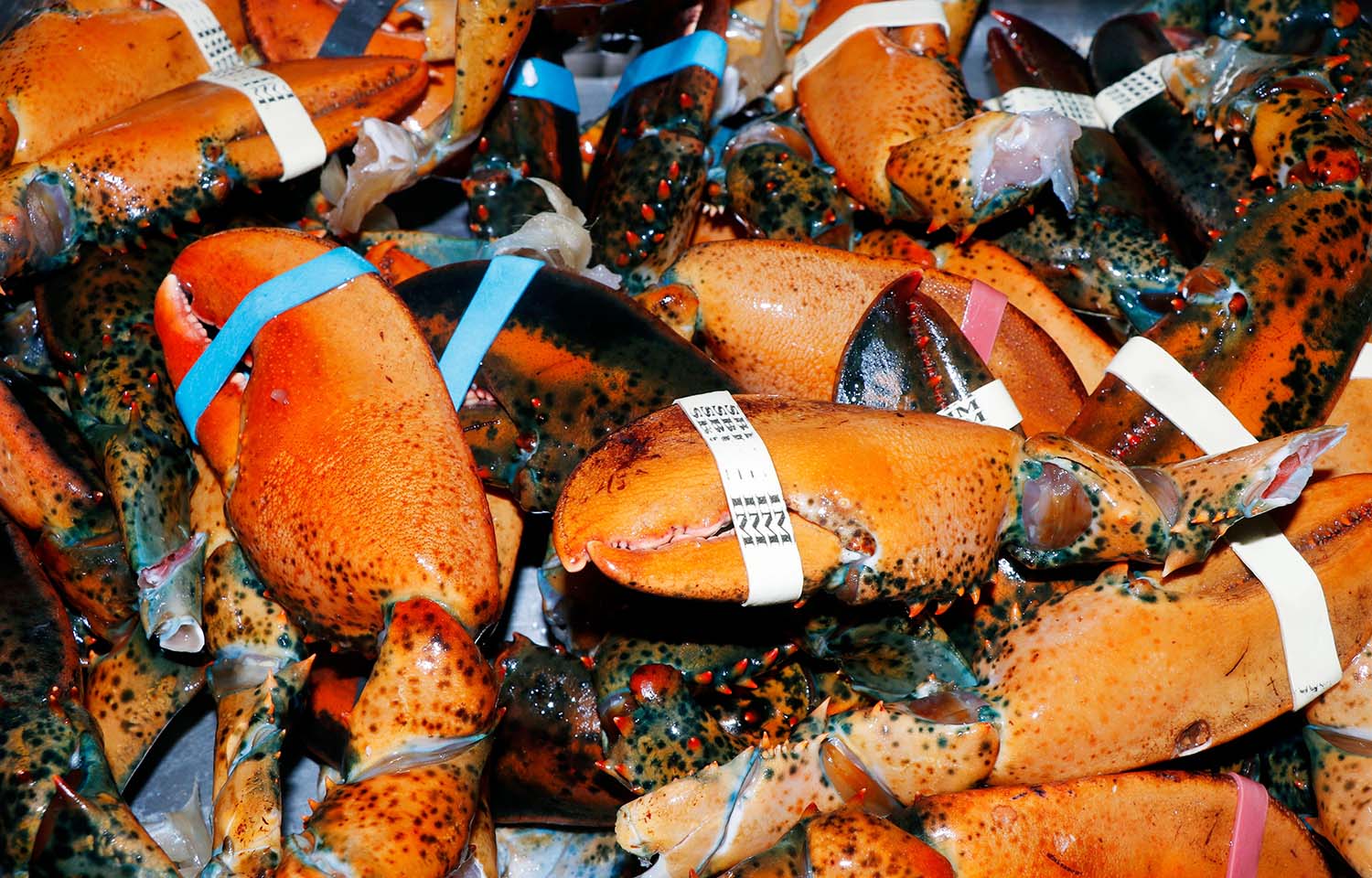
Researchers at the University of Maine (UMaine) are working on a project to turn discarded lobster shells into golf tees, using ground-up shell particles from Richmond, Maine, U.S.A.-based lobster-processing company Shucks Maine Lobster.
UMaine Professor of Chemical Engineering David Neivandt leads the project, working with a team of student researchers and faculty. According to a university release, the project is part of a decades-long study into turning underutilized byproducts from Maine’s lobster industry into new products that also promote sustainability.
According to UMaine, an estimated 50,000 tons of lobster shells are generated per year, and processors are left with disposal fees or large volumes to discard themselves.
For Shucks Maine Lobster, sending the shells to UMaine allows researchers to dry, break down, ground, and sift the product into a powder for production, giving new life to an otherwise unused byproduct. Golf tees are often composed of wood or plastic, with an estimated 1 billion wooden tees discarded annually, UMaine said. Plastic tees that are discarded never break down and remain on courses, possibly consumed by wildlife or posing a threat to maintenance equipment.
Researchers countered this issue by producing the lobster shell tee, which breaks down in 30 days. As the tee decomposes, minerals and other nutrients that naturally occur in lobster shells are released into the soil.
During the testing process, the team of researchers spent years ensuring the lobster-shell tees could withstand the same pressure a wooden or plastic tee, and several rounds of improvements were finetuned before the tees were ready for deployment.
Old Town, Maine, U.S.A.-based Hidden Meadows Golf Course touted the strength and environmental sustainability of the tee to local media outlet News Center Maine, stating that the strength of the tee holds up and the positive impact of additional nutrients in the soil during and after decomposition is another benefit.
Neivandt said the tees are compositionally accurate and ready to be scaled in production. As it stands, researchers can produce about three to six tees an hour at a cost of around USD 0.05 to USD 0.35 (EUR 0.04 to USD 0.31) per tee.
