
NOAA Fisheries has awarded 14 new grants through its Scallop Research Set-Aside Program.
The program was set up by the New England Fishery Management Council in 1999 and carves out part of the fishery’s landings to boats to carry out research projects.
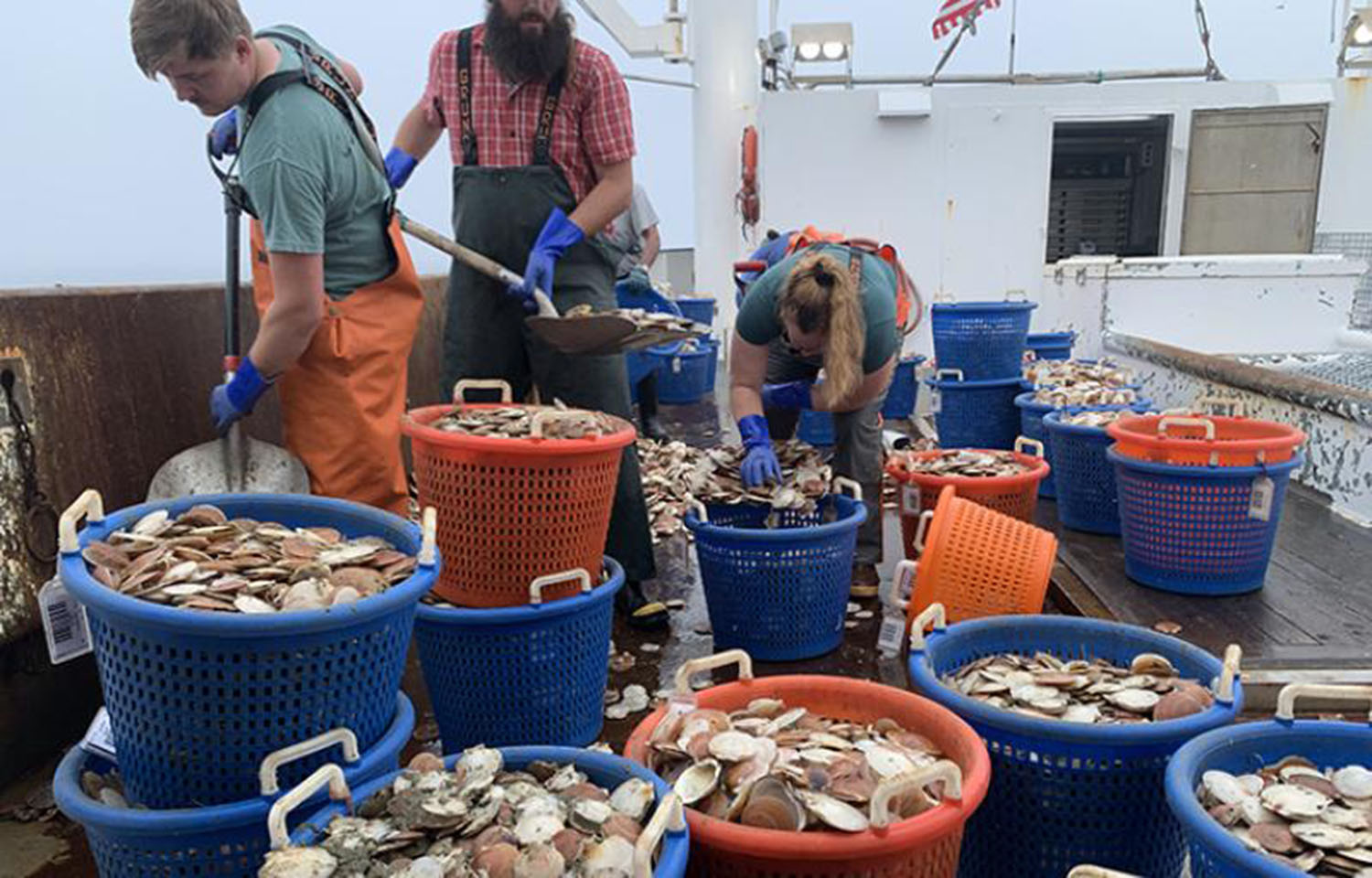
“Instead of awarding federal funds, this unique program sets aside a portion of scallops that would otherwise be available for commercial harvest,” NOAA Fisheries said. “Those pounds are awarded to researchers who then work with the fishing industry to both conduct their research and harvest the scallops to fund the work.”
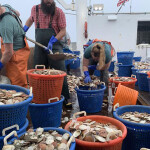
The quota awards function as a financial incentive for boats to participate in the research; instead of getting paid directly, fishers get access to quota that will allow them to harvest more and make more money. This year, NOAA Fisheries is giving out 1.5 million pounds of Atlantic sea scallops as part of its program, which based on its estimate of a USD 16 (EUR 14.30) per pound price, should generate more than USD 25 million (EUR 22.3 million). Of that total, USD 6 million (EUR 5.3 million) will go to supporting research, while the remaining USD 19 million (EUR 17 million) will go directly to the harvesters.
The projects this year include enhancements to existing scallop surveys, such as expanding coverage of Georges Bank, using AI-enhanced processing on survey imagery, and supporting data collection and co-management of the scallop population.
Most of the grants are worth over USD 1 million (EUR 892,000).
The Cape Cod Fishermen’s Alliance is being granted a total budget of just under USD 3 million (EUR 2.7 million), 62,555 pounds of quota in 2026, and 125,217 pounds of quota in 2027 to design and test dynamic co-management to protect scallop seed and maximize yield. The Coonamessett Farm Foundation is also being awarded USD 3 million for its seasonal survey on the eastern part of Georges Bank, along with 92,402 pounds of quota in 2026 and 95,118 pounds in 2027.
The University of New Hampshire will receive USD 3.07 million (EUR 2.74 million), along with quota in 2026, 2027, and 2028, for a study on recruitment enhancement feasibility in the U.S. Atlantic sea scallop fishery.
Other grants include USD 2.6 million (EUR 2.3 million) and quota in 2026 and 2027 to the Woods Hole Oceanographic Institute (WHOI), which will work to develop an early-warning system to forecast sea scallop mortality risk caused by thermal stress. WHOI was also issued a USD 2 million (EUR 1.8 million) grant to combine biology, ecology, and physics to predict recruitment of Atlantic sea scallops.
The Massachusetts Dartmouth School for Marine Science and Technology (SMAST) was awarded grants for three separate programs: targeting the effects of food availability on temperature tolerance for sea scallops in their early lives, extensions of the Georges Bank Drop Camera survey, and a study on the “spatiotemporal variability” of scallop shell height to meat weight relationships, and what environmental factors influence that.
“This project will quantify variability in scallop shell height-meat weight relationships over space and time and identify environmental drivers of that variability,” SMAST said. “These relationships are used to convert survey abundance to biomass, so small changes can substantially affect stock assessments and fishery value.”
Other studies include Commercial Fisheries Research Foundation studies on sustaining and improving the research fleet approach in the fishery and sustaining ScallApp use for industry tracking of scallop health and reproduction, as well as four Virginia Institute of Marine Science studies on AI-enhanced processing of HabCam imagery to improve scallop surveys, monitoring environmental conditions and sea scallop mortality in the Elephant Trunk region, assisting scallop management decision processes with a “GIS” tool, and assessing the viability of spat collection in the southern portion of the sea scallop resource.
“The program is a model of innovation,” NOAA said. “It funds essential research without using federal dollars and builds strong partnerships between scientists and the fishing industry.”
