


Russia’s Federal Fisheries Agency (Rosrybolovstvo) announced its investment quota program is now fully operational.
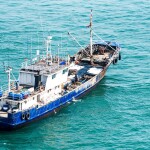
Ilya Shestakov, the head of Rosrybolovstvo, announced the program was fully operational at the Eastern Economic Forum, according to a release from the agency. Despite “restrictions,” Rosrybolovstvo said 58 vessels have already been built under the program, 64 more are under construction, and 30 fish processing plants have been built.
"This program is undoubtedly very important, and it has received the support of Russian President Vladimir Putin,” Shestakov said. “It took time to get it up and running, due to COVID-19 restrictions and then sanctions. But now the program is operating at full capacity.”
Russia has been touting positive results in its investment quotas program in 2026, despite issues early on in the program. The program got its start in 2018, but quickly ran up against issues as delays at Russian shipyards which were compounded by Covid-19 quickly stacked up. Russia’s invasion of Ukraine and global sanctions on the country added to the delays, and in 2024 Russia proposed extending a deadline for vessels to be built as shipbuilding delays continued.
Russia originally projected 106 vessels would be completed by the end of 2024, but those delays have resulted in just over half of that being completed as of 2026.
Another vessel was recently completed, according to Rosrybolovstvo. The longliner Gandvik-3, built under the program, launched from St. Petersburg, and will be operated by fishing company Virma to catch cod, haddock, halibut, and wolffish.
Despite the slower progress than projected, Shestakov said the currently completed vessels and processing plants have already had a material impact on the country’s seafood industry, allowing it to utilize more of its catch and shift from raw-materials toward advanced processing for products like pollock fillets.
"We have moved away from a raw materials-based fishing business model to a model where we can process our products 100 percent,” Shestakov said.
The ability for Russia to create more whole fish, fillets, surimi, and other products also gives it more flexibility for export markets, he said.
"Diversification is also very important for us, because preferences in both export and domestic markets change periodically. It's important to assess production and be able to move in both directions,” Shestakov said.
Russia recently released a Strategy for the Socioeconomic Development of the Far Eastern Federal District which also focuses on increasing the depth of processing of aquatic bioresources and more aquaculture facilities, fishnews reported.
