






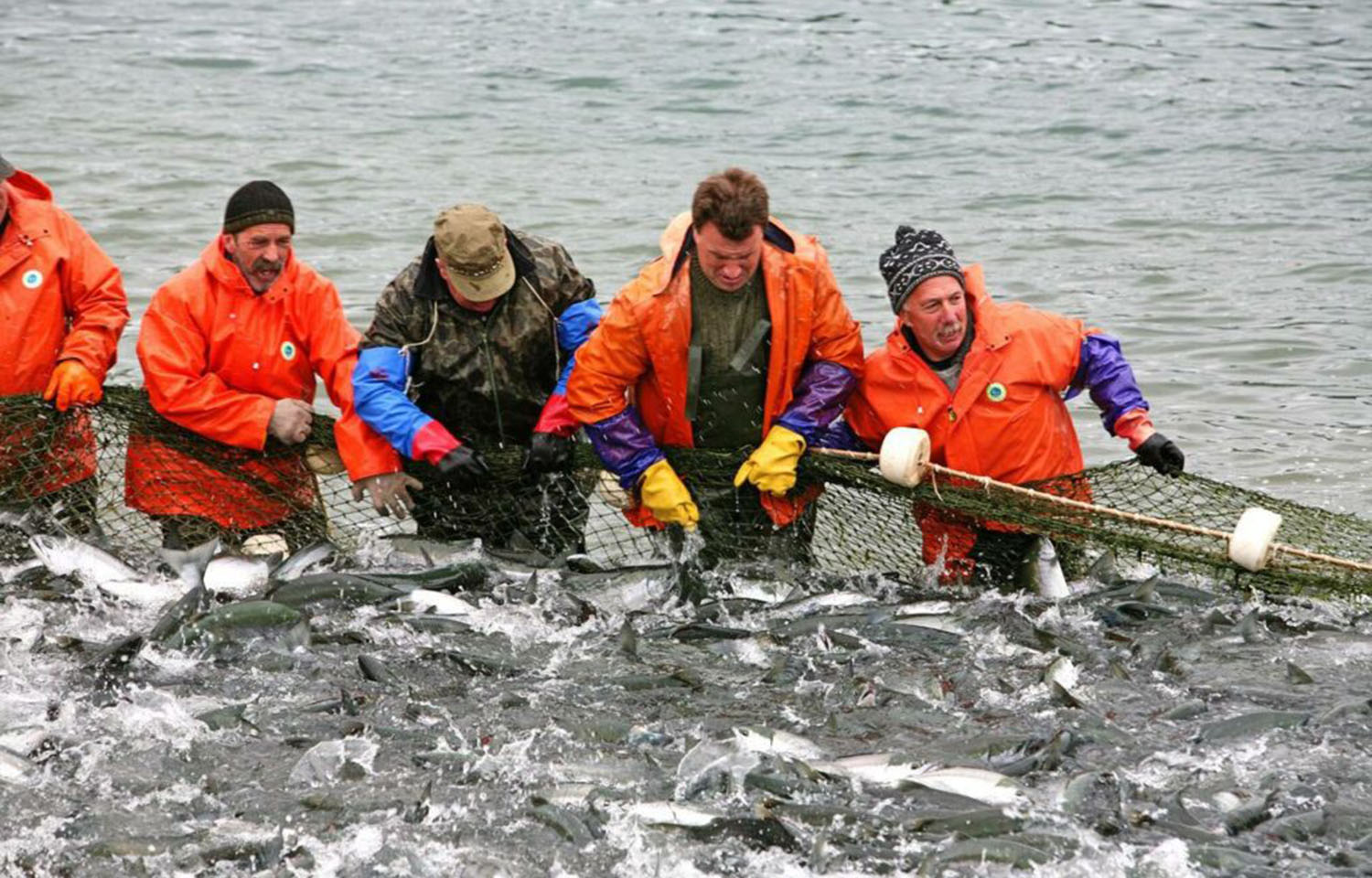
Statistics posted by the Russian Federal Fisheries Agency (Rosrybolovstvo) are forecasting a lower salmon catch in the country’s Far East year over year, as the beginning of the fishing season has gotten off to a slow start.
Russian salmon fishers in the Far East are predicted to catch 320,000 metric tons (MT) of salmon based on initial forecasts from VNIRO – the All-Russian Research Institute of Fisheries and Oceanography. That total would be down from the 490,000 MT caught in 2023 – a year in which VNIRO forecasted a potential catch of 609,000 MT.
According to Rosrybolovstvo, as of 27 June, salmon fishers had caught 2,440 MT of Pacific salmon in the Far East – with 1,800 MT of that total coming from Kamchatka – marking a slower pace than in 2023.
“The beginning of the fishing season this year is not as intense in terms of fish arrivals as in 2023,” Rosrybolovstvo said.
Climatic and hydrological conditions are largely to blame for the slower start.
"Our science says that for now, this is only a delay in approaches; VNIRO research, which is conducted after the salmon have started to spawn, will help to clarify the forecasts,” Rosrybolovstvo Head Ilya Shestakov said. “It is important to coordinate the work to ensure sustainable fishing in order to develop the resource as efficiently as possible with a priority on optimal filling of spawning grounds.”
Shestakov also met with Kamchatka Krai Governor Vladimir Solodov in June to discuss issues related to the region’s fishing industry, with an emphasis on the salmon fishery, Rosrybolovstvo said.
“It is important to ensure that the fishing season, although it will not be as record-breaking as in 2023, is coordinated and without problems,” Shestakov said.
Kamchatka produces more seafood products than any other region of Russia. Last year, more than 30 percent of Russia’s total seafood catch came from Kamchatka, which was, in part, thanks to the region catching 80 percent of the country’s salmon.
While the forecast projects a lower catch in 2024 than in 2023, Shestakov said an increase in fishing efforts will offset potential shortfalls.
"Of course, there will be enough fish to meet the needs of the domestic market and for export,” he said.
The domestic seafood market is a focus of another program that the Russian government and the government of Kamchatka Krai have jointly carried out. Rosrybolovstvo said the Affordable Fish project is being implemented by the administrative region, expanding the range and volume of fish products sold with a more affordable price – with both retailers and producers participating, according to Solodov.
"All this allows us to offer citizens affordable fish, and its availability will expand. The fight against poaching will give confidence in the quality and safety of products," Solodov said.
Shestakov also said the participation of regions like Kamchatka is important in its push to get Russians to purchase and consume more seafood.
"The task is large-scale; the participation of regions, businesses, and the public is necessary,” Shestakov said. “Participation of Kamchatka in the national program for promoting fish products is of great importance; best practices and production quality benchmarks are needed.”
The new initiative in Kamchatka follows a 2023 order by Russian President Vladimir Putin to increase the domestic production of fish products. After that order, Russia implemented a Far Eastern Pollock promotion program in 2023, which Association of Pollock Harvesters President Alexey Buglak said helped contribute to growing demand for pollock.
That program, as well as the new program in Kamchatka, are just steps along the path of increasing consumption of domestic seafood in the nation, Shestakov said.
"We hope that fish industry companies will join this work,” Shestakov said. “We will develop and implement a powerful program, thanks to which we will be able to popularize domestic fish, form a culture of consumption in the country, and increase demand.”
