

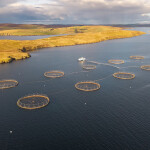

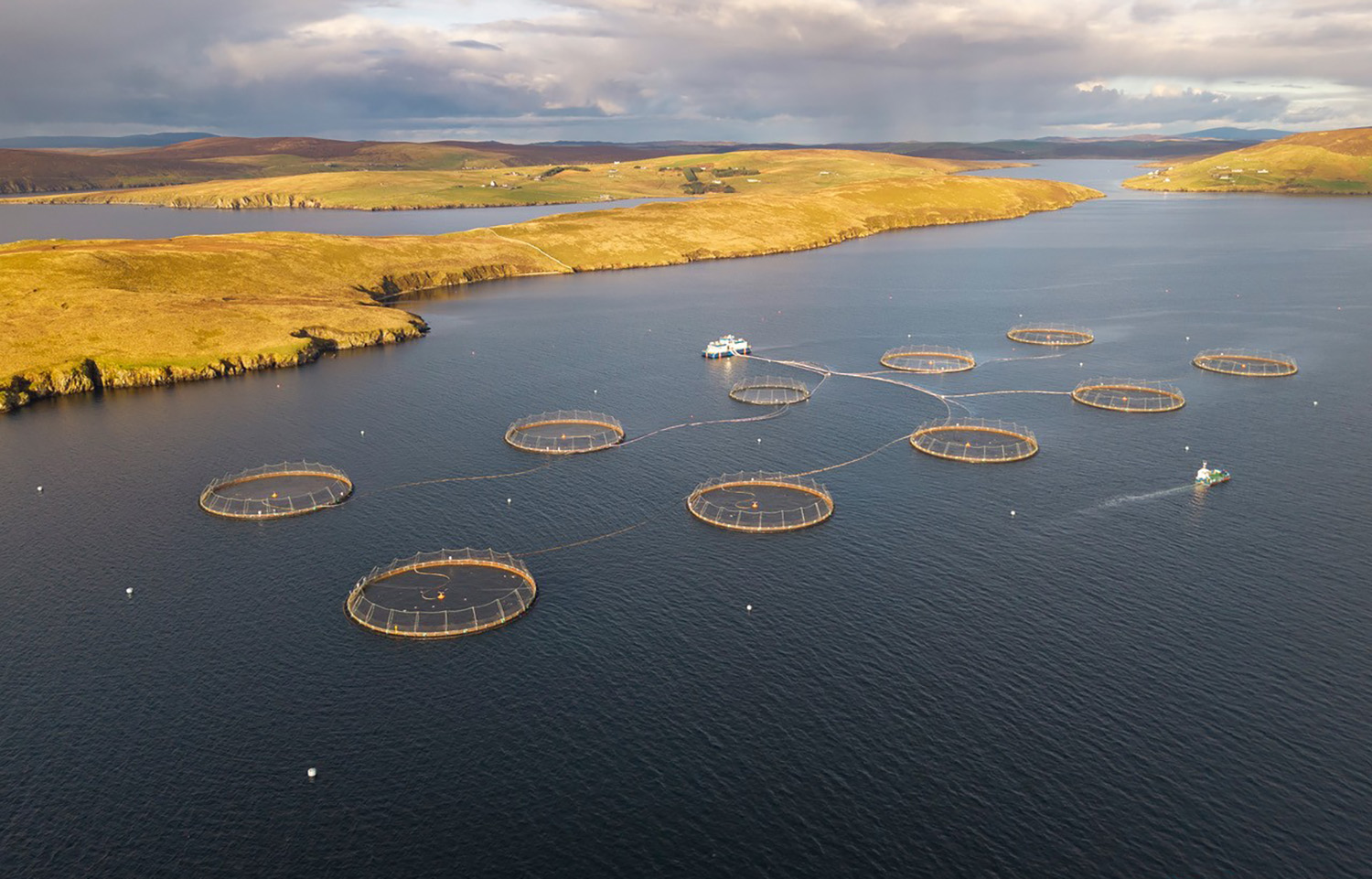
Stirling, Scotland-based aquaculture firm Scottish Sea Farms has officially opened its Billy Baa salmon farm off the west coast of the Shetland Islands, marking the start of operations at what the company described as “Scotland’s biggest salmon farm.”
The firm, which is jointly owned by Norwegian salmon-farming companies SalMar and Lerøy Seafood Group, confirmed the GBP 7.5 million (USD 10 million, EUR 9 million) site has consent for a maximum biomass of 4,091 metric tons (MT) and forms part of the company’s wider strategy to concentrate production at larger sites in locations offering deeper water and stronger currents.
The marine site was opened by Scottish Member of Parliament Hannah Mary Goodlad, who represents Shetland and said the project was a great example of the islands’ “unique ability to attract key, high-value investment.”
Billy Baa has nine 160-meter pens – the first of this size to be installed in Shetland – alongside one 120-meter pen.
Supplied by the Inverness-based Gael Force Group, the SeaQurePen 500 units are designed to withstand exposed conditions around the islands. The site has an average water depth of 45 meters, making it one of the deepest in Scottish Sea Farms’ Shetland portfolio.
The farm was stocked in September, with fish transferred from a nursery site at an average weight of 1 kilogram. Farm Manager Peter Muir said the company expects to harvest its first fish from the site in October or November of next year.
“Even though we have more fish on site, the amount of space they have to swim around in is still extensive,” he said. “The fish are looking really good.”
Muir, who was involved in designing the farm’s infrastructure, said the larger pens also provide a more practical and safer working environment for staff, with wider walkways and heavier-duty structures.
Another key part of the development is a 500-MT steel feed barge supplied by ScaleAQ in Scotland. It is the largest barge in Scottish Sea Farms’ fleet to date and incorporates a Fjord Maritime hybrid power system, combining a diesel generator with battery storage to provide a continuous power supply.
Billy Baa also has a 10-line feeding system, allowing all pens to be fed simultaneously. Muir said this should make site management more efficient, particularly when feeding needs to be completed quickly ahead of poor weather or planned treatments.
Eight full-time roles have been created at the site.
Operations at the new site should help Scotland as a whole continue on its growth trajectory in terms of nationwide salmon production. Recent data from the Scottish government found that Atlantic salmon production increased 3 percent, or 5,836 metric tons (MT), in 2025 to 197,836 MT.
Salmon Scotland CEO Tavish Scott said the figures served as “another vote of confidence” for Scottish salmon, with the bump in production reflecting farmers’ response to strong demand in domestic and export markets.
The farm would also help Scottish Sea Farms maintain its own volume growth trajectory. In a recently released Q3 2026 report, SalMar CEO Frode Arntsen said Scottish Sea Farms “delivered a significant increase in volume” during the three-month period and expects SalMar’s share of the joint venture’s total 2027 harvest to total 45,000 gutted weight tons.
