


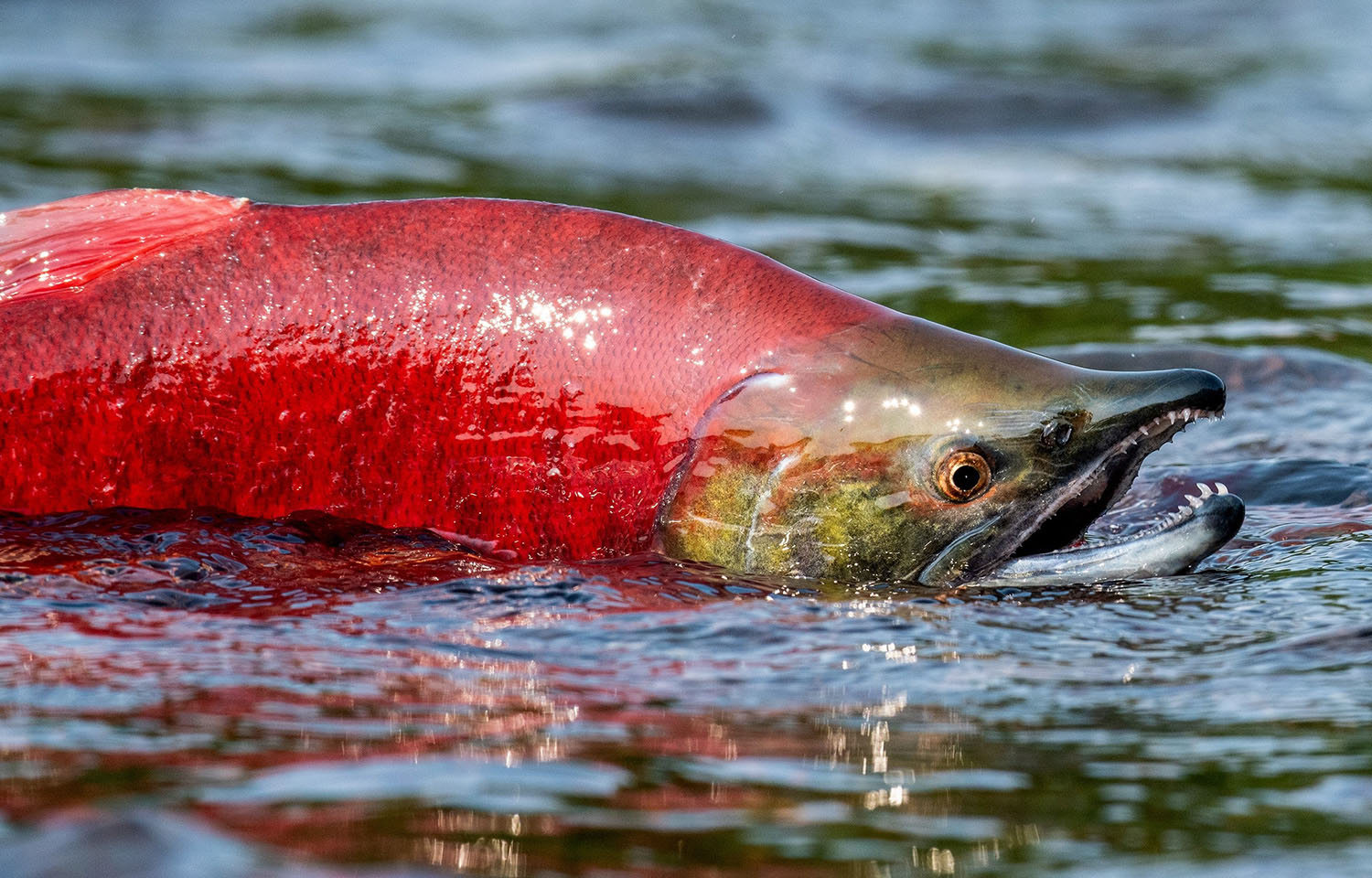
The Alaska Department of Fish and Game (ADF&G) is forecasting an excellent sockeye salmon season in the Upper Cook Inlet this year, with an expected run of 7.6 million fish and available harvest of 5.6 million fish.
Though higher than average, that would still be notably lower than the surge of sockeye that returned in the 2025 run. The state estimated a 2025 run of 11.5 million sockeye, 4.6 million more than the preseason forecast of 6.9 million fish. According to ADF&G, commercial fishers were able to harvest 3.4 million sockeye in 2025 – 60 percent more than the average annual harvest over the last 20 years.
According to the ADG&F’s aggregated 10-year forecast runs, there is an 80 percent probability that the 2026 run will fall between 5 million and 10.1 million fish.
Last year’s estimated total run was 8 million to the Kenai River; 1.6 million to the Kasilof River; 460,000 to the Susitna River; and 80,000 to Fish Creek. The 2025 run forecast was 4.1 million to the Kenai River; 1.2 million to the Kasilof River; and 105,000 to Fish Creek.
In 2026, the Kenai River sockeye salmon forecast is approximately 4.4 million fish, which is 12 percent higher than the historical average run since 1986 and 23 percent more than the recent 10-year average run.
The Kasilof River sockeye salmon run forecast is approximately 1.4 million fish, which is 54 percent greater than the historical average run and 43 percent greater than the recent 10-year average run.
Approximately 489,400 sockeye salmon are forecast to return to the Susitna River and 100,000 to Fish Creek in 2026. In the Susitna River, the forecast is 24 percent above the historical average since 2006 and 35 percent greater than the recent 10-year average run. However, in Fish Creek, the forecast is 9 percent lower than the long-term average run size of 110,000 fish.
