



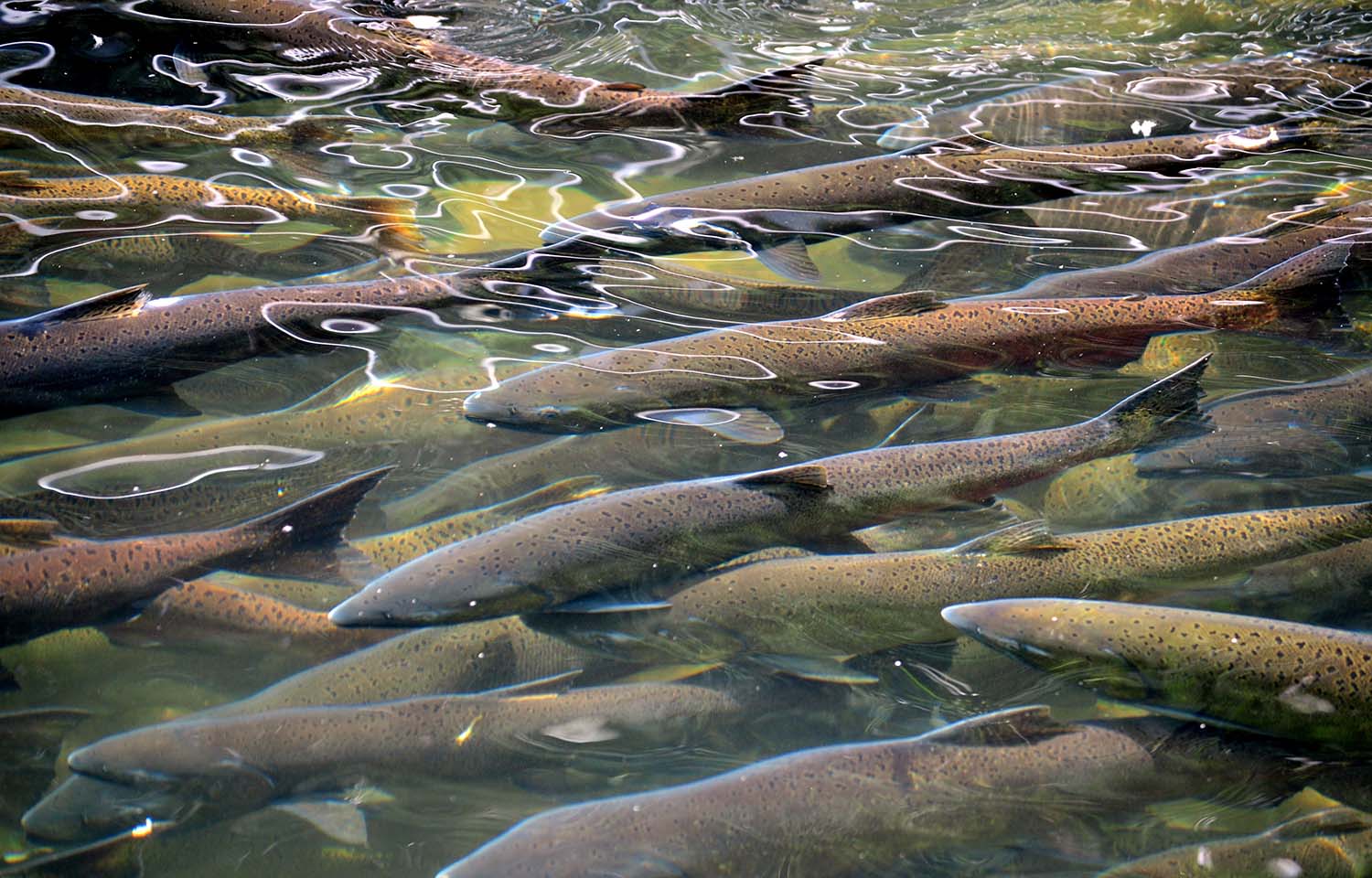
The Alaska Department of Fish and Game (ADF&G) has projected a decreased commercial salmon harvest in 2026 after an above-average harvest in 2025.
A draft of the report was published earlier in April, but the final draft was published 21 April.
ADF&G forecasts for the 2026 commercial salmon harvest season include 56 million pink salmon, 49.7 million sockeye, 17.2 million chum, and 2.4 million coho, which would total 125.5 million fish for the season. This season’s prediction is 71.9 million less salmon commercially harvested compared to last year.
The lesser commercial harvest estimates are partly due to an “off year” for pink salmon and, if it comes to fruition, would be lower than annual totals in all but four years since 2000, the Alaska Beacon reported.
ADF&G reported that pink salmon run in two-year life cycles, and 2025 was a large harvest year for the species.
“There is a great deal of uncertainty in forecasting pink salmon returns due to their fixed two-year life history and, therefore, limited information to serve as the basis for predictions (i.e., no siblings returning during prior years),” ADF&G said in the release. “As a result, pink salmon harvest forecasts are generally based on harvests from previous brood years.”
According to ADF&G, salmon harvests for all species totaled approximately 197.4 million fish in 2025 and comprised 52.7 million sockeye, 120 million pink, 21.7 million chum, 2.7 million coho, and 201,000 Chinook salmon.
ADF&G reported that pink salmon harvests were “well distributed” across Southeast, Central, and Westward regions of Alaska, while Bristol Bay had the highest concentration of sockeye salmon harvests.
Also affecting salmon runs, according to a recent report by the Juneau Independent, are invasive northern pike that have risen in South-Central Alaskan rivers and lakes as water temperatures rise and have been recorded eating juvenile salmon and other native species. The study was conducted in the Deshka River, which feeds into the Cook Inlet. The publication also reported that Chinook and coho salmon in the area are most affected due to fish thriving in colder water.
“Fish, which are cold-blooded animals, have varying physiological responses to heat,” UAF Fisheries Biologist and study co-author Erik Schoen told the Juneau Independent. “Compared to salmon, which get sluggish in warm temperatures, northern pike thrive and become speedier swimmers. If it keeps getting warmer, they get much better at catching salmon. They’re amazing ambush predators.”
