

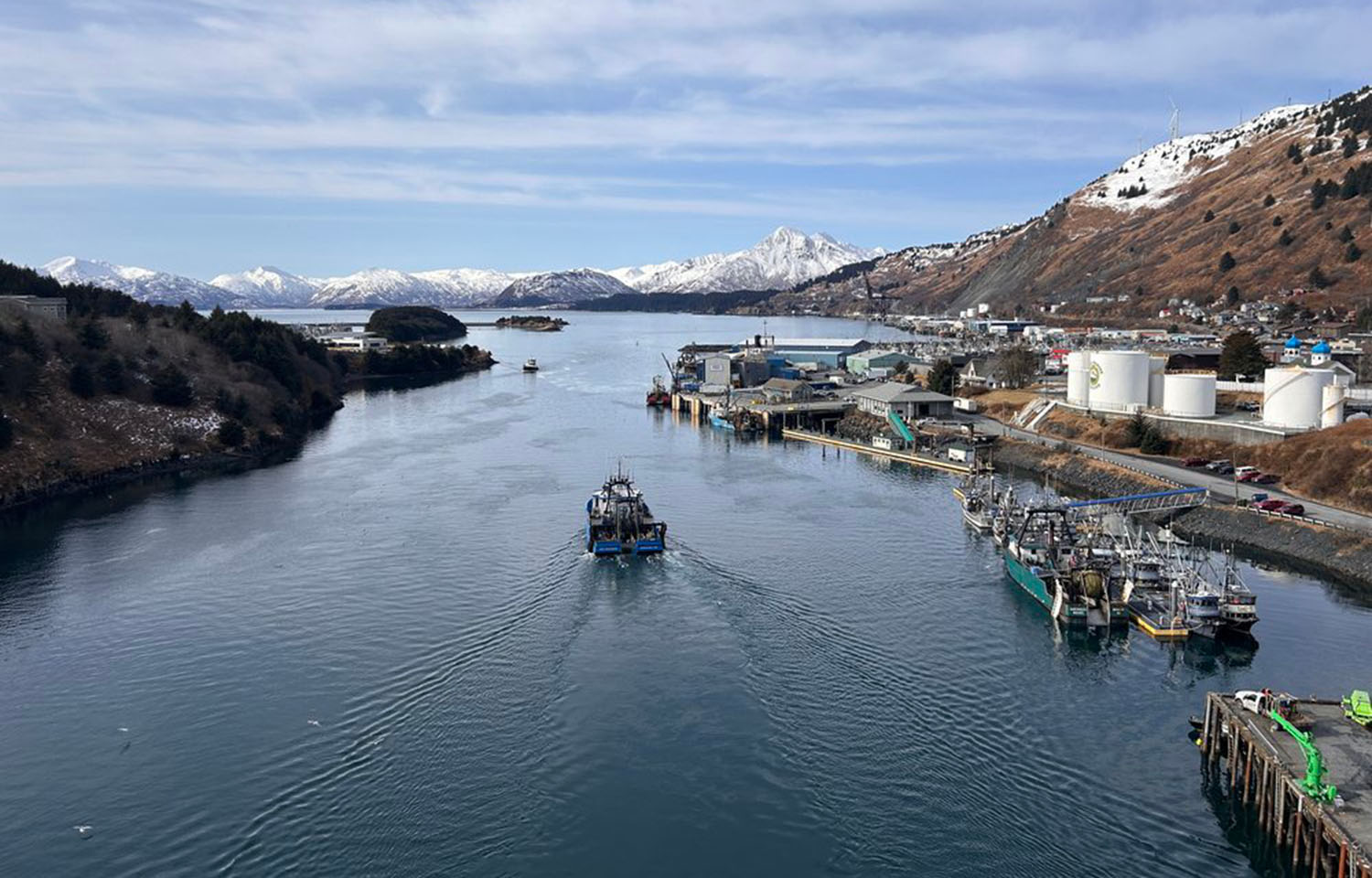
Alaska’s “A” pollock season kicked off on 20 January, and the Alaska Pollock Fishery Alliance (APFA) is calling it a high stakes season for the economy of the communities it supports.
Alaska’s pollock fishery is one of the largest in the world, and last year it caught 99.9 percent of its 1,263,580 metric ton (MT) quota. In 2025, Alaska’s federal fisheries in the Bering Sea will be able to access 1.375 million MT, a 6 percent hike over 2024, and fisheries in the Gulf of Alaska will be allowed to target 171,000 MT.
The fishery’s “A” season will run through April, and represents some of the most efficient fishing for a lot of companies targeting the species. Its start this year comes after 2024 was marked by a number of challenges, which compounded on multiple years of losses that NOAA Fisheries estimates cost the industry USD 1.8 billion (EUR 1.7 billion) in 2022 and 2023 due to declining profitability.
The APFA said “A” season will be make-or-break time for Unalaska, Kodiak, and other fishing communities, determining “whether they thrive or stare down an uncertain future.”
Alaska’s pollock fishery faced regulatory challenges in 2024, and had to fight off a proposed ban of all trawling in Prince William Sound the industry said would hurt fishermen who couldn’t afford to keep fishing if it went through. The fight over trawling was also just after the industry was dealt a major blow when a sudden unusual bycatch incident forced the state to shut down the Central Regulatory Area of the Gulf of Alaska (CGOA) pollock fishery, leaving 50,000 MT of quota uncaught.
“The Central Gulf of Alaska pollock fishery was cut short last fall which had a significant economic impact on Kodiak. Processors, vessels, and support businesses are counting on a successful ‘A’ season pollock fishery to survive,” Alaska Groundfish Data Bank Executive Director Julie Bonney said.
The wider Alaskan seafood industry has been facing an uncertain future after multiple years of crab fishing closures and a down year for the salmon fishery. Major seafood processing company Trident Seafoods was already planning a pullback from its operations in Alaska and sold off a number of its facilities throughout the year.
Community Development Association CEO Luke Fanning acknowledged in a press release the industry “has faced considerable setbacks in recent years” and a successful “A” season, and pollock fishery, will be key in 2025.
“The success of the pollock fishery is not only critically important for the jobs it creates, the families it supports, and the communities it sustains, but also for the infrastructure and markets it provides for other fisheries like crab, pacific cod and sablefish,” Fanning said.
Alaskan communities secure portions of the pollock harvest in the Bering Sea through the Community Development Quota program, which helps support jobs and create revenue for small fishing vessels in the state. According to the APFA 30 percent of the pollock industry in the Bering Sea is owned by CDQ groups, and the economic health of the communities it supports is tied to a successful “A” season.
“This fishery is and economic engine for the CDQ program,” Fanning said. “Without it, the level of resources going into Western Alaska would be greatly reduced, with no clear replacement.”
As the fishery sets off, it does so after a year marked by big shifts in product types. In 2024, according to data shared during the 2025 Global Seafood Market Conference, the industry produced 12.6 percent less surimi, 23.4 percent less deep-skinned fillets, and 27.4 percent more pin-bone out fillets.
High Liner CEO Paul Jewer said during the panel that while there was a shift in production, the product’s stability still makes it a safe bet.
“That should present some growth opportunities for pollock as we go forward,” he said.
