


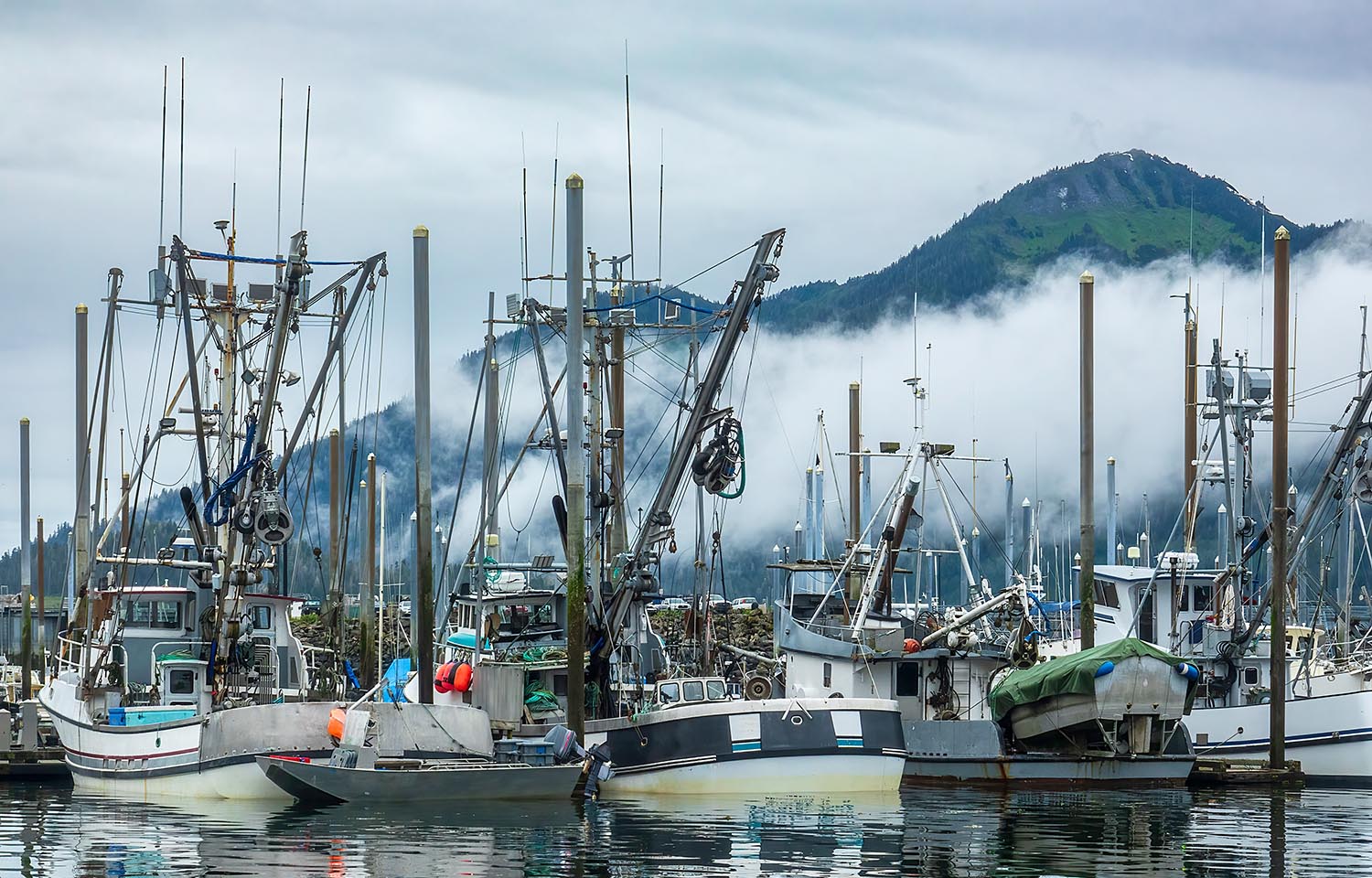
A report from Alaska’s Department of Labor and Workforce Development shows the state’s commercial fishing workforce is continuing to shrink, with the number of fishers working in the sector reaching a record low in 2024.
The state report found that the commercial fishing sector lost 443 jobs in 2024, a 7.6 percent drop from 2023. On average, there were 5,393 people employed in harvesting fish in Alaska per month in 2024, down from a high of 8,501 in 2015.
The results continue a trend for Alaska, which has bled fishing jobs for five consecutive years.
“Seafood harvesting has lost more than one-third of its total jobs in a decade, with fishing employment down every year of the last 10 except for 2019. The summer peak has fallen about 30 percent, from 24,600 jobs in July 2014 to 17,400 in July 2024,” Alaska state economist Joshua Warren noted in the report.
Rising costs, downward pressure on prices from foreign competition, and the seafood sector’s instability have all contributed to the declining number of jobs.
“Alaska seafood harvesters continue to grapple with unpredictable runs, the volatility of climate change, seafood processing plant closures and sales, and disrupted fisheries,” Warren said. “Some fisheries have closed earlier than usual in recent years or entirely, a list that varies from year to year. For example, the Bering Sea crab fisheries closed in 2022 and 2023 after stocks crashed 90 percent and then reopened in 2024 but with greatly reduced catch limits.”
Alaska’s seafood sector has floundered since the Covid-19 pandemic.
An economic snapshot released by NOAA Fisheries in 2024 found that the state’s commercial seafood industry had seen its profitability decline 50 percent from 2022 to 2023, resulting in a USD 1.8 billion (EUR 1.7 billion) loss. NOAA economists listed several contributing factors to the economic upheaval, including increased competition from cheaper Russian pollock, trade barriers, a strengthening U.S. dollar, and inflation. The state has also been impacted by multiple seafood processing facility closures and the shuttering of some commercial fisheries for sustainability reasons.
“The closures, sales, and leases of processing facilities in 2024 left many fishermen, processing workers, and communities scrambling,” the snapshot noted. “Numerous fishermen across the region had to attempt to find new buyers for their fish, causing tremendous distress. Plant closures displaced processing workers and left residents of fishing communities unemployed or underemployed.”
Strong job growth in November and December 2024 were a source for some optimism, with Warren suggesting that the state could see some job recovery in 2025. However, U.S. President Donald Trump’s ongoing efforts to renegotiate global trade deals – which has involved a heavy hand in raising tariffs on foreign goods – is a major unknown, with Warren point out that “they will likely put additional pressure on prices as U.S. harvesters compete with countries that have more favorable trade deals.”
