



The U.S. federal government, the state of Alaska, and the Association of Village Council Presidents (AVCP) have filed briefs with the U.S. Supreme Court in their ongoing battle over a subsistence fishing system which prioritizes rural Alaskans.
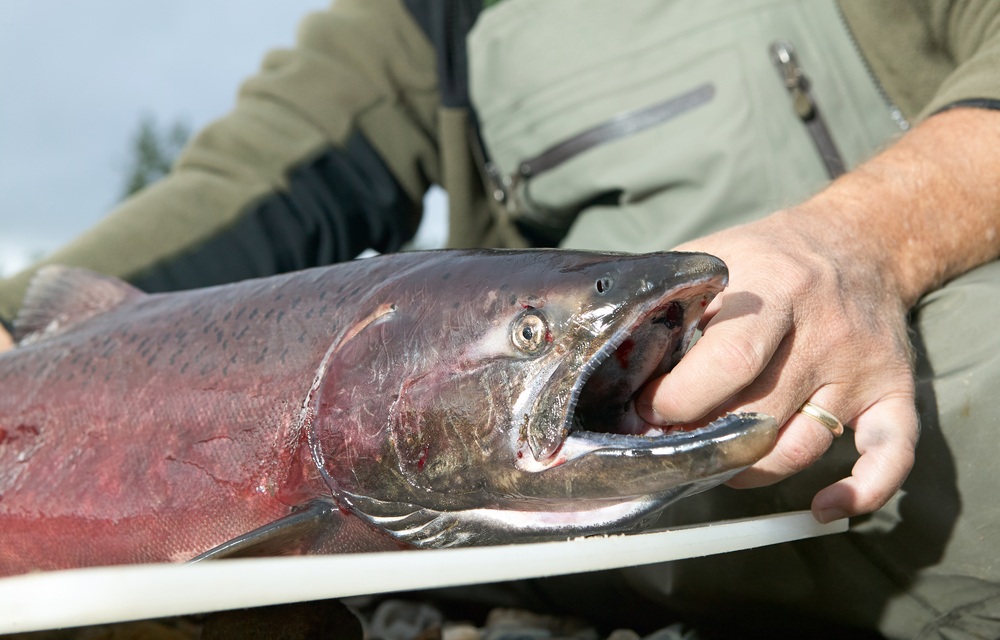
“Subsistence is not just a word on paper. It is the heart of our communities, families, elders, and children,” AVCP CEO Vivian Korthuis said in a release. “The state’s continued attacks on these rights are a direct challenge to our traditions and values. Every salmon counts, and we hope that the United States Supreme Court will affirm what we already know to be true. We will continue to advocate for our people, our waters, and Our Way of Life for as long as it takes.”
The dispute between the state and federal government lies in the Alaska National Interest Lands Conservation Act (ANILCA), a federal law that requires preferential treatment for rural Alaskans in setting subsistence fishing regulations in Alaska. However, the law only applies to federal lands, and the state government has opposed preferential treatment for rural Alaskans. The difference has created a two-tiered system in Alaska, where rural residents receive preferential treatment when subsistence fishing on federal lands and waters but not on state lands and waters.
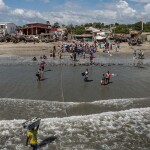
In 2021, the two governments issued conflicting emergency orders regarding fishing on the Kuskokwim River; the federal government closed fishing on the Kuskokwim River with the exception of rural subsistence fishers, while the state government said subsistence fishing was open to all eligible residents. In 2022, the administration of then-U.S. President Joe Biden sought an injunction to block the state’s orders, and in 2023, the state sued.
The courts, however, have sided with the federal government and Tribal groups – who also support preferential treatment for rural Alaskans – so far. In 2024, a district court ruled in favor of preferential treatment, and an appeals court upheld that ruling in August 2025.
Undeterred, the Alaskan government petitioned the Supreme Court to take up the case in September to rule on the meaning of the term “public lands.” In the state’s eyes, the term “public lands” in the ANILCA only applies to land, not to navigable waters in the state. If that were true, the state claims, the federal government would have no authority to regulate subsistence fishing along the Kuskokwim River.
The Ninth Circuit Court of Appeals has previously ruled that those navigable waters were in fact “public lands” in a 1995 case known as Katie John v. Norton. However, the state argues that that definition is at odds with Supreme Court precedent; in another case, Sturgeon v. Frost, the court ruled that navigable waters were not public lands.
“Getting this right is critical for Alaska. Federal mismanagement of Alaska’s fisheries was a key driver of Statehood nearly 70 years ago,” the state argued in its petition. “To preserve these resources, Alaska must comprehensively regulate its waters. But, the decision below deprives Alaska of this control, perpetuates a broken regulatory regime, and disregards the text that Congress enacted.”
Now, the state, the U.S. government, and Tribal groups have filed briefs with the Supreme Court as the justices decide whether to take up the case for review.
In its brief, the U.S. Department of Justice notes that courts have not take issue with the theoretical differences between the Katie John case and Sturgeon in the past, pointing out that the state of Alaska had claimed in an amicus brief in Sturgeon that the case had no implication on the Katie John precedent.
“Alaska now raises the same question it has twice before asked this Court to resolve. The Court should once again deny review,” the Department of Justice said. “The only relevant development since the two previous denials of certiorari is the Court’s decision in Sturgeon. But in Sturgeon itself, this Court noted that ANILCA’s ‘subsistence-fishing provisions’ were ‘not at issue,’ and that its decision ‘d[id] not disturb the [court of appeals’] holdings that the Park Service may regulate subsistence fishing on navigable waters.’”
Multiple Tribal groups – including AVCP, the Kuskokwim River Intertribal Fish Commission, Ahtna Tene Nené, Ahtna, Inc., and the Alaska Federation of Natives – also field a joint brief asking the Supreme Court to reject the petition.
“Subsistence is not just a legal right; it is Our Way of Life. Katie John has protected our community for many years. So far, every court has affirmed what we know to be true: that our subsistence rights are our legal rights,” Korthuis said after AVCP filed its brief. “The State of Alaska’s latest challenge at the Supreme Court level is a distraction from supporting our rights and traditions. We urge the United States Supreme Court to uphold these rights and reject any attempt by the State of Alaska to undermine them. AVCP continues to stand united with our allies to defend and protect Our Way of Life.”
According to the Supreme Court’s website, the briefs have been distributed for conference on 9 January.
