




The Atlantic States Marine Fisheries Commission (ASMFC) has chosen to cut the 2026 Atlantic menhaden quota by 20 percent for 2026, drawing criticism from the fishing industry and environmental groups alike.
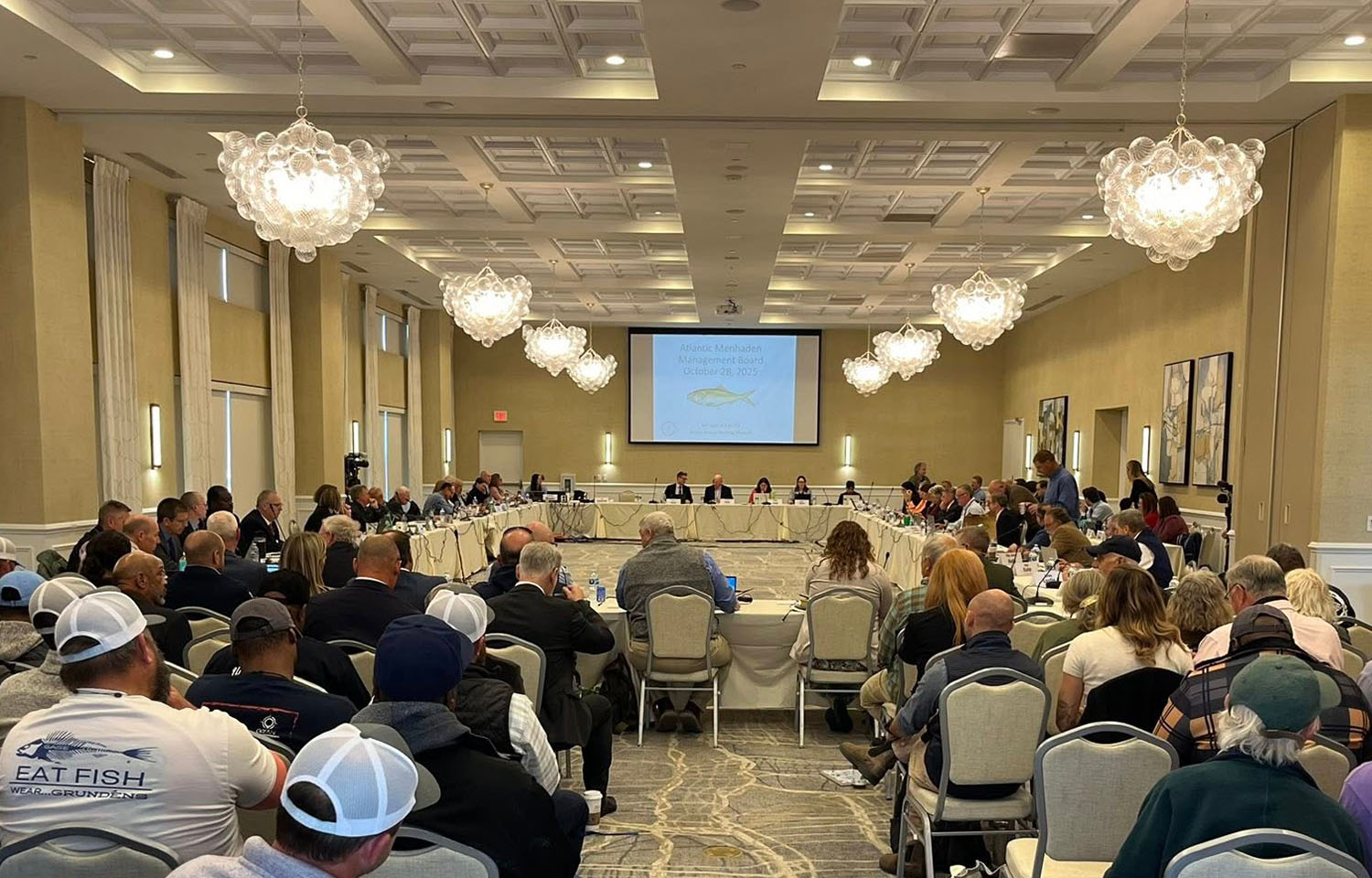
The ASMFC menhaden management board met on 28 October and decided to reduce the total allowable catch (TAC) for menhaden to 186,840 metric tons (MT), down 20 percent from the 233,550-MT quota the commission set for 2025. The reduction was based on a number of different factors, including ecological reference points (ERPs) that include interactions between fishing mortality rates and striped bass, as well as other predator biomass targets, and a lower estimated fecundity of menhaden.
With those factors in mind, the ASMFC set the new lower TAC, and reactions have been mixed from both the seafood industry and environmental groups pushing for big cuts to the menhaden fishery.
Fishing organizations like the Menhaden Fisheries Coalition have advocated for relatively light cuts to the stock.
Ahead of the meeting, the coalition said it supported a 15 percent precautionary reduction to the TAC, which it said would “ensure no chance of overfishing over the next three years.” The coalition has repeatedly pointed out that the ASMFC’s use of ERPs – a system it only recently moved to in 2020 – results in consistently more conservative management than previous single-species population models.
“Despite a lower estimate of menhaden fecundity, the stock status remains not overfished and overfishing is not occurring,” the coalition said.
The New England Fishermen’s Stewardship Association (NEFSA) said the cuts were steeper than needed, with Chair Dustin Delano saying there is a low risk of overfishing offered by even a 10 percent cut.
“I urged the Commission to avoid drastic cuts to the menhaden quota, Delano said. “Even this lesser 20 percent reduction will have troubling effects on working fishermen, bait suppliers, and the lobster and crab fisheries that depend on menhaden.”
Delano said the ERP model and the rapid swing in quota are undermining trust in the scientific process for setting TACs.
“That uncertainty should be a reason for caution, not overreaction,” he said. “The current management measures already keep the stock healthy and the risk of overfishing extremely low. Further sweeping cuts won’t help the resource, but they will hurt the communities that rely on it.”
Not all groups were disheartened by the amount the TAC was cut, though.
The Maine Lobstermen’s Association said the 20 percent cut was a vast improvement over the calls for 55 percent cuts and thanks members of fisheries relying on menhaden for speaking out.
“While any cut will still impact Maine’s lobster fishery, this decision recognizes the importance of menhaden as a critical local bait source and the need to keep Maine’s small-boat fleet working,” the MLA said.
Environmental groups, meanwhile, were pushing the commission for cuts as deep as 55 percent to the available quota – which would set the TAC at just over 105,000 MT.
“To protect menhaden’s role in the food web and meet science-based ERPs, fisheries regulators must follow the science and immediately cut the coastwide harvest by at least 50 percent while also beginning the process to give menhaden additional protections urgently needed in the Chesapeake Bay,” Chesapeake Bay Foundation Forage Campaign Manager Will Poston said in advance of the meeting.
The Theodore Roosevelt Conservation Partnership (TRCP) was also calling for cuts of over 50 percent to help rebuild the population of other species.
Both groups called the ASMFC’s 20 percent cut too small.
“The board’s decision to adopt only a 20 percent reduction in menhaden harvest, despite the science and input from ASMFC’s own scientists who highlighted the risks, makes it more challenging to achieve striped bass recovery by 2029,” TRCP Center for Fisheries Director Chris Macaluso said in a release. “This step falls short of fully advancing more than a decade of progress toward ecosystem-based management and undermines public trust in the process.”
Poston added that the cuts were “nothing more than a performative nod” to ecosystem-based management.
“This lack of meaningful action is not only risky for menhaden but also the many fisheries and small businesses that depend on a thriving ecosystem,” Poston said.
