






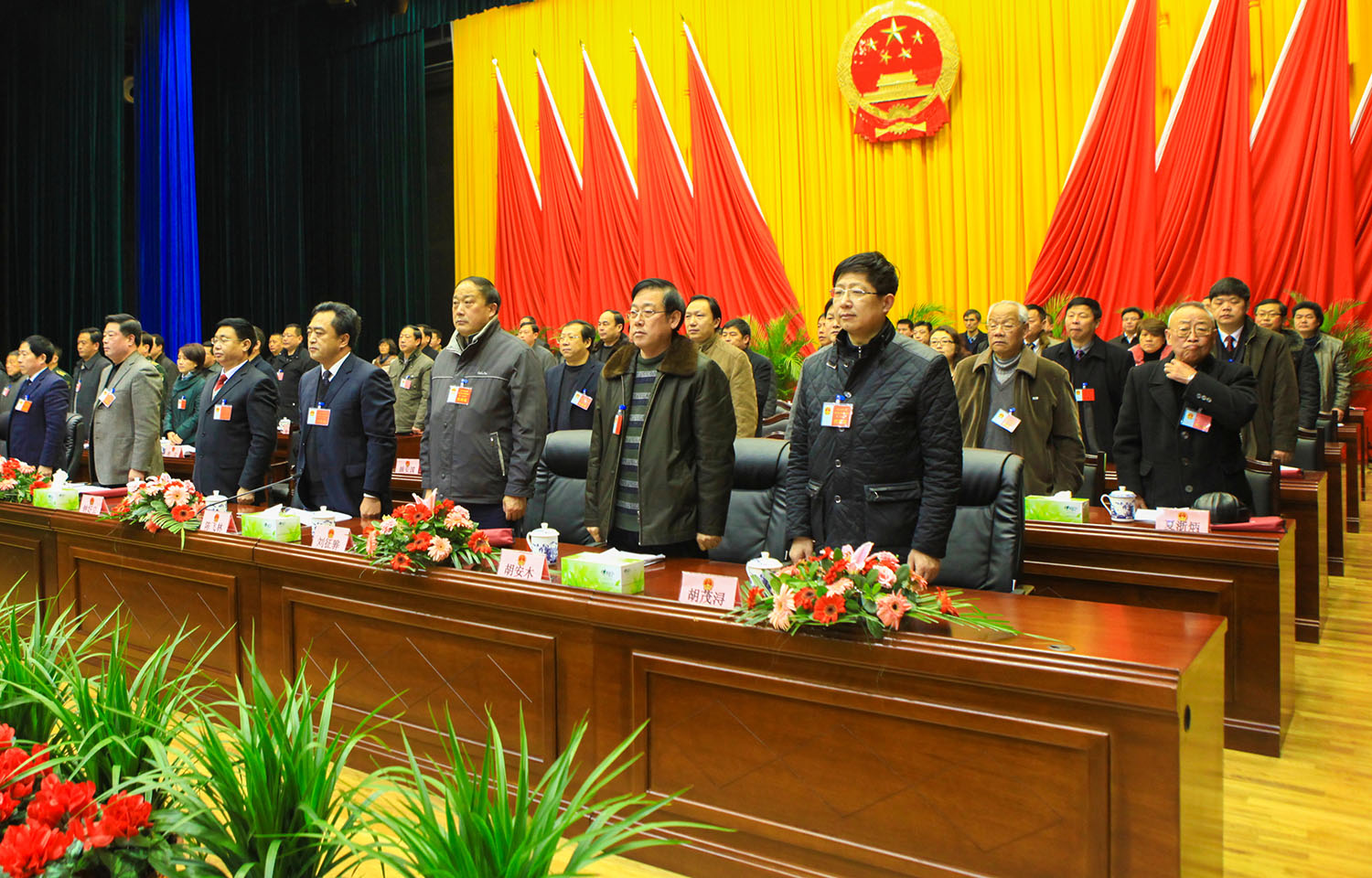
China’s seafood industry has the government’s full backing to expand, judging from comments made at China’s annual National People’s Congress.
In remarks at the annual National People’s Congress in Beijing on 5 March, Chinese Premier Li Qiang spoke of strengthening China’s food security, including continuing a policy of backing the country’s distant-water fishing sector, which the government supports with generous subsidies.
“We will support and expand our livestock and fishery production,” Li said.
Qiang said the government, led by Chinese General Secretary Xi Jinping, has set a target of 5 percent economic growth in 2024, which would be down from the 5.2 percent growth seen in 2023 but up from 3 percent in 2022.
“The foundation for China’s sustained economic recovery is not yet stable, with insufficient effective demand, overcapacity in some industries, weak social expectations, and still many risks and hidden dangers,” Li told delegates at the annual meeting of China’s rubber-stamp legislature, according to the Associated Press.
The country’s distant-water fishing sector is well represented at the National People's Congress, with delegates including Luen Thai Fishing Ventures Vice Chair Wang Heng Li and Fuzhou Hongdong Fishery Co. Chairman Lan Pingyong, who first became a delegate in 2018.
China can “gain more pricing power” in global tuna markets via further integration of logistics facilities in Hong Kong and Shenzhen to facilitate trading and processing of tuna caught by Chinese distant-water vessels, according to Wang.
“The municipal government of Shenzhen has big plans for the tuna industry,” Wang said.
Luen Thai, a subsidiary of apparel conglomerate Luen Thai International Group, operates three interconnected tuna-fishing companies, Liancheng Overseas Fishery (Shenzhen) Co., China Southern Fishery Shenzhen Co., and Liancheng Overseas Fishery (FSM) Co., all of which carry Marine Stewardship Council certification for yellowfin and bigeye tuna.
For his part, Lan expressed concern about food safety risks arising from fraudulent use of geographical indicators to promote products. Sales channels are changing, but safety for consumers “cannot be discounted,” Lan said. He told journalists he wants to see regulation of live-streaming commerce sites and a crackdown on marketing and promotion of falsely advertised products.
“Rapid development of new business formats and models such as community group buying, online sales, and live streaming has brought some new challenges,” he said.
Hongdong Fishery Co. has made investments in both Africa and Latin America, and its Fuzhou headquarters has become a prime destination for visiting delegations of foreign officials from countries seeking Chinese investment. The president of the Maldives recently spent a day there during a week-long stay in China.
A lack of financing and adequate labor supply in rural areas was named as the top concern of Xing Qingsong, a representative of the National People’s Congress and Secretary of the Party Committee and Chairman of Jiangsu Gucheng Lake Qingsong Fisheries Professional Cooperative, which produces freshwater crab and crayfish. Xing called for government subsidies for freshwater aquaculture to maintain production volumes, as well as for better treatment of the sector by China’s state-controlled banking sector, which, he said, has often neglected rural enterprise.
Cheng Kaimin, the technical director of major Chinese feed firm Yuehai Feed Co., said at the meeting the country needs to do more to become self-sufficient in sourcing seed for its vast aquaculture sector. In his role as delegate to the National People’s Congress from the city of Zhanjiang, Guangdong province, Kaimin said China’s continued reliance on imported seedlings is a “roadblock” to growth. He called for his hometown of Zhanjiang, also home to Guolian Aquatic Group, to be the location of a proposed government-subsidized “southern germplasm base."
China’s aquaculture sector is seeing new production trends such as “small shed” and “factory” shrimp farming as well as “deep-sea cage farming.” Cheng said these developments would create space for future growth in Chinese seafood output but that more seed is needed to power these initiatives.
Cheng also said the adoption of artificial intelligence and high-tech equipment can de-risk the aquaculture sector and make it more attractive to domestic and international investors.
"The support of intelligent models of equipment and facilities has given the traditional aquaculture industry new vitality and development models," Cheng said.
With international business and economists watching closely for signs of economic policy and stimulus measures, the government has exerted increased information control over the meeting, with the premier’s customary press conference canceled.
“We owe our achievements in 2023 to General Secretary Xi Jinping, who is at the helm charting the course,” Li said in his prepared remarks.
