




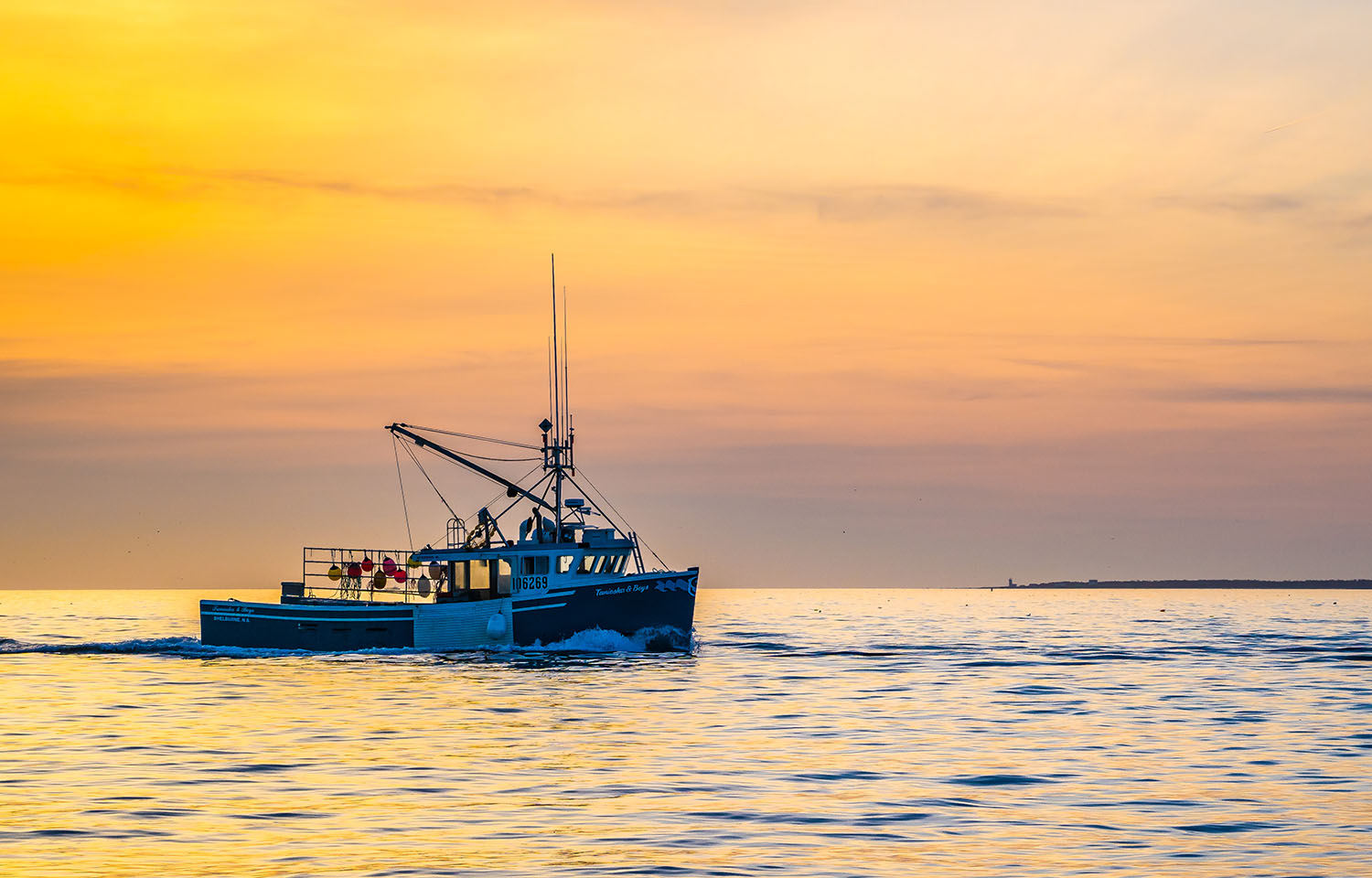
Canada lobster-fishing areas (LFAs) 33 and 34 in the province of Nova Scotia have been open for two weeks, and high-quality lobsters are reportedly fetching prices roughly in line with 2023.
Fishermen in both 33 and 34 set their gear during “dumping day” on 26 November – the same date as in 2023. Over the course of the 2023 to 2024 season, fishermen caught nearly 23,000 metric tons (MT) of lobster in the two areas.
The 2023 season started off with a price of CAD 10 (USD 7.04, EUR 6.70) per pound, and Tangier Lobster Company Managing Director Stewart Lamont told SeafoodSource that the shore price so far this year has been similar.
Lamont said the shore price so far has held at CAD 11.50 (USD 8.10, EUR 7.71) per pound for higher-quality lobster and CAD 10 for processing-grade lobster in the first two weeks of the fishery.
“It’s all anecdotal; we don’t really have real-time data, but there’s no scarcity of lobster at this moment,” Lamont said. “The catch overall is comparable to last year according to anecdotal information that I have.”
The first week of the fishery saw good weather, he said, but the second week of the season has brought a shift in temperature that has dropped below freezing.
“It’s pretty apparent that winter has arrived. That’s a complication for live lobster; the extreme cold and any wind conditions can always weaken the resource for shipment purposes, so I’m always nervous when we have sub-freezing weather,” Lamont said.
Two things that Lamont said he has been seeing in catch so far that could cause complications are a lack of larger-sized lobsters and a lower quality to the catch.
“The quality in the big picture is nothing to brag about, as mother nature has really not done us any favors this year. The quality is somewhat to significantly less than it was a year ago, with a higher percentage of softshell,” he said. “We have a lower meat yield overall and blood protein levels hovering between 6 and 9.”
Blood protein levels are sampled to determine lobster quality, with a higher number meaning a lobster is likely fully meated and likely hardshell – which is better for shipping live. A blood protein level of less than 6 is an indicator of a lobster potentially being softshell with lower meat content. Typically, a range of between 6 and 7.99 is considered of “medium” quality in the Lobster Quality Preseason Sampling Program’s report.
“Extracting the undesirables is more costly and frustrating this year, so we must build that into the margin of the good product,” Lamont said.
He added that there appears to be a lower size distribution – with sizes of 1.5 pounds and up less common in the catch than they were at the same point in 2023.
Lamont said currently, the export market of live lobster to Europe and China is relatively quiet, as the season won’t pick up in Europe just yet and China continues to hesitate with the current price.
“The challenge is the shore price that we’re paying here compared to the delivery price that China wants to pay really doesn’t allow us enough margin,” he said. “China either has to be willing to pay more, or we have to be willing to sell for less.”
Lamont said there will be no issues selling lobster; the key will be what price companies will accept, which becomes less of a factor as the last two weeks of December approach and companies become more concerned about making sure deliveries go through.
“Credibility in the last two weeks of December is more important than any other time of year,” Lamont said. “If our clients in Europe and Asia need product, it won’t just be price that makes the determination; it’ll be confidence level in the exporter.”
Canada’s lobster export market to the U.S., meanwhile, is dealing with the uncertainty from U.S. President-elect Donald Trump’s comments on potential tariffs on all Canadian goods. Trump said he plans to institute tariffs of as high as 25 percent on all Canadian products – which would hit over USD 1 billion (EUR 951 million) in lobster exports from Canada.
Those tariffs won’t be a factor until Trump officially takes office in January but could still be a factor to companies that buy lobster now to store until then.
“They are buying a pre-tariff lobster today but storing a high percentage with the idea they would be shipped to America sometime after late January – when presumably a tariff might kick in,” Lamont said. “Companies have exposure, they have concern, and they’re trying to game this thing out.”
The lobster season in Nova Scotia has also kicked off as the province continues to deal with controversy over reports of poaching and illegal fishing. Fishermen in Canada claim fishermen from the U.S. state of Maine have been illegally harvesting lobster in Canada’s waters – an issue that has led to clashes and walk-outs.
The controversy reached a new height as the United Fisheries Conservation Alliance (UFCA) – a group representing lobster-fishing associations in Nova Scotia, New Brunswick, and Prince Edward Island, Canada – filed a notice of action against Independent Fisheries Limited and its president: Xiaoming Mao.
“UFCA has obtained the necessary evidence to clearly link Independent Fisheries to the buying of illegal and unauthorized lobsters landed at the Saulnierville Wharf,” UFCA President Colin Sproul said.
The lawsuit also names Jason Lamrock, Tyler Nickerson, and Weasley Nickerson as parties, the UFCA said in a release.
“With this action, our message is clear. This is only the beginning. If you are illegally selling lobster or illegally buying lobster, know that you are being watched every day and every hour,” Sproul said. “We are gathering evidence against you at this very moment."
