






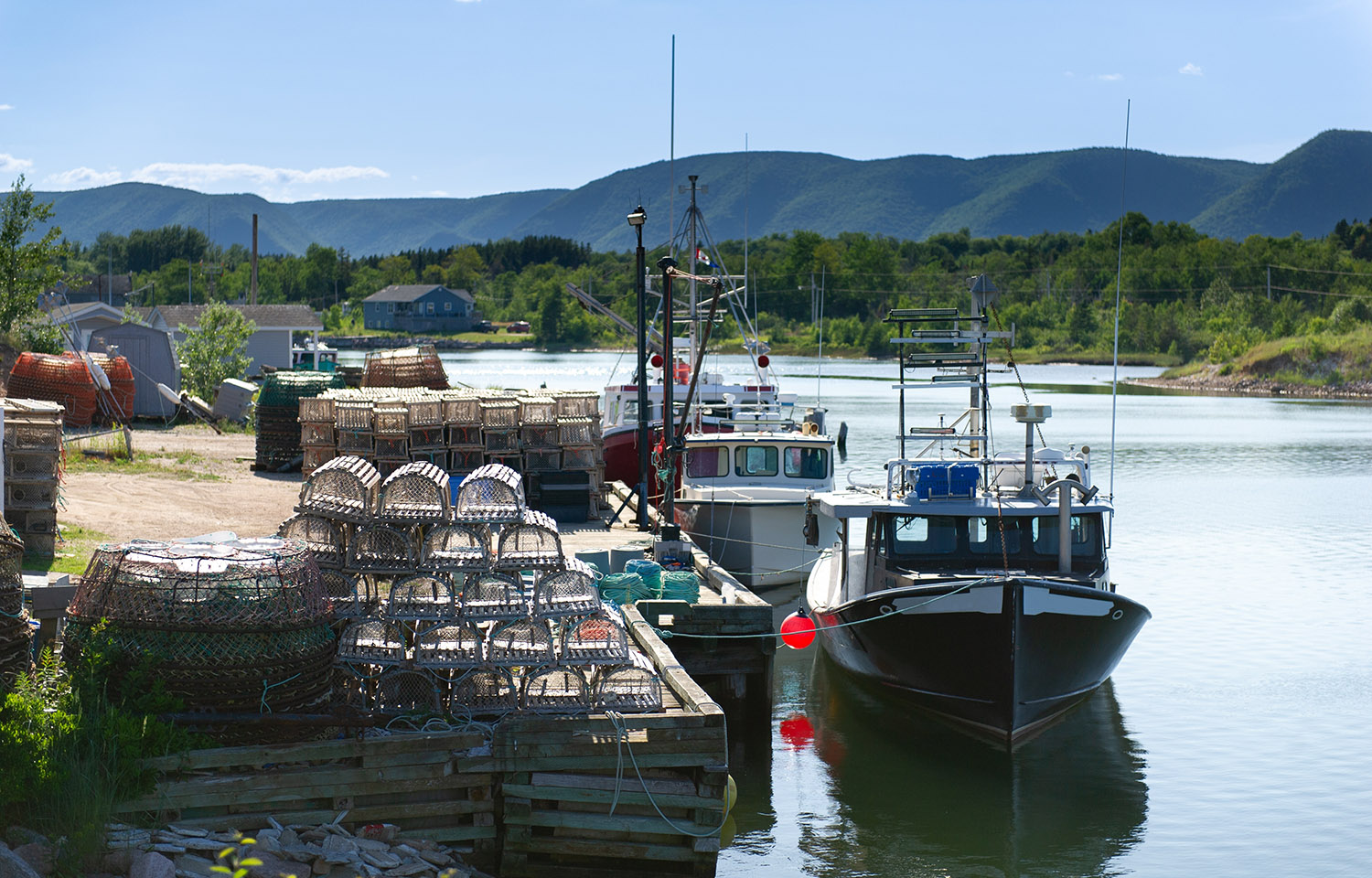
The Nova Scotia Supreme Court has rejected a commercial fishing group’s request to recoup CAD 334,000 (USD 238,312, EUR 206,502) in legal fees after the Sipekne'katik First Nation withdrew a lawsuit defending its “moderate livelihood” lobster fishery in the province earlier this year.
The Sipekne'katik has been running a summer and fall lobster fishery in St. Marys Bay, Nova Scotia, outside of the federally recognized commercial fishery since 2020, arguing that its members have a treaty right to fish for a “moderate livelihood.” Though the Supreme Court of Canada ruled in 1999 that First Nations have a right to hunt and fish for a moderate livelihood, the government has not defined those terms, leaving the St. Marys Bay lobster fishery in a legal grey area.
In 2021, the Sipekne'katik sued to block any federal regulations on its livelihood fishery.
The First Nation fishery has been strongly opposed by commercial fishers in the area, who argue the “moderate livelihood” fishery is actually a commercial operation competing with their own regulated harvest over a limited number of lobsters. In a 2024 legal filing, the Unified Fisheries Conservation Alliance (UFCA) claimed that unregulated Sipekne'katik fishers had depleted lobster stocks in the bay and led to 30 commercial fishers abandoning the fishery over decreased catches.
At the same time, Canada Department of Fisheries and Oceans (DFO) has stepped up enforcement of the Southeast Nova Scotia lobster fishery this year, conducting 76 plant inspections and seizing 1,529 traps and six vessels. More than 28,000 lobsters have been released back into the ocean alive due to the enforcement actions. On 16 October, one individual was arrested “for the illegal purchase of lobster harvested for food, social, and ceremonial (FSC)” purposes. While the government allows First Nations to fish for food, lobster harvested for FSC purposes is not allowed to be sold commercially.
The Sipekne'katik ultimately withdrew its lawsuit in June 2025, citing progress in federal negotiations as well as soaring legal costs, estimating that it had spent CAD 572,073 (USD 408,194, EUR 353,788) already.
Following that decision, UFCA asked the judge to force the Indigenous government to pay its legal fees. The alliance had been allowed to intervene in the lawsuit on the side of DFO on behalf of the commercial lobster industry and was seeking to recoup CAD 400,000 (USD 285,404, EUR 247,367) it had spent on legal fees.
UFCA ultimately lowered that number to CAD 334,000, but Nova Scotia Supreme Court Justice John Keith rejected the request 30 October, calling the claim “excessive.”
UFCA Lawyer Michel Samson told the CBC that it was unusual for courts to award costs for legal fees to intervenors but that it’s typical for parties to try to recoup as much as possible. While the judge rejected the higher amount requested by UFCA, he did order the Sipekne'katik government to pay the group CAD 15,000 (USD 10,703, EUR 9,276) in legal fees. Samson told the CBC that the token award speaks to his client’s strong case.
“For us, it’s a major victory for the UFCA in the fact that Justice Keith affirmed that we have a direct and meaningful interest and questions around First Nation rights and equitable sharing of the fishery resource,” Samson said.
