




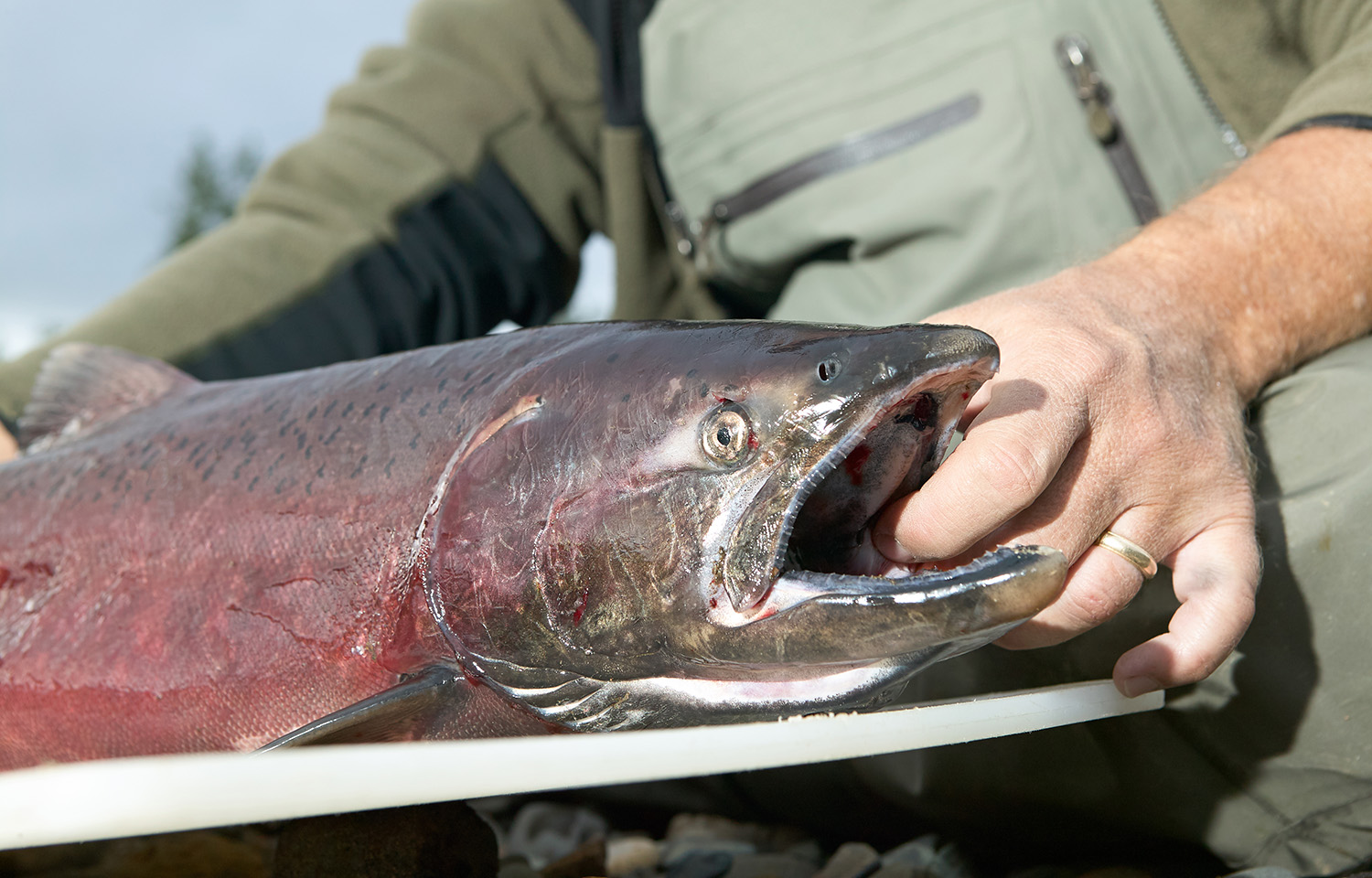
The August king salmon season in Southeast Alaska will not happen after Alaska Department of Fish and Game (ADF&G) determined there was a catch overage in the first retention period earlier this summer.
Commercial trollers caught 82,000 kings in the first season, above the target of 66,700, forcing ADF&G to end fishing on 8 July. While the agency’s 2024 preseason forecast estimated commercial fishermen would be left with 15,000 kings to catch in the second season in August, sport fishermen caught around 52,000 kings, exceeding their allocation by 14,000 fish. Following a controversial management plan approved in 2023, that total was deducted from the commercial troll allocation.
“Following this reduction, the remaining annual troll allocation does not provide a sufficient harvest target to open a competitive second summer commercial troll fishery Chinook salmon retention period,” ADF&G said in a 6 August release. “However, if there is an adequate number of Chinook salmon remaining on the all-gear treaty allocation, a limited harvest troll fishery may open. Any plans to open a limited harvest fishery would be announced later this month.”
The Alaska Trollers Association (ATA) said a surge in fishing tourism is upending the delicate balance between the commercial- and sport-fishing sectors in the region.
“In the past, Southeast Alaska harvesters successfully shared the king salmon catch. With the explosion of tourism, that model fell apart,” it said. “The unanticipated impact of over-tourism, depriving resident sports fishermen and trollers of their traditional times and areas to harvest, is wrecking relationships and community economies.”
A similar situation arose in 2023, when the sport-fishing sector surpassed their harvest share by 17,000 fish, forcing the cancelation of the August Chinook opening.
“The issue is that the numbers of non-resident anglers are unconstrained and growing rapidly as tourism levels rise across the region and charter businesses proliferate,” ATA said. “The charter client Chinook harvest proceeds throughout the summer season, with daily bag and annual harvest limits for individual anglers. However, there is no annual limit or management objective for the charter fishing sector. Tourists fishing in Southeast are the only group allowed this open-ended practice.”
The number of salmon trollers operating in Southeast Alaska has declined from 756 a decade ago to 450 this season, according to ATA, which said it was “deeply concerned” about ADF&G’s management approach.
“The recent change of management from in-season, adaptive management to laissez-faire management for the tourists is controversial and contested,” it said. “The Alaska Board of Fisheries Management plan negotiated March 2022 by representatives of the region’s three salmon stakeholder groups – resident sport, guided sport, and commercial trollers – had been working well to sustainably distribute the Chinook harvest between the groups.”
But, in response to a request to revisit the agreement to clarify management plans, ADF&G changed the terms of the agreement to favor charter fishermen December 2023, giving them priority in calculating overages, according to ATA.
“While ADF&G is trying to implement laissez-faire management to placate the charter and lodge business, they are destroying the ability of our Alaska trollers to fill orders to our fish-loving customers,” ATA said. “Accelerated catches by tourists are appropriating fish away from our long-time small-boat fisheries and processors. If our local small-boat fishermen go out of business, the economic resilience of our isolated island communities will be diminished and destabilized regionwide.”
The shift in management is having ripple effects in Southeast Alaska’s society and economy, which is heavily dependent on fishing, according to ATA.
“This unexpected reduction cuts into the already modest amount earned annually by our fishermen and leaves processors explaining to their long-time customers why king salmon won’t be provided as promised for their customers,” it said. “Taking Chinook from Alaska residents (trollers) and allocating this valuable and limited resource to a growing pool of non-resident sport harvesters is a violation of the mission statement of the Alaska Department of Fish and Game.”
Southeast Alaska’s trollers are also facing a lawsuit filed by Wild Fish Conservancy in 2020 seeking to prevent Chinook overharvesting to protect the primary food source of the southern resident killer whale population. That suit remains active, with NOAA currently working to finalize two court-mandated environmental impact statements – one regarding an incidental take statement for Southeast Alaska salmon fisheries and the other investigating the impact of its prey increase program.
“If successful, this lawsuit would set a precedent making it easier for radical groups to shut down any Alaska natural resource industry,” ATA said. “Trollers are the canary in the mine. If the troll industry fails because of the outrageous and incorrect claims by WFC, then Southeast Alaska will fail economically, and the rest of Alaska will more likely face a similar fate.”
Mike Shimchick, the owner of Stellar Pacific Seafoods, which primarily trades in Alaska-caught salmon and black cod, said the closure is another blow to an industry that has been struggling during a down year for salmon catches, on the back of two years of struggles leading to a situation so bad some have deemed it a crisis.
“There are customers who buy big kings for smoking, and when those fish are not available for two years in a row, they’re getting closer to saying ‘Okay, that's it. I can't do only one season,’” Shimchick told SeafoodSource. “Without that fish available, they’re going to turn to farmed kings. They just will, eventually.”
