






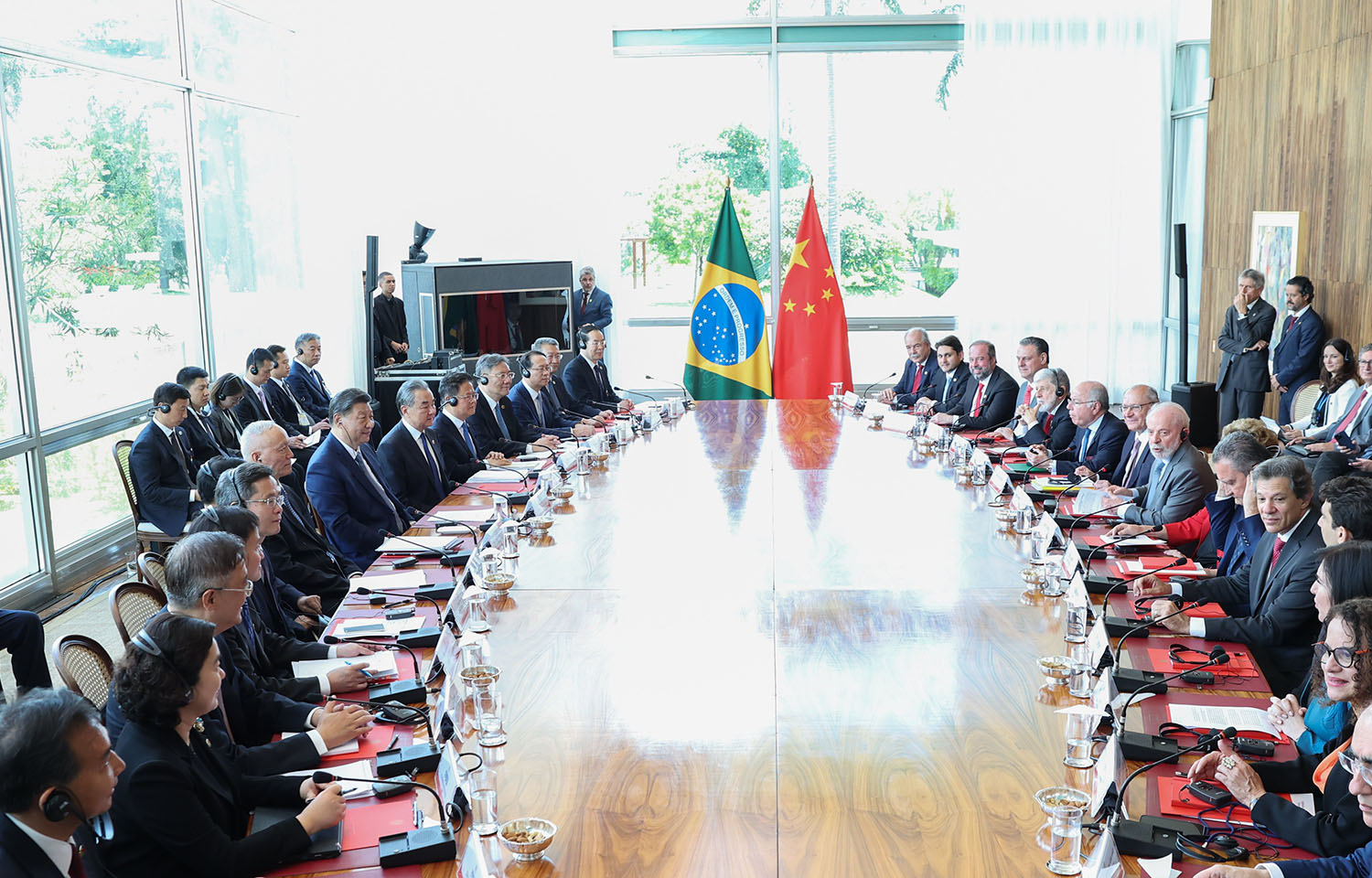
Brazil and China have formally signed a protocol allowing for the export of wild-caught Brazilian fish to Chinese buyers as the country continues to seek alternative suppliers.
The announcement by the General Administration of China Customs follows nearly a decade of lobbying by Brazil’s Ministry of Agriculture, Livestock, and Supply (MAPA).
The move also comes as China begins its annual fishing moratorium on its own waters, which ties up the country’s fishing fleet for the summer months and creating space for imported wild seafood products. The ban – which first started in 1995 – covers the East China Sea and this year runs from 1 May to the middle of September.
During a visit to Brazil in November, Chinese President Xi Jinping met with Brazilian President Luiz Inácio Lula da Silva and signed a wide range of protocols granting access for Brazilian foodstuffs – including phytosanitary agreements on fishmeal, fish oil, and other proteins and fats derived from fish for animal feed.
China bought USD 94.4 billion (EUR 84 billion) worth of goods from Brazil in 2024, and exported USD 69.1 billion (EUR 61.4 billion) worth of products to the Latin American country, a key supplier of its meat and soybean.
Brazil didn’t feature in the top ten sources of China’s seafood imports in 2024 – a list led by Russia and Ecuador in value terms – but China has in recent years prioritized widening the list of countries from which it gets its seafood and food imports in order to buttress food security.
Beijing has also used opening up market access for food from other countries as a way of both placating its trading partners outside of the U.S. and shifting its sourcing away from the West. China’s trade partners have been keen to reduce growing trade deficits with China – and are wary of a potential uptick in that deficit as China seeks alternative markets after high tariffs imposed by U.S. President Donald Trump reduced U.S. demand.
Signs of increasing exports elsewhere are already showing. Exports to the European Union increased by 4 percent in the first quarter of 2025 compared to the same period of 2024. But China’s imports from the E.U. declined by six percent, as China’s vast manufacturing sector increasingly displaces imports with locally manufactured goods. China’s trade surplus with the E.U. rose by 18 percent year on year to USD 64 billion (EUR 56.9 billion) in the first quarter of 2025.
