


U.S. President Donald Trump will impose levies totaling 104 percent across all Chinese imports starting 9 April, White House Press Secretary Karoline Leavitt confirmed.
The 104 percent total is made up of the first 10 percent tariff in February, the second 10 percent tariff announced just a month later, the recent 34 percent tariff announced on 2 April, and a new 50 percent additional tariff which Trump said is in response to China hitting U.S. goods with a 34 percent tariff to match the 2 April amount.
“April 8th, 2025, the United States will impose ADDITIONAL Tariffs on China of 50 percent effective April 9th,” Trump wrote on his Truth Social social media platform. “Additionally, all talks with China concerning their requested meetings with us will be terminated!”
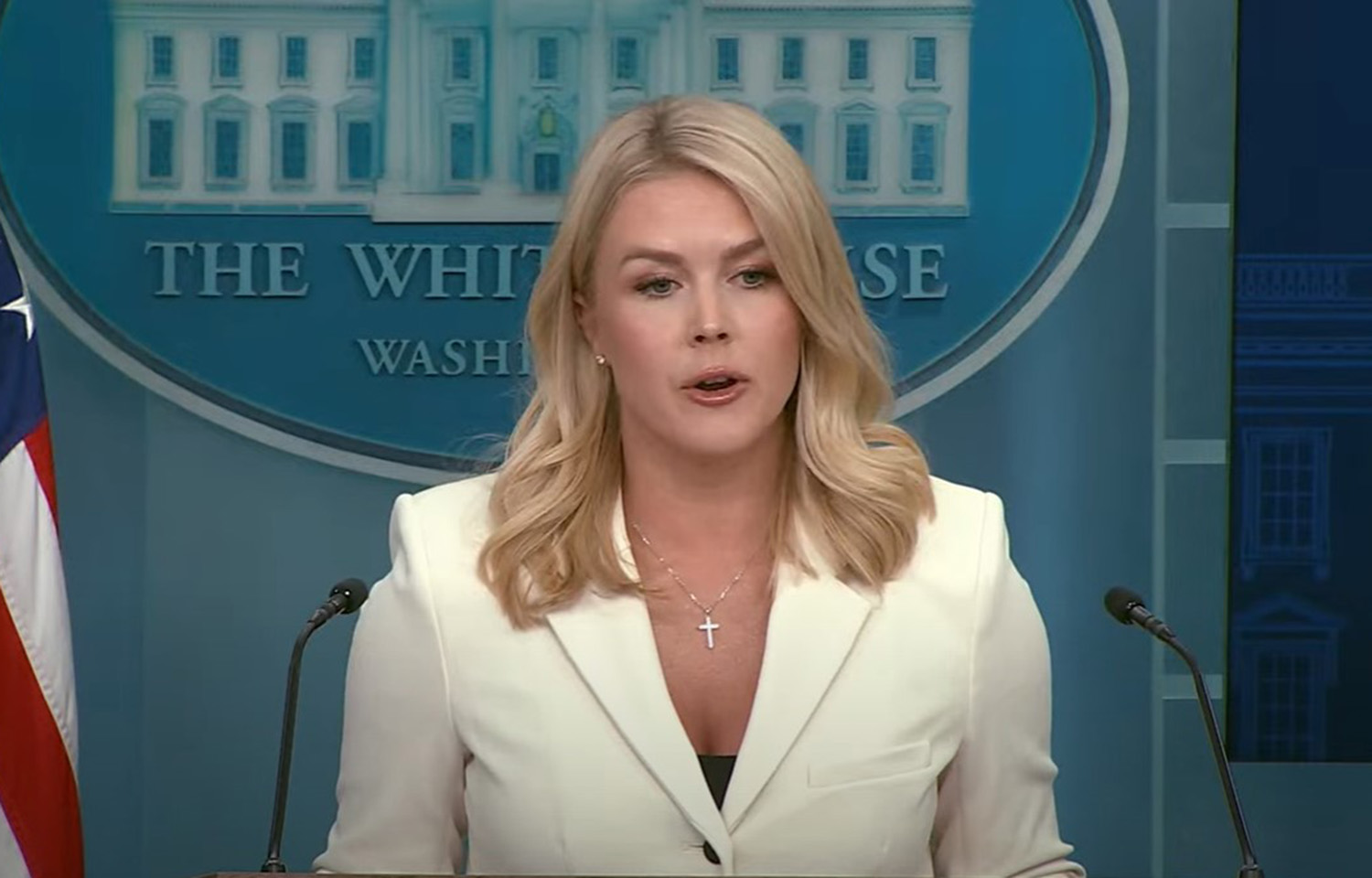
At a press conference on 8 April, Leavitt confirmed the 104 percent tariff amount and the implementation date of 9 April – the same date the initial 34 percent tariff was to be implemented.
“America does not need other countries as much as other countries need us, and President Trump knows this,” Leavitt said. “Countries like China, who have chosen to retaliate and try to double down on their mistreatment of American workers are making a mistake. President Trump has a spine of steel, and he will not break.”
The U.S. imported USD 1.52 billion (EUR 1.38 billion) worth of seafood from China in 2024, meaning the new 104 percent tariff rate would have doubled importers’ costs by adding USD 1.59 billion (EUR 1.45 billion) in duties to those imports.
The escalation with China comes as U.S. Customs and Border Protection provided additional guidance on how it would apply the 9 April reciprocal tariffs, which escalate on top of the 10 percent tariffs applied to virtually every country for goods that left warehouses for consumption after 12:01 a.m. eastern daylight time (EDT) on 5 April.
According to the guidance, the tariff action is effective for goods withdrawn from warehouses for consumption as of 12:01 a.m. EDT on 9 April. Companies with goods in transit to the U.S. have until 27 May, 2025 to onshore the goods to avoid additional duties – the same date as the lower 10 percent tariffs.
That timeline could mean any goods not already on the water are coming close to missing that deadline, Supreme Crab CEO Troy Turkin told SeafoodSource.
Shipping timelines haven’t fully recovered after lengthy delays during the Covid-19 pandemic. Turkin said that while transit times have improved, companies can no longer count on something making it from Asia to Los Angeles, California in three or four weeks.
“Things being put on the water right now, are looking at that timeline where people are going to have to be looking at these costs,” Turkin said. “We have to assume that these are the numbers that we have to factor into all of our buy pricing.”
Supreme Crab imports pasteurized crab meat from Asia, and during the 2025 Global Seafood Market Conference in January – before any tariffs were announced or imposed – Turkin said he was concerned about what tariffs could look like on China and Vietnam as the two countries are the only source of red swimming crab.
Now any imports of red swimming crab from China are facing a 104 percent tariff, while imports from Vietnam are being hit with a 46 percent tariff.
“The red swimming crab is not going away, but there’s going to be some restructuring, and with the higher prices I expect there is going to be some reduction of volume consumed here too, there's no way around any of that,” Turkin said.
He added that the existing tariffs on China were already too high to make importing the product feasible, even before the additional 50 percent tariff. U.S. crab importers have already had to deal with 25 percent Section 301 tariffs on red swimming crab since they were implemented during the first Trump administration. The latest tariffs would put the rate at 129 percent for the product – which means the supply chain is going to shift.
“The reality is, we have existing demand, we have to import based on what these percentages are,” Turkin said.
The CBP guidance on the new tariffs also includes a similar reporting item to the previous guidance indicating articles “in which at least 20 percent of the value of article is U.S. originating,” the U.S. content will not be subject to the reciprocal tariff.
SeafoodSource contacted CBP for clarification on what that could mean for U.S.-origin seafood products like pollock that are exported to China for secondary processing and re-imported, but has not received comment.
