






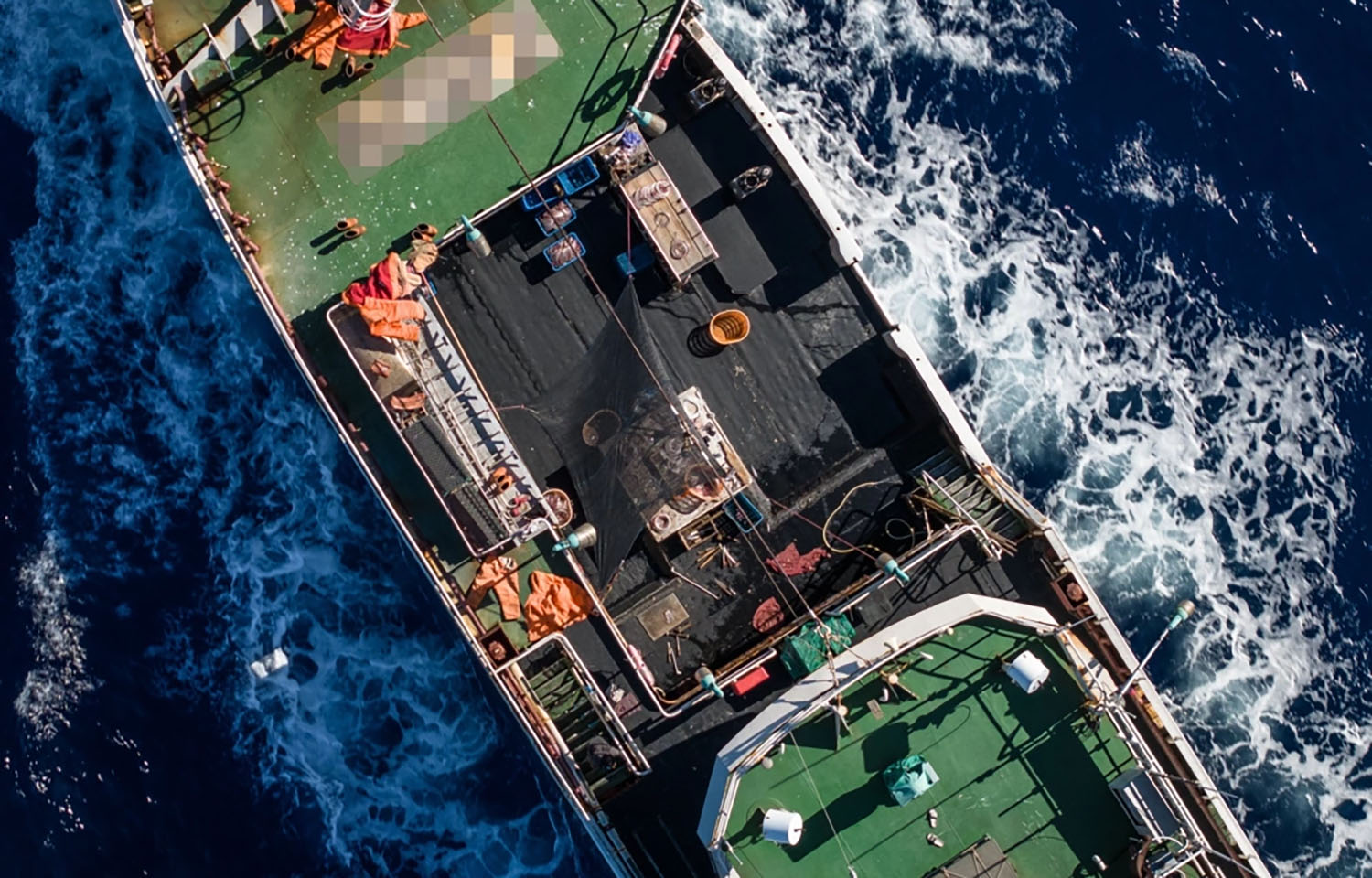
The family of a deceased Chinese distant-water fisherman has been awarded CNY 200,000 (USD 28,051, EUR 24,025) by a maritime court in Ningbo, more than two years after his death by suicide aboard a tuna purse-seine vessel in the Pacific Ocean.
The fisherman, surnamed Wang, reportedly suffered from long periods of sea sickness before taking his life in May 2023, when his vessel was near the Cook Islands, which is more than 6,500 miles away from the Chinese mainland.
According to Jiyu News, the CNY 200,000 compensation package was agreed upon after a period of pre-trial mediation between the fishing company Wang worked for and the labor agent he was in contact with, as well as Wang’s family.
After receiving the compensation, Wang’s family then appealed that award to the Zhejiang Provincial Higher People's Court seeking CNY 2 million (USD 280,514, EUR 244,273) in compensation, claiming that the amounts awarded were significantly lower than the normal compensation for death due to maritime personal injury in the country.
However, because the death was ruled a suicide, the court determined that the company was not clearly at fault for the incident, and the appeal was rejected.
Though Wang’s family was awarded some compensation, according to Li Qiang, the executive director of New York City-based NGO China Labor Watch, there is no similarly accessible process in China for foreign workers aboard Chinese vessels, many of whom hail from Indonesia or the Philippines.
“It is very difficult for foreign workers to bring legal cases in China,” Qiang said. “Language barriers, high litigation costs, and the lack of public interest organizations providing legal aid all limit their ability to seek justice through the Chinese court system.”
Qiang said he is “not aware” of any cases in which foreign workers have taken legal action against Chinese companies in Chinese courts.
“However, if such a lawsuit were to be filed in China, it would be extremely difficult for the workers to pursue,” Qiang explained.
Still, Qiang said as China looks increasingly toward foreign labor to staff projects abroad being built under the nation’s Belt and Road initiative, pressure may mount to establish such a system.
“In China’s Belt and Road-related projects, more workers are beginning to voice demands for better labor conditions,” he said. “At the same time, the Chinese government is expanding its influence in overseas mining and resource sectors and promoting ‘Chinese standards.’ Whether these policies will genuinely improve workers’ conditions remains to be seen.”
China is a member of the International Labor Organization, which recently published the “Draft Guidelines For Fair Labor Market Services For Migrant Fishers,” requiring countries to “effectively exercise jurisdiction and control over fishing vessels flying their flag by establishing a system for ensuring compliance with laws, regulations, and measures to protect all fishers, including migrant fishers, working onboard fishing vessels, including reporting, monitoring, complaint procedures, appropriate penalties, and corrective measures, as well as regular and unannounced inspections using a strategic compliance approach to better target vessels.”
