






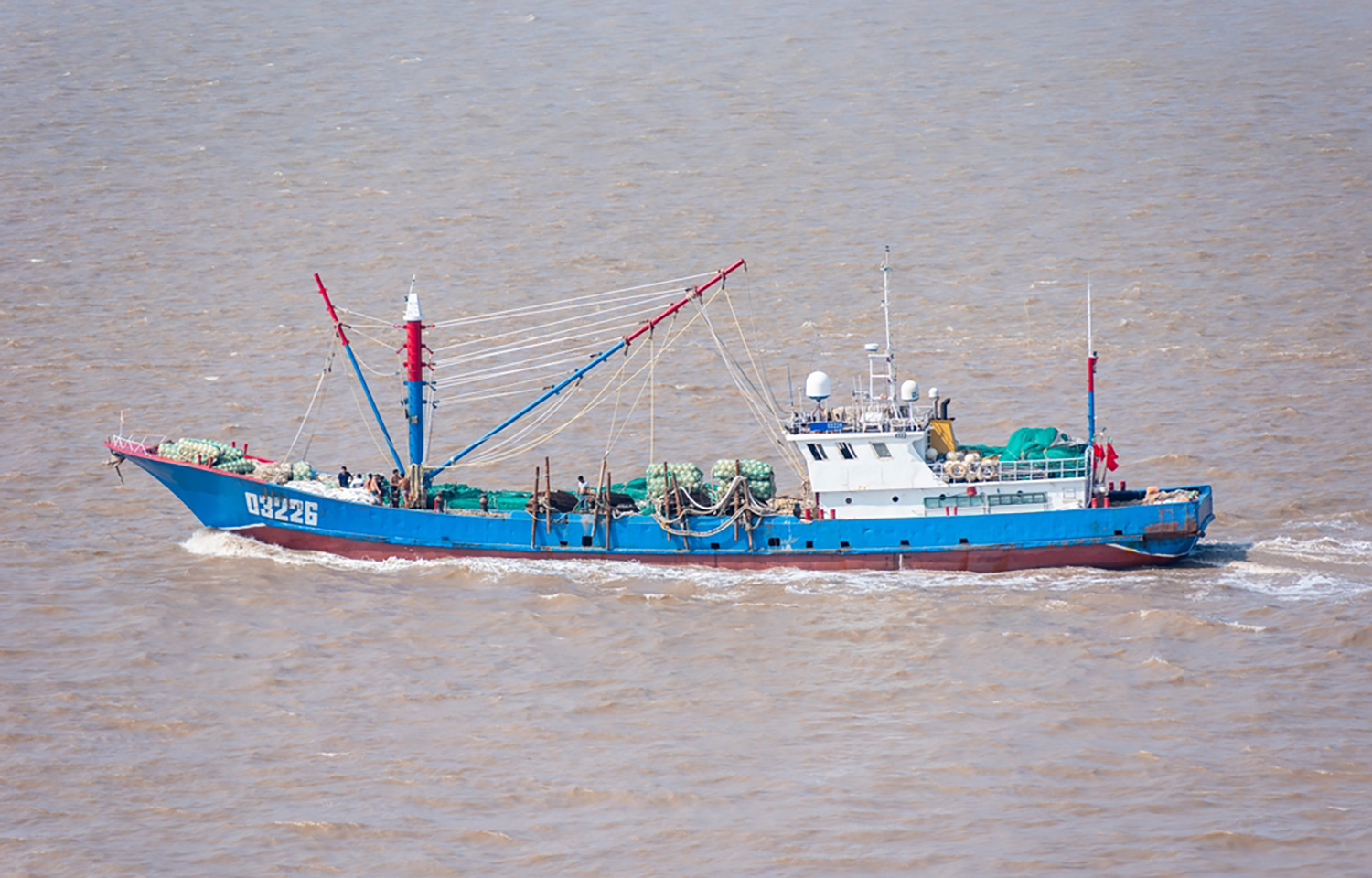
China’s increasing reliance on Southeast Asian labor to man its distant-water fleet has led to alleged abuse from staffing agencies that facilitate contracts for Chinese fishing firms.
A Filipino fisherman, who spoke to SeafoodSource on the promise of anonymity, said that the manager of a prominent Filipino labor agency who works with multiple recruiting firms for Chinese fishing companies has not paid workers’ salaries to their families as agreed in their contracts.
“We are truly grateful to the various Chinese fishing vessel companies that provide us with work and employment. We take pride in our hard work, but we no longer wish to be victims of this situation. We also want to prevent future crew members from experiencing wage theft at the hands of this individual,” he said. “We are in a dire situation, as some crew members have lost their lives, and their families have suffered, as well. While these crew members were on board, their families were not receiving the wages owed to them.”
The fisherman explained that he signed a 12-month contract in Manila that lists the aforementioned Filipino labor agency and a Fuzhou, China-based human resources consultancy as the hiring bodies on the agreement, suggesting workers themselves are not engaged directly by Chinese fishing companies and do not have much power in asserting their rights.
The contract sets a “basic monthly salary” of USD 379 (EUR 333) per 48-hour workweek for the position of a “fisherman” aboard a Chinese vessel with a “fixed overtime” of USD 114 (EUR 100) and “vacation leave pay” of USD 57 (EUR 50).
The fisherman said that some of those wages have not been paid out and he is seeking to recover that unpaid money.
“Unfortunately, the [labor agency manager] is involved in numerous legal cases regarding salary theft – specifically failing to pay wages to many crew members of these companies. As a result, employees have been deprived of thousands of pesos in wages while working on board,” the worker said. “We have sought assistance from various government agencies in the Philippines, but unfortunately, no legal actions have been taken, and [the manager] continues to operate and engage as an agent with different Philippine agencies.”
The worker is seeking to prevent the agent from signing any future contracts with Chinese entities and is seeking to raise the issue with relevant Philippine government agencies such as the Philippine Overseas Employment Administration (POEA) and the Overseas Workers Welfare Administration (OWWA).
Other distant-water fishers have made calls for advances in labor rights, including Indonesian fishers aboard Taiwanese distant-water vessels.
“[Securing rights] is very important because we work in isolated waters, and sometimes, we don’t know when we will return. Four months becomes six months. Six months becomes one year. We lost contact with our agency; we lost contact with our families,” Silwanus, an Indonesian migrant fisher, told SeafoodSource earlier this year.
