






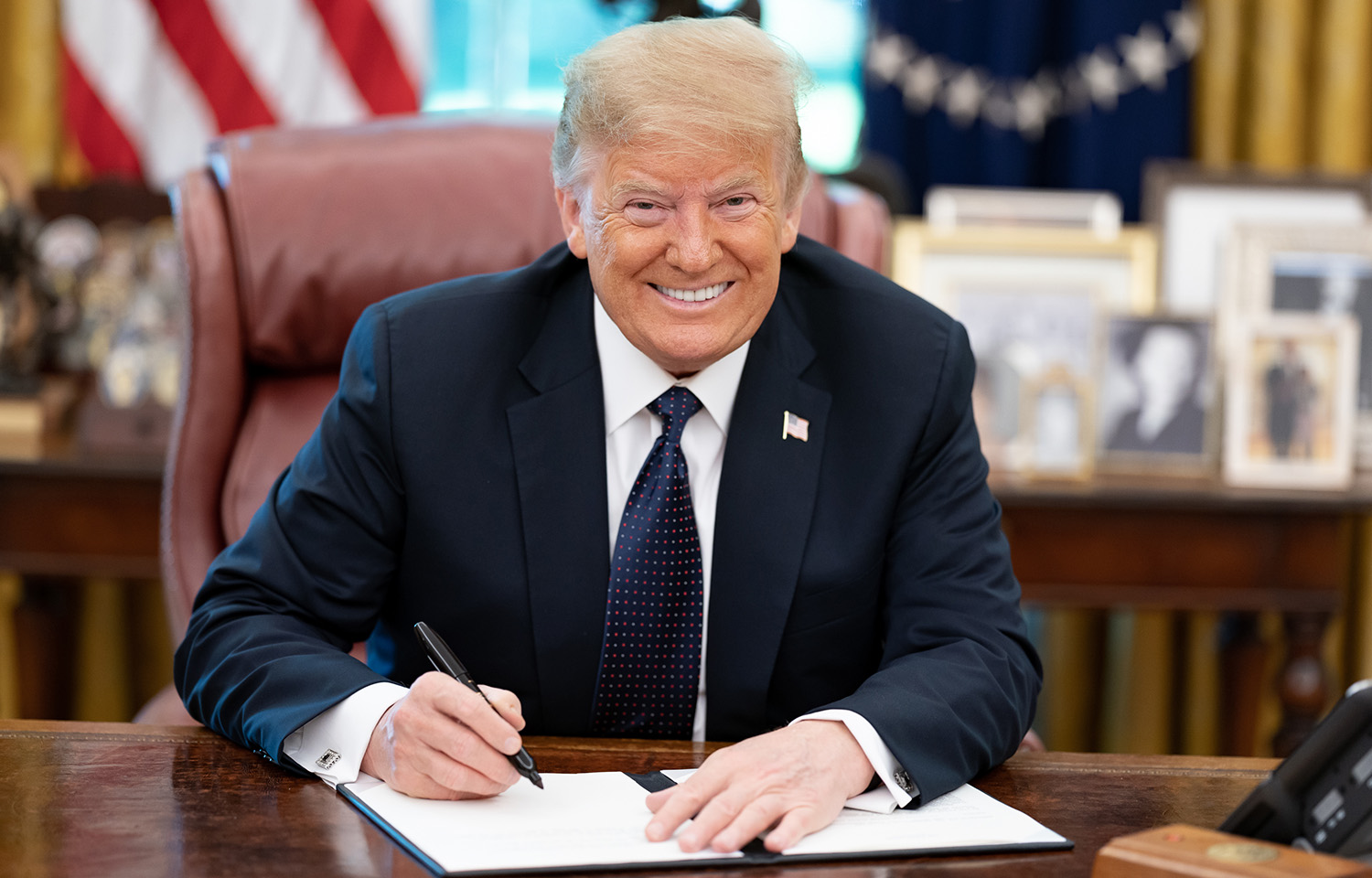
The expected effects of tariffs proposed by U.S. president-elect Donald Trump, paired with the possible resumption of the East and Gulf Coast port strike, has experts predicting a surge in volume at the nation’s container ports – and U.S. importers are bracing for costs.
National Retail Federation (NRF) Vice President for Supply Chain and Customs Policy Jonathan Gold said the tariffs and cargo disruptions will both pose issues.
“Neither of these developments is good for retailers, their customers, or the economy,” he said.
On the campaign trail Trump proposed a number of sweeping tariffs meant to boost the U.S. economy by disincentivizing foreign trade, including a universal 10 to 20 percent tariff on imports from all foreign countries and an additional 60 percent tariff on Chinese imports. Now that he has won the election, some parts of the seafood industry – like aquaculture – are feeling bullish, while others are fearing higher costs throughout the supply chain.
Adding pressure to the situation for importers is the possibility that the International Longshoremen’s Union could resume strike activity at East and Gulf Coast ports in January, when a temporary deal that ended their early October strike is set to expire. The union and the port management company, the United States’ Maritime Alliance, are due to resume negotiations next week.
“October’s strike lasted only three days but there’s the potential for a longer strike if a new labor contract is not reached after the contract extension runs out in mid-January," Gold said. "That has retailers spending extra to bring in cargo early or continue shifting it to the West Coast to avoid any potential disruptions, much like they did earlier this year. And we’re hearing that some merchants will also move up shipments to avoid the costly tariff increases expected after Donald Trump returns to the White House.”
According to the NRF’s Global Port Tracker, imports to U.S. ports in September were up 12.8 percent year over year, amounting to 2.29 million TEUs. Though October’s numbers have not yet been reported, Global Port Tracker projects that they are likely to reach 2.13 million TEUs, up 3.7 percent from October of 2023.
November is forecast at 2.15 million TEUs, up 13.6 percent percent year over year, while December is projected at 1.99 million TEUs, up 6.1 percent. These numbers have been revised from previous projections to reflect the impact of the potential port strike, though they have not yet been adjusted to reflect election results, so it is possible that they will continue to go up.
January 2025 is currently forecast at 2.01 million TEUs, a 2.5 percent increase year over year, while February is projected to come down to 1.77 million TEUs, a 9.3 percent drop reflective of the timing of Lunar New Year, which shuts down Asian factories. The Global Port Tracker predicts that March will see an increase to 2.01 million TEUs, up 4.4 percent year over year.
The NRF has been vocal about its concerns that Trump tariffs would cost consumers money, recently publishing a study on the proposed tariffs’ impacts that found that retailers could expect consumer spending power to dip by USD 46 billion to 78 billion (EUR 43.6 billion to 73.9 billion) a year.
Gold said in the report that tariffs are taxes paid by U.S. importers, not exporters or foreign countries, and those costs will ultimately be passed on to consumers. In a release, the NRF said that it expects cost spikes to “hit low-income families especially hard.”
Individual seafood importers were taking a more mixed view of their futures. New York City, New York, U.S.A.-based wholesaler Ian MacGregor of LP Seafood and Specialty (formerly Lobster Place) told SeafoodSource that his company is taking a wait and see approach to upcoming market changes.
“The rhetoric from the incoming administration obviously suggests that foreign supply is likely to be disrupted by tariffs and other trade barriers – but it's difficult to discern how much of that rhetoric is bluster and how tariffs might impact the seafood industry," MacGregor said.
MacGregor, who supplies a number of New York City's Michelin-starred chefs with premium fish from around the world, said that he’s hopeful that his Japanese supply source is safe, but the outlook is unclear.
“More locally, as an NYC area foodservice-focused distributor I think the outlook is kind of cloudy. One the one hand, widespread antipathy towards Donald Trump in the NYC metropolitan area may tamp down the 'festive mood' that drives business activity at the restaurants, hotels, and caterers we serve," he said. "On the other, if the economy thrives under the new President (and tariffs don’t stoke inflation), we can hope that will be a tailwind for our industry.”
Container traders, by contrast, are anticipating that the new administration’s policies will bring profits.
“Trump is expected to heavily emphasize economic stimulation through deregulation, tax cuts, and substantial investments in infrastructure and domestic production. This could lead to a surge in domestic demand for containers as businesses ramp up production and trade within U.S. borders,” Container Xchange co-founder and CEO Christian Roeloffs said.
In its November 2024 market report, Cargo Xchange pointed out that West Coast ports had already seen record volume and encouraged traders to act to capitalize on opportunities presented by global and national instability and market shifts. It advocated that container traders employ a buy-repo-sell model, capitalizing on a decline in container prices in China now, then repositioning their containers to different ports where they could fetch higher prices, in anticipation of U.S. cost spikes.
FreightWaves CEO Craig Fuller concurred, arguing that Trump's tariffs were "not your grandpa's economic disaster."
While he acknowledged that the historical precident of the Smoot-Hawley Tariff Act of 1930, which deepended the Great Depression, was alarming, crucial differences in the global economic landscape, he said, would produce different outcomes today.
Ultimately he suggested that short-term volatility might be the price of longer-term security.
"The U.S. system, focused on short-term gains due to frequent elections and quarterly earnings reports, has historically disincentivized long-term strategic sourcing," Fuller said. "However, the immediate threat of tariffs could prompt quicker action toward more resilient supply chains."
