




Ecuador exported less shrimp by both volume and value year over year in 2024, with big decreases seen in shipments to China.
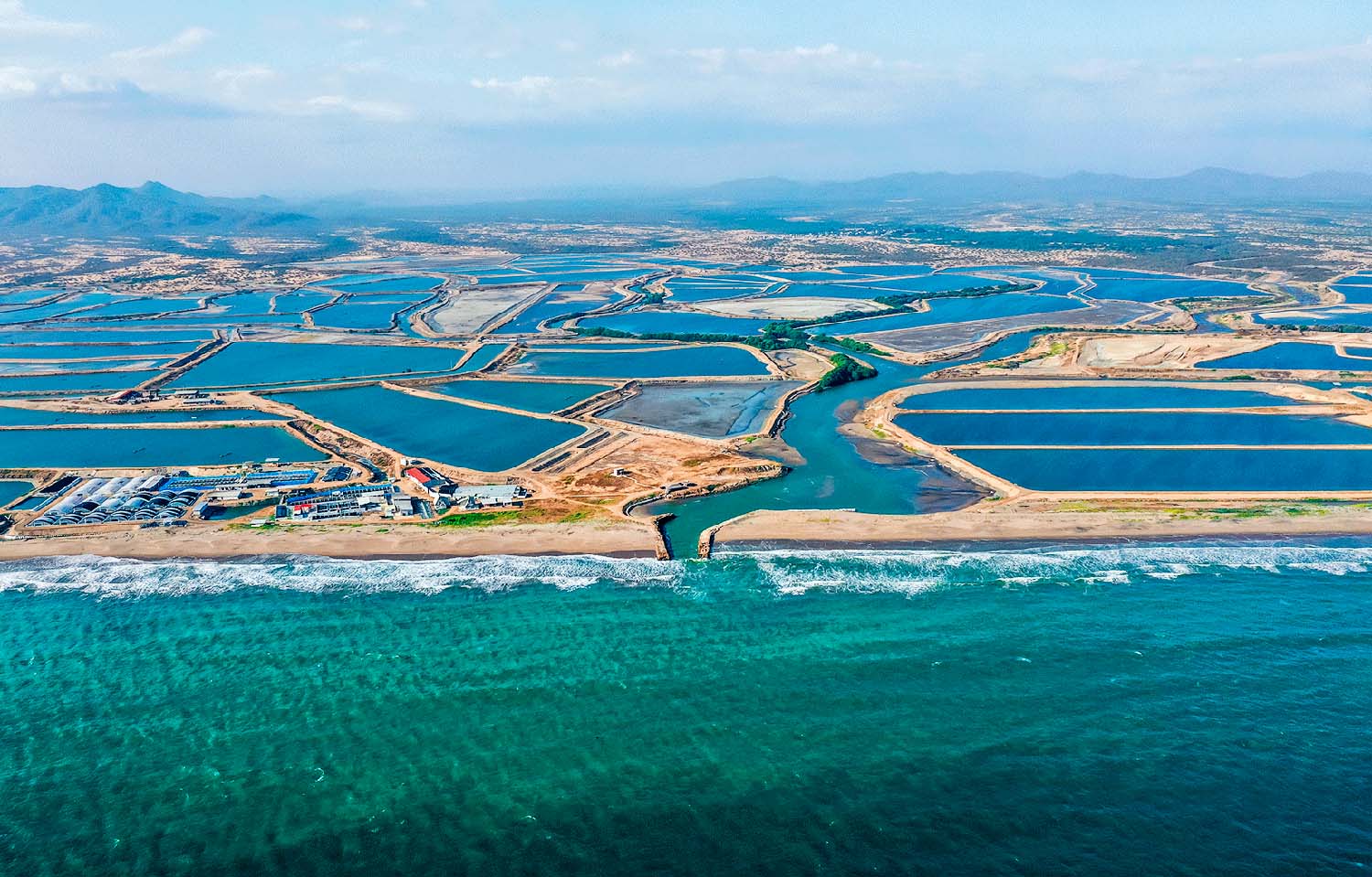
Ecuador exported 2.67 billion pounds of farmed shrimp in 2024, bringing in USD 6.07 billion (EUR 5.79 billion), representing decreases of 0.2 percent and 3.5 percent, respectively, when compared to 2023, according to figures from Ecuador’s National Aquaculture Chamber (CNA).
Ecuadorian shrimp shipments to China, the South American country’s largest market, fell 13.9 percent by value to USD 3.01 billion (EUR 2.87 billion) when compared to 2023 and 8.2 percent by volume to 1.45 billion pounds. China bought 58.9 percent of Ecuadorian shrimp by volume in 2023; that fell to 54.2 percent in 2024.
Ecuador’s second and third biggest markets, Europe and the United States, mostly picked up the slack.
Exports to Europe grew 11.3 percent by value and 15.2 percent by volume, respectively, to USD 1.24 billion (EUR 1.18 billion) and 541 million pounds, the latter figure of which comprised 20.2 percent of Ecuador’s 2024 shrimp exports.
Ecuadorian shrimp shipments to the U.S. increased 5.1 percent by value and 4 percent by volume to USD 1.32 billion (EUR 1.26 billion) and 473 million pounds, respectively. The U.S. imported 17.7 percent of all Ecuadorian shrimp in 2024.
Broken down by company, Industrial Pesquera Santa Priscila maintained the top spot for shrimp exports, shipping out more than 472 million pounds of shrimp in 2024, according to Forbes Ecuador, representing value worth USD 1.29 billion (EUR 1.23 billion). Its sales represented more than 21 percent of the total sent abroad by the industry.
Songa rose to second place from third in 2023 with exports of more than 256 million pounds, worth more than USD 609 million (EUR 581 million).
Omarsa ranked third in exports, with a volume of 211 million pounds bringing in sales of USD 496 million (EUR 473 million), Forbes reported.
In fourth place was Expalsa, sending more than 139 million pounds of shrimp abroad, with sales approaching USD 291 million (EUR 277 million).
Nirsa came in fifth place in the Forbes ranking with exports of more than 120 million pounds of shrimp worth nearly USD 258 million (EUR 246 million).
In sixth place was Promarisco with more than 106 million pounds of shrimp shipped, representing sales of USD 225 million (EUR 214 million).
Exportquilsa came in seventh place, with volume shipped exceeding 72 million pounds, bringing in sales of USD 162 million (EUR 154 million).
In eighth place was Empacreci, which exported more than 73 million pounds of shrimp and brought in USD 148 million (EUR 141 million).
Empagran came in ninth place with more than 64 million pounds of shrimp shipped abroad and sales of nearly USD 141 million (EUR 134 million).
Cofimar rounded out the ranking in 10th place, with more than 54 million pounds of shrimp exported, recording sales of close to USD 137 million (EUR 131 million).
“Ecuador closed 2024 with a [slight] drop in export volume, showing signs of slowing down due to the saturation of key markets, logistical problems, and fluctuations in global demand,” CNA Executive President José Antonio Camposano told SeafoodSource.
Gluna Shrimp Founder and CEO Gabriel Luna said on his LinkedIn profile that though the totals decreased, it’s not enough to cause concern within the industry.
“There is not enough difference to be something that concerns us nor that shows a decrease in exports. It does show a deceleration in the growth we were [traditionally] experiencing,” he said.
Luna also pointed out that monthly export records were broken in 2024, such as the 260 million pounds Ecuador shipped abroad in November, but there were also much lower months, which is reflected in the monthly average of 223 million pounds.
Regardless of the inconsistent monthly totals, the higher exports to the U.S. and Europe particularly “show our ability to adapt to changing times, to introduce new products, and serve new markets,” Luna – who is also the co-founder of the Global Shrimp Council – said.
Camposano is optimistic on growth for 2025, projecting expansion between 3 percent and 4 percent, which he said will be driven by the penetration of traditional markets, diversification, and the adoption of new technologies.
“The plan includes strengthening the global brand under the slogan ‘Ecuador First Class Shrimp’ and increasing the supply of processed products,” he said.
However, there are obstacles that the industry will have to address to see growth, such as weak prices and U.S. politicians calling for antidumping and countervailing duties on seafood from countries including Ecuador. Domestically, the industry is facing such issues as a fragile national electric system leading to power outages, as well as unprecedented crime waves, both of which are affecting the aquaculture sector.
