



European Commissioner for Fisheries and Oceans Costas Kadis reiterated his call to transition fishing fleets away from fossil fuels amid the ongoing war in Iran, which has caused fuel prices to spike all around the globe.
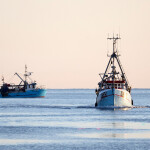
From Thailand to the United States, commercial fishers are considering keeping their vessels tied to the dock instead of letting the rising fuel costs eat into their thin operating margins. In Europe, some national governments have begun offering financial support to the commercial fishing sector to offset the higher fuel prices. Spain announced EUR 25 million (USD 29 million) in financial aid to the commercial fishing sector, while France announced a EUR 0.20 (USD 0.23) per liter reimbursement for commercial fishing vessels’ fuel bills during the month of April.
In a 29 March speech to the European Commission’s Agriculture and Fisheries Council, Kadis said it was critical to move the bloc's commercial fishing fleets away from fossil fuel dependency and insulate it from volatile energy prices.
“The energy transition initiative was originally conceived three years ago, as a response to skyrocketing energy prices following Russia's aggression against Ukraine,” Kadis said. “The recent impact of the Middle East conflict on fuel prices brings again to the fore the risks associated with fossil fuel dependency in fisheries. It highlights the urgency of accelerating the energy transition in E.U. fisheries and aquaculture.”
Progress has been made since the initiative was first announced in 2023, Kadis said. The Energy Transition Partnership has become a hub for best practices and stakeholder exchanges, while its working groups recently delivered their first set of recommendations for the European Commission’s Roadmap for Energy Transition in February. That roadmap will be part of the commission’s Vision 2040, a long-term framework for fisheries and aquaculture Kadis initially called for in 2024. Kadis said he expects the package of policies will be adopted in the third quarter of 2026.
However, challenges remain.
“Financial and technical challenges persist, as the technology to decarbonize and modernize the fisheries sector is still developing,” Kadis said. “Investments are still insufficient and access to alternative energy sources limited. Port infrastructure remains inadequate. Attracting new generations of fishers proves difficult in a sector which struggles to attract private investment.”
Earlier in March, Fisheries Committee Chair Carmen Crespo Díaz and fishing industry group Europêche had called for the commission to open up the European Maritime, Fisheries, and Aquaculture Fund (EMFAF) to provide financial support to help offset fuel costs. The fund has a budget of EUR 6.1 billion (USD 7 billion) to distribute from 2021 through 2026, with the intended purpose of supporting innovative projects and improving sustainability.
Kadis said he plans to trigger a mechanism with EMFAF to enable E.U. member nations to better support their fishery and aquaculture sectors.
“To this end, I would encourage Member States to continue implementing their EMFAF national programs and reducing administrative burden at national level. This will ensure smoother and faster absorption of funds. The Commission services stand ready to provide any help and support,” Kadis said.
