






The Faroe Islands recently released its annual overview of seafood exports for 2025, finding that exports of mackerel, blue whiting, cod, and haddock increased by both volume and value, while salmon exports saw value declines.
In total, seafood exports from the Faroe Islands increased 8 percent by value, rising to DKK 13.4 billion (USD 2.1 billion, EUR 1.8 billion) compared to DKK 12.5 billion (USD 2 billion, EUR 1.7 billion) in the same period the previous year, according to Hagstova Føroya, the national statistical authority of the Faroe Islands.
The data used for the overview, covering the period between November 2024 and October 2025, found that mackerel exports experienced big increases, rising over DKK 740 million (USD 117 million, EUR 99.1 million) to nearly DKK 2 billion (USD 320 million, EUR 268 million), marking an increase of over 65 percent year over year.
Part of the value increase came from a spike in volume, as the Faroes exported 19 percent more mackerel year over year, but most of the increase came from higher global prices, as the industry earned 39 percent more per kilogram of exported mackerel during the period year over year.
For 2026, the Faroe Islands is part of a four-way deal for mackerel quotas in the Northeast Atlantic with Norway, the U.K. and Iceland. The Faroe Islands has agreed to 12 percent of a 299,010-metric-ton (MT) quota, which is a 46 percent reduction from 2025.
Regarding other pelagic exports, blue whiting shipments increased by 80 percent, rising from DKK 26.5 million (USD 4.2 million, EUR 3.5 million) to DKK 47.8 million (USD 7.6 million, EUR 6.4 million) as the country went from exporting 9 million MT in the 12-month period a year prior to 15.8 million MT.
Cod exports increased nearly 35 percent by value, as well.
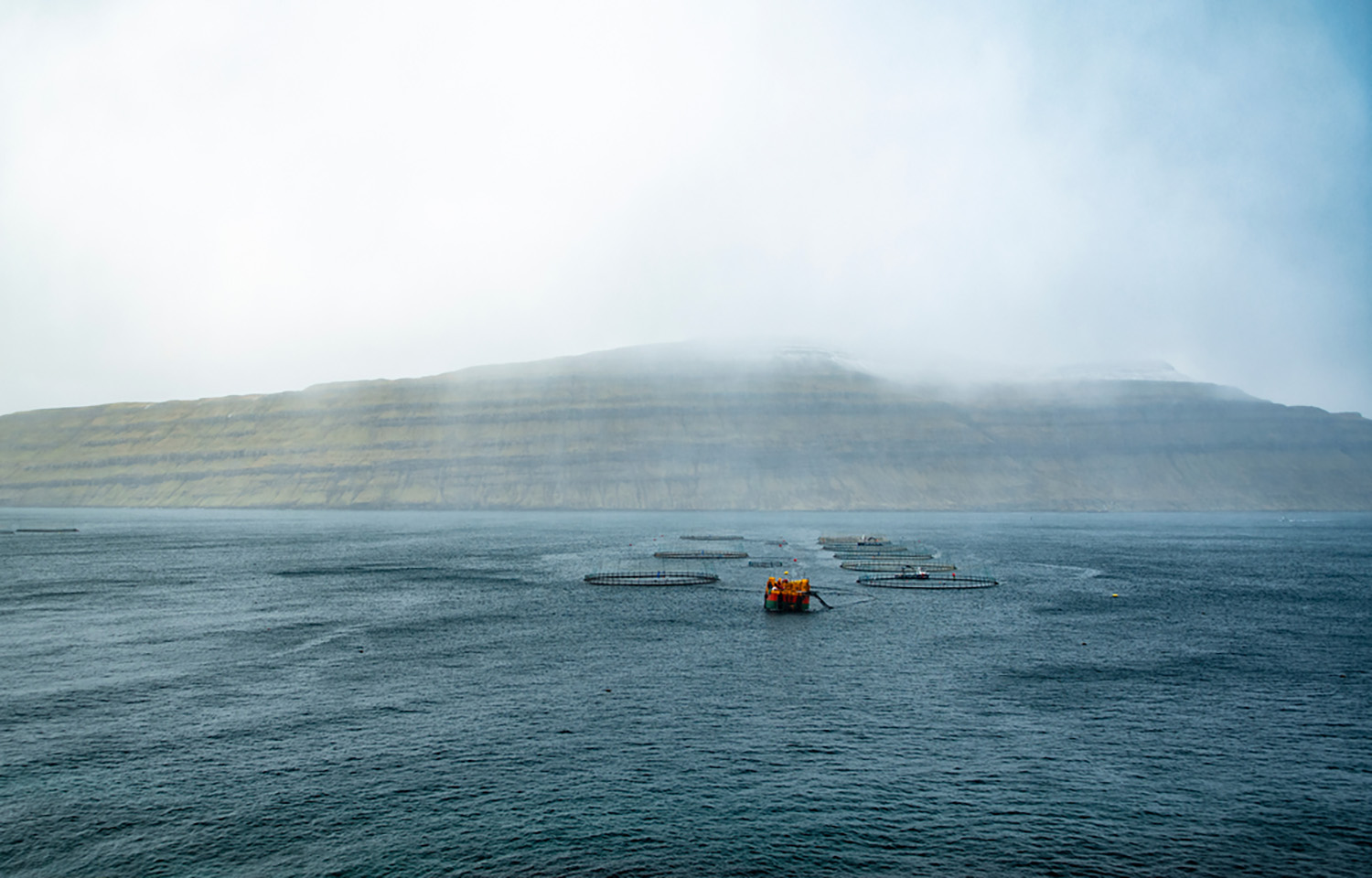
As for the territory’s aquaculture industry, salmon exports suffered from international price declines largely due to Norwegian oversupply; though it exported more volume, it received lower per-kilogram prices.
From November 2024 to October 2025, the volume of salmon exports increased 17 percent, but value decreased by 0.7 percent.
The Faroe Islands also exported 34.4 percent less feed, 36.3 percent less fish flour, and 74.3 percent less fish oil compared to the same period a year prior.
According to Hagstova Føroya, the markets that bought the most Faroe Islands seafood were the E.U. and Asia, where most growth went to China. The Faroe Islands increased sales to the E.U. by approximately DKK 1 billion (USD 158 million, EUR 134 million) to DKK 6.5 billion (USD 1 billion, EUR 871 million). It also increased its sales to Asia from DKK 30.5 million (USD 4.9 million, EUR 4.1 million to DKK 113.9 million (USD 18.2 million, EUR 15.3 million), marking growth of 273 percent.
Despite ongoing tensions with Russia, Faroese exports to the country still totaled DKK 180.4 million (USD 28.7 million, EUR 24.2 million), though major salmon-farming firms like Bakkafrost and Hiddenfjord have continued to boycott the Russian market since its invasion of Ukraine in 2022.
