


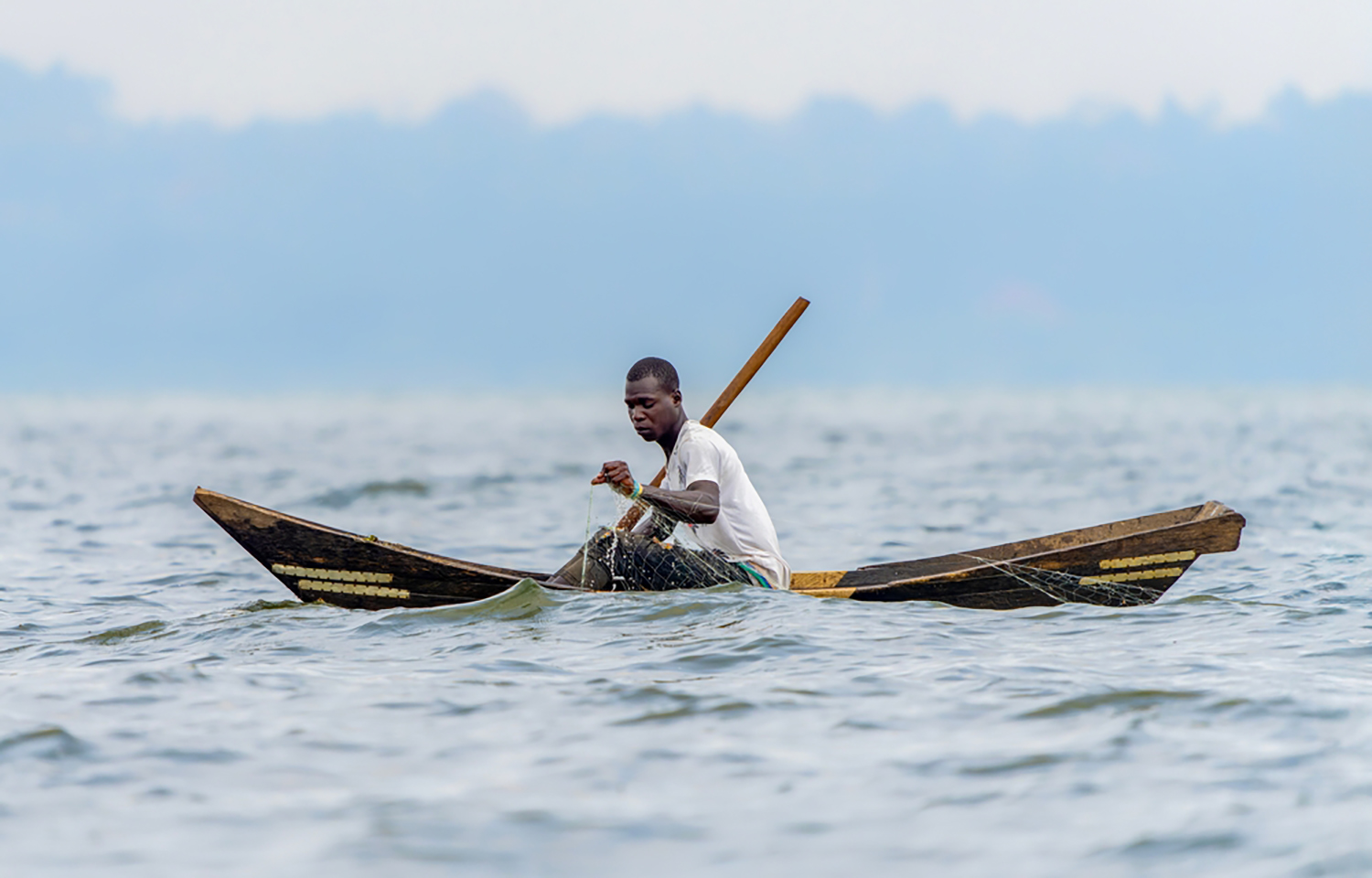
Uganda’s proposed plan to restock fish populations in the nation’s lakes and rivers has been met with criticism from fisheries organizations and some members of the Ugandan parliament (MPs) who insist the program fails to address the real causes of fish depletion in the nation’s fisheries.
The Ugandan Parliamentary Budget Committee is seeking the support of MPs to allocate UGX 23 billion (USD 6.2 million, EUR 5.8 million) toward financing stock-rebuilding efforts in the East African country’s key fisheries, including Albert, Edward, Kyoga, Victoria, and Wamala lakes, as well as support the construction of fish production facilities in select locations.
The UGX 23 billion figure came out of a report published by the Ugandan Ministry of Agriculture, Animal Industry, and Fisheries that indicates a current funding deficit of around UGX 16 billion (USD 4.3 million, EUR 4 million) for establishing fish production facilities and UGX 7 billion (USD 1.9 million EUR 1.8 million) for restocking lakes and other smaller fisheries that have suffered from reported depletion of fish stocks.
“The [budget] committee recommends that, under the special intervention for the fisheries sub-sector and aquaculture development, UGX 23 billion be provided to implement these activities,” Vice Chairperson of the Budget Committee Achia Remigio said.
However, the Uganda Fisheries and Fish Conservation Association (UFFCA), a fishery sector development and advocacy nonprofit, said the restocking plan “will not work and makes no sense to fishing communities in the manner it is envisaged by the government.”
“Depletion of fish in the lakes targeted in the restocking plan is mainly caused by the increasing use of illegal fishing gear,” UFFCA Executive Director Seremos Kamuturaki told SeafoodSource. “Carrying out restocking without effectively tackling the problem of use of illegal gear is an exercise in futility because the juvenile fish that would be introduced during the stock-building phase would be wiped out in no time by these unscrupulous fishers. We are not even sure whether the plan has alternative provisions for the survival of fishers in case there is a ban on fishing to allow for the restocking plan to be implemented.”
Besides the issue of illegal fishing causing stock depletion, Kamuturaki also placed blame on other countries in East Africa, including Kenya and Tanzania, for failing to promote co-management of inland fisheries resources “to create a sense of ownership among the Indigenous fishing communities.”
“What we have now is a situation where governments on their own have formed committees with a large representation of downstream value chain actors, such as processors and exporters, but very few representatives of the Indigenous fishing communities around the water bodies,” he said.
Kamuturaki said UFFCA, which represents Ugandan small-scale fishers operating on the country’s lakes and rivers, is instead proposing the establishment of separate small cooperatives for each of the species fished in the country, “such as a Nile perch association or dagaa association but with a central management to promote self-regulation of fishing activities in our lakes and rivers and give fishing communities, who are the actual resource owners, opportunity to co-manage the fisheries with the government.”
Some Ugandan MPs have also criticized the restocking plan, saying academics and other politicians making decisions did not consult fishing communities around Uganda’s inland lakes on the plan nor on other proposed investments in the fisheries sector.
“These researchers at the national Fisheries Resources Research Institute or the National Agricultural Research Organization might have good academic knowledge, but they don’t consult fishermen about the actual conditions of the water bodies,” Kyamuswa County MP Moses Kabusu said.
Buvuma Island MP Robert Migadde said the restocking plan, should it get the green light from parliament, must mainly focus on Nile perch – the most prevalent fish species in Uganda and which the country has advantages to produce compared to other countries – to be successful.
Hellen Nakimuli, an MP out of Kalangala, said she does not even believe the plan will get off the ground.
“Many times we have seen these ministries request financing, and when money is approved, not much comes out of it,” she said.
The United Nations’ Food and Agriculture Organization (FAO) has labeled Uganda’s fisheries as disorganized operations with little regulation to control illegal fishing.
“[Fishing limits] are controlled only through licensing, but the suitable number of licenses that should be issued on each lake is not known and there is no regulation to control fishing capacity on individual lakes,” FAO said. “Consequently, the fishing capacity has continued to increase with increasing human populations even when catches decline, which threatens the sustainability of fish stocks.”
