






The global seafood industry is charting a smoother sail in 2026 compared to last year, according to several economic and sector experts.
While geopolitical pressures served to redirect seafood trade flows last year, prompting buyers to reconfigure sourcing strategies, RaboResearch Seafood Analyst Novel Sharma noted in February 2026 that those tensions did not suppress demand – especially for several key farmed species.
“What was interesting in the U.S. was something we describe as a ‘K-shaped economy,’” Sharma said. “Lower-income consumers saw their purchasing power weaken, but higherincome consumers – who are typically the main buyers of high-value seafood like salmon and shrimp – actually saw their wealth increase, largely driven by stock market performance. So, their purchasing power improved. Europe has also been surprisingly stable. We don’t expect Europe to replicate the growth we saw last year, but it should remain relatively steady. Inflation is more under control, and that’s helped maintain consumption.”
Macroeconomist, geopolitical finance expert, and best-selling author Nomi Prins said she was also struck by the seafood industry’s trade dexterity through last year’s turmoil.
“The industry faced disruption last year, but some strategies and adaptation helped certain companies and countries. For example, the U.S. removed and then reinstated and then removed tariffs on Canada and Mexico and then slapped an extra 10 percent on China. Today, we’re not past it, but we’re in a different moment; it’s not an industry in reactivity and panic; it is operating inside what’s now kind of a realigned system,” Prins told SeafoodSource. “There are some trade routes that have shifted: India, Vietnam, Brazil, Ecuador, they’ve all sort of stepped into new strategies or are kind of existing by the U.S.-China friction, which I think will remain an overhang this year, but it’s been put aside with some of these other countries stepping in.”
This flexibility led to certain countries experiencing “best-year-in-record-type results [in 2025]” – and will likely continue to pay off in 2026, Prins added.
“Vietnam shattered records: Their shrimp exports achieved USD 4.6 billion [EUR 4 billion] [in 2025], which is their strongest growth in three years because the supply chain adapted around ultimately where tariffs were and where they abated,” she said. “What Vietnam did, it had already been doing; it didn’t wait for the trade wars to stop, it just sort of pivoted its distribution channels quickly to channels that already existed and emphasized them. I think we’re going to see a lot of that kind of thing.”
Similarly, India also “faced really sticky tariffs at one point” in 2025, Prins said, “but still their exports hit an all-time high.”
“Again, [India] diversified, and they diversified quickly and aggressively. That’s another big theme: diversifying and having that path; choosing a direction and moving with it, not against it,” Prins explained. “It’s not about fighting tariffs but adapting around them.”
“We’ve got more traceability mandates as a result of some of these tariffs that are now going to be more permanently in place, which I think is a good thing. Traceability is going to be a good point of economic advantage for companies and countries that actually stick with the rules and the mandates and have good technology to report on them because they’re here, they’re active, they’re enforceable. That’s going to be one thing we’re going to see: the winners in this environment emerge,” Prins said.
“As a competitive advantage, it’s not a burden anymore to have the technology that’s best-in-class to mirror traceability and standards. We’re seeing it more in the U.S. and Japan and with Middle East retailers wanting to enforce traceability requirements. A lot of that’s actually driven from the demand side. It’s not even just regulations, rules, and tariffs when it comes to traceability, but it’s also what consumers want more of because it shows value in the product that they’re buying,” she added. “The companies that invest in traceability – digital traceability or even in blockchain-backed records or technologies – and that practice sound sustainability can get access to those higher-margin markets where consumers are more apt to pay more for the best products. I think traceability is an economic advantage, and I think it’s going to be a big theme this year.”
In tandem with prioritizing traceability and quality, global consumers are also gravitating toward healthy, nutritious, and convenient seafood products and meals. In its recent “U.K. Market & Retail Trends Report 2026,” the Norwegian Seafood Council (NSC) found all of these consumption drivers to be deeply important for U.K. consumers, no matter the species.
“The U.K. is already one of the most innovative seafood markets globally, with a world-class processing and retail sector that supports it,” NSC U.K. Director Bjørn-Erik Stabell said in March. “Our role is to contribute to that innovation by bringing Norwegian products to the market and by sharing insights that can support better decisions, spark new ideas, and unlock further growth. In doing so, we aim to strengthen the partnership between Norway industry and the U.K. industry. Seafood is growing in the U.K. It’s doing really well. It’s growing in value and volume despite high average prices. If you look at it versus other proteins, it’s one of the highest average prices per kilogram, yet it’s still maintaining this growth.”
Speaking to the NSC report at the 2026 Norway-U.K. Seafood Summit, Stabell noted that raw consumption and frozen formats hold a lot of promise for seafood at U.K. retail in 2026.
“Raw consumption represents one of the most exciting growth opportunities for seafood in U.K. retail,” Stabell said. “The opportunity lies in making raw seafood more accessible – through clear quality cues, strong provenance messaging, and convenient, ready-to-enjoy formats.”
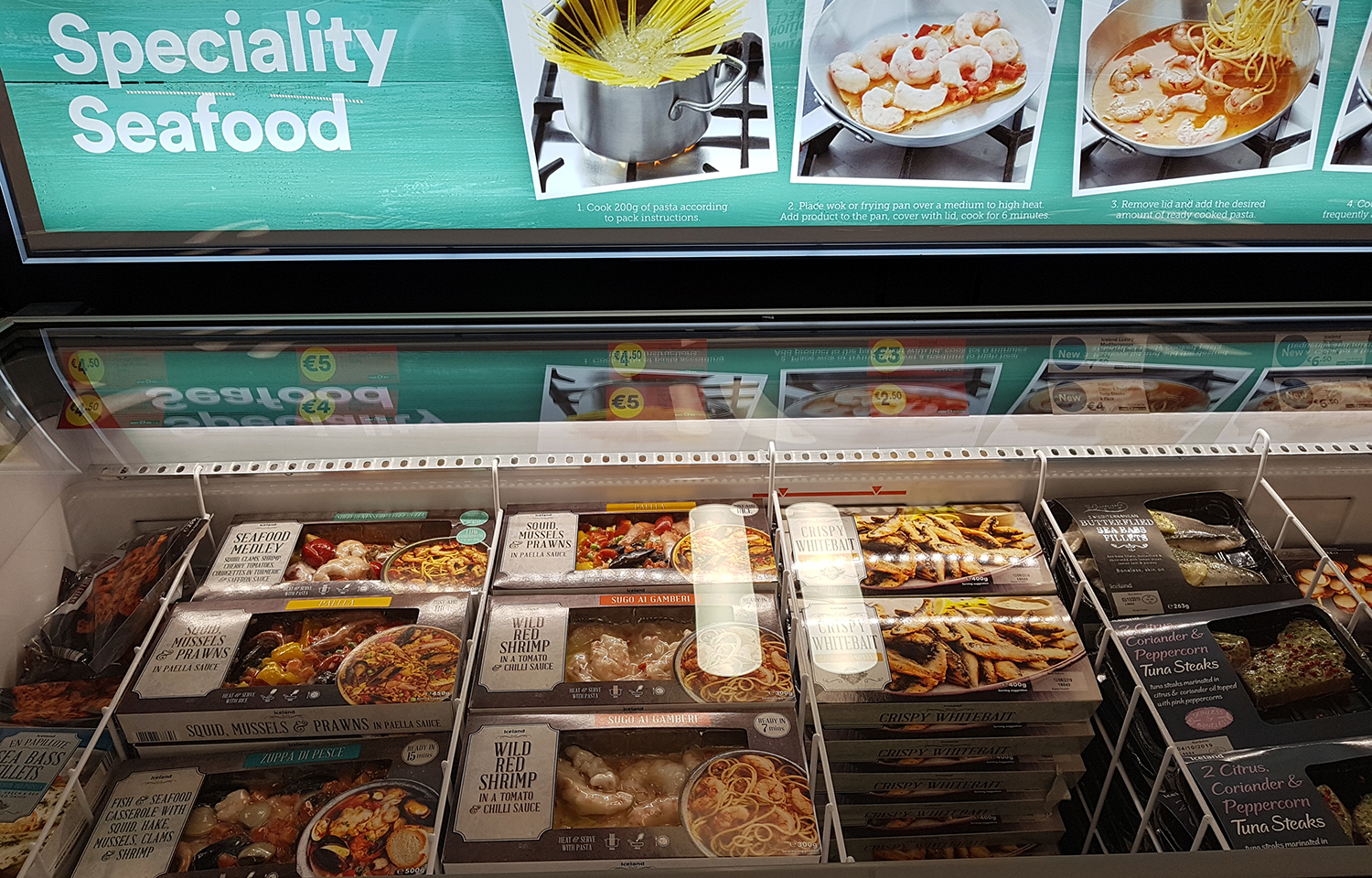
“The freezer is becoming one of the most exciting spaces for seafood innovation,” Stabell added. “This is a structural change, not a short-term trend, and Norwegian suppliers are well-positioned to help drive the next phase of growth.”
