



Global seafood markets have entered 2026 on steadier footing than expected, with resilient consumer demand continuing to support prices across key farmed species.
This resilience has come despite geopolitical uncertainty, shifting trade flows, and tight supply conditions, according to the latest RaboResearch aquaculture outlook report from Rabobank.
The report claims easing inflation in major market economies has helped sustain consumption as 2026 has kicked off, but the seafood industry is still navigating a complex operating environment shaped by macroeconomic uncertainty, evolving tariff rates, and climate-related risks.
Nevertheless, RaboResearch Seafood Analyst Novel Sharma told SeafoodSource that 2026 is set to be better than last year.
“There was a lot of uncertainty in 2025, especially around tariffs,” he said. “It was a very volatile year, particularly because the U.S. plays such a big role in markets like shrimp and salmon.”
The RaboResearch analysis explained that geopolitical tensions have redirected seafood trade flows rather than suppress demand outright. At the same time, buyers have been adjusting sourcing strategies in response to tariffs, market access constraints, and inventory swings. While the impacts have varied across regions and species, overall demand has remained robust, providing a degree of price stability – even amid fluctuating volumes.
“What was interesting in the U.S. was something we describe as a ‘K-shaped economy.’ Lower-income consumers saw their purchasing power weaken, but higher-income consumers – who are typically the main buyers of high-value seafood like salmon and shrimp – actually saw their wealth increase, largely driven by stock market performance. So, their purchasing power improved,” Sharma said. “Europe has also been surprisingly stable. We don’t expect Europe to replicate the growth we saw last year, but it should remain relatively steady. Inflation is more under control, and that’s helped maintain consumption.”
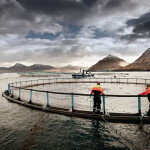
Global salmon supply growth is expected to slow sharply in early 2026, with output forecast to either be flat or increase, at most, 2 percent in the first half of the year.
“Last year, a lot of salmon was harvested at the end of 2025 because growth rates were very strong,” Sharma said. “Fish reached harvest size faster than expected, partly due to improved biology, better vaccination coverage, and relatively mild water temperatures. We’ve also seen more post-smolt strategies, which shorten the time fish spend at sea. Some fish stocked in spring reached harvest size in less than a year. So, even though biomass levels are lower going into the first half of 2026, growth rates could surprise on the upside. Water temperatures have been milder than expected, which boosts feeding and growth. Our base case is still limited growth in the first half, but there are signals suggesting we may be underestimating how well fish will grow.”
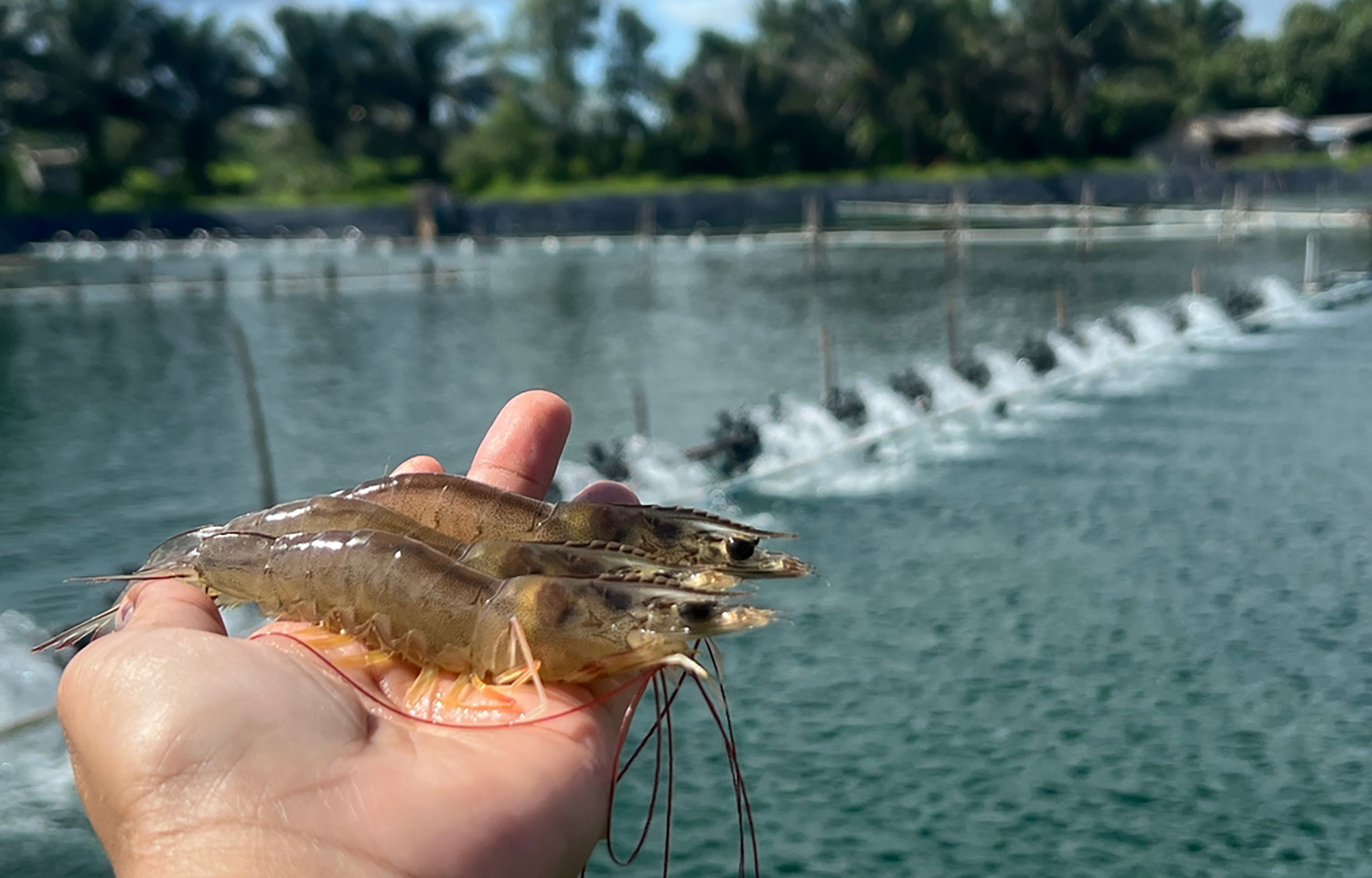
In shrimp, tariffs and market access are increasingly shaping global competition. U.S. imports eased toward the end of 2025 as buyers worked through inventories built ahead of new tariff rates – a trend expected to keep shipments lower in early 2026.
The Rabobank report confirmed that Europe absorbed some of the volumes diverted from the U.S. throughout 2025, but late-year stock-building may limit further intake as this year progresses. In China, imports normalized by mid-2025 before easing again later in the year. Prices have remained relatively stable, which Rabobank sees as a sign of healthier underlying demand than the volume data alone might suggest.
Competitively, Ecuador continues to strengthen its position thanks to tariff advantages and growing value-added capacity. India, meanwhile, is feeling the squeeze as U.S. duties pressure margins, while Vietnam is holding ground in higher-value segments. Indonesia, however, remains exposed due to its reliance on the U.S. market, intensifying regional competition, and reputational issues.
Though markets like India and Indonesia have struggled to adjust to the evolving landscape, shrimp is a sector where things can change much faster, Sharma said.
“Shrimp can be grown in under 100 days, so production responds quickly to prices and market signals. That makes shrimp markets more volatile but also more adaptable,” he said. “If nothing changes – which is a big ‘if’ – we expect growth to continue but more slowly. What the industry really needs is rebalancing. We saw huge growth during and after Covid-19, driven by retail demand. That eventually led to oversupply, rising inventories, and a price collapse. Nobody wants a repeat of that, and the industry is very aware that price points matter.”
Elsewhere, fishmeal markets entered 2026 under tight supply conditions. The second Peruvian anchovy fishing season in 2025 opened with a provisional quota of just 500,000 metric tons (MT), later raised to 1.6 million MT as biomass estimates improved. Even so, that remained lower than previous years.
Even if supplies improve, Rabobank expects fishmeal prices to stay elevated.
Overall, the outlook for global aquaculture is cautiously optimistic, Sharma said. Tight supply, resilient demand, and ongoing trade realignments are expected to keep prices solid across key sectors, even as producers and processors continue to navigate geopolitical and environmental uncertainty in 2026.
“Now, we understand the dynamics much better,” he said. “Even if things change, we have a clearer idea of how the industry is likely to react. That makes everyone better prepared.”
