


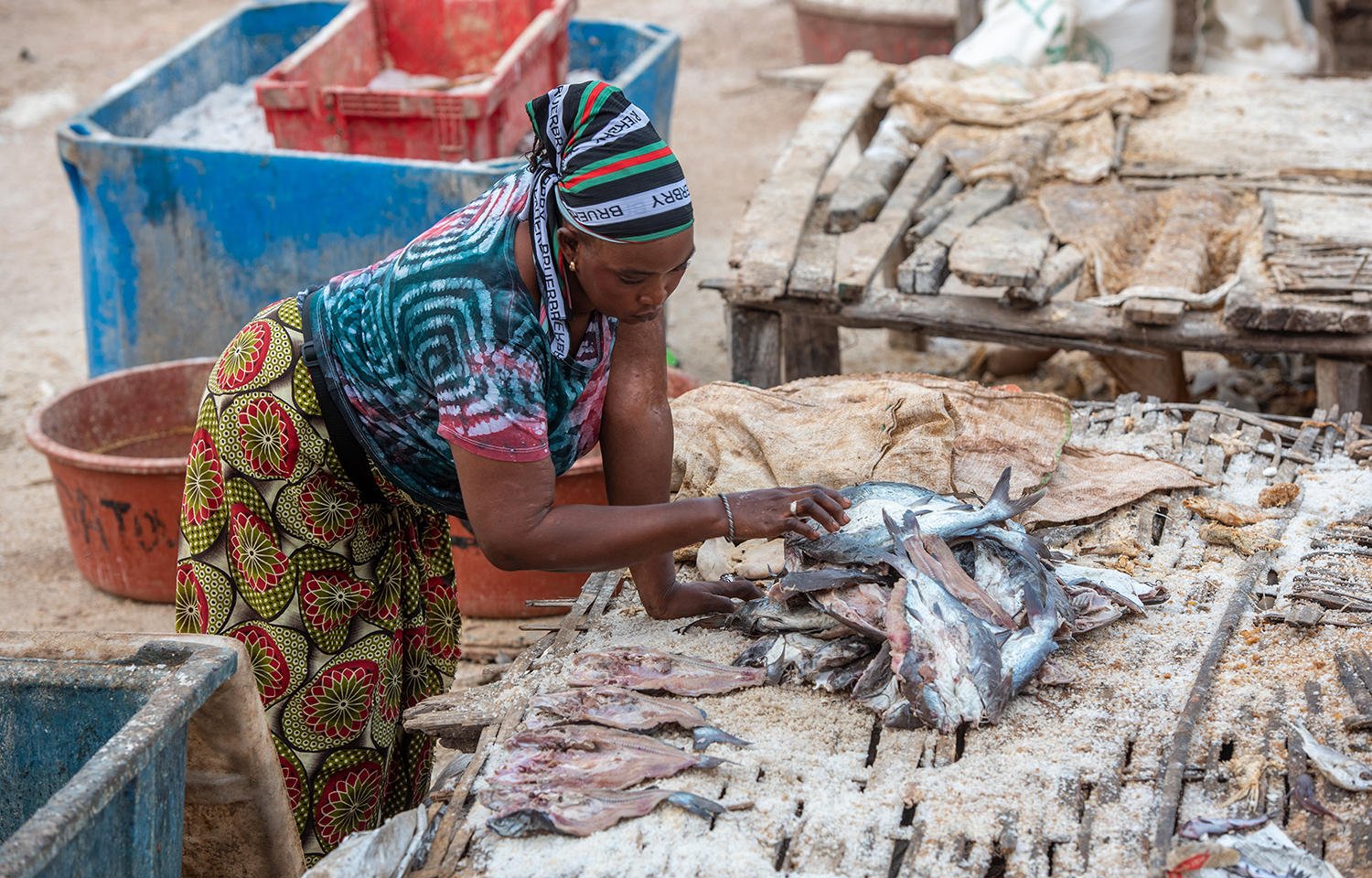
The West African country of Guinea-Bissau has banned the production of fishmeal and fish oil as concerns mount over the overfishing of small pelagics.
Guinea-Bissau Fisheries and Maritime Economy Minister Virginia Pires Correia, one of 23 ministers appointed under President Horta N'tam who was sworn in last November, said the nation will “adopt immediate corrective measures in order to suspend, restrict, and stop the production activity of fishmeal and fish oil, whether by ships or by units on land.”
The minister also paused issuance of fishing licenses for small pelagic fish and related fishing operations for supplying factory ships for the production of fishmeal and fish oil.
As justification for the move, Correia said that fishmeal and fish oil operations in the country have “endangered pelagic species as well as the surrounding ecosystem since the production of fishmeal and fish oil for animal feed competes with fish intended for the population's diet, thus posing a risk for consumers' food and nutritional security.”
Béatrice Gorez, the coordinator of the Coalition for Fair Fisheries Arrangements (CFFA), a platform focusing on raising awareness about the impacts of E.U. policies on African artisanal fishing communities, told SeafoodSource the minister's decision was bold and “reflects the level of concern about the social, food security, and ecological impacts of fishmeal production growth.”
She said governments, especially in West Africa, should “prioritize small pelagic species for direct human consumption, given their importance for food security and nutrition and to limit reduction into fishmeal and fish oil to processing byproducts or strictly controlled volumes.”
“This means giving priority access (permits, licensing, fees) to those who fish for human consumption/local regional markets, in particular small-scale fishers, and this needs to be accompanied by adequate investments in at-sea and on-land cold chains to ensure more small pelagics can be used for human consumption, particularly through small-scale processing,” Gorez said.
Gorez said governments in West Africa have an opportunity to lead campaigns to cap or reduce fishmeal plant capacity, strengthen licensing and monitoring, and improve enforcement against illegal or unreported landings that end up in fishmeal factories.
“Greater transparency is also essential such as public reporting on volumes by species, destination, and export flows would make it easier to assess real impacts and hold industry accountable,” she said.
The Regional Partnership for Coastal and Marine Conservation in West Africa (PRCM) similarly called the ban “courageous” and an exemplary initiative.
“We hope this decision will pave the way for a positive momentum across the sub-region, fostering healthy oceans and a sustainable future for communities,” it said.
The latest move follows similar commitments Guinea-Bissau has made to restore and protect small pelagic species in its waters. The country also signed a new fishing protocol deal signed with the European Union last year, where the two parties agreed fishing for small pelagic species was “off limits, owing to the state of the stocks and low uptake.”
The new deal allows 28 freezer tuna seiners and surface longliners, as well as 13 pole-and-line tuna vessels, from Spain, France, Italy, Greece, and Portugal to fish in Guinea-Bissau’s waters, harvesting up to 3,500 gross registered tonnage (GRT) of cephalopods and 3,700 GRT of shrimp annually until 2029 in exchange for EUR 85 million (USD 101 million). That total includes EUR 4.5 million (USD 5.4 million) for the promotion of Guinea-Bissau’s sustainable fisheries management and to support local fishing communities, according to the E.U.
