




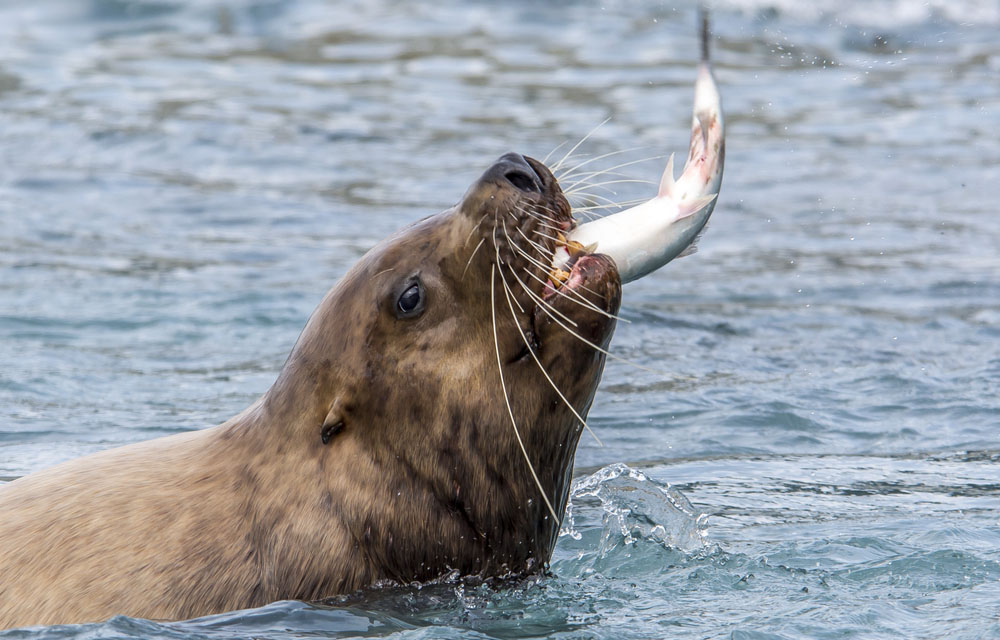
A new bill introduced in U.S. Congress would authorize Native American tribes in Southwest Washington to kill some of the sea lions eating salmon in the Columbia River.
California and stellar sea lion populations have ballooned in the Pacific Northwest under the Marine Mammal Protection Act (MMPA); since 1950, the population has increased from roughly 10,000 to 250,000. Salmon are a major source of prey for sea lions, and the increased pinniped population has placed more pressure on the fish.
“In the decades since the enactment of the MMPA, pinniped populations have exploded and are dominating ecosystems across the Pacific Northwest and devastating salmon and steelhead populations listed under the Endangered Species Act,” U.S. Representative Harriet Hageman (R-Wyoming) said during a congressional hearing on sea lion predation on salmon held late last year. “The National Marine Fisheries Service has found on repeated occasions over the last two decades that pinniped predation is a leading factor in preventing the recovery of these salmon species. One study found that by 2015 across the Pacific coast, pinnipeds consumed six times the number of Chinook salmon that were captured through commercial and recreational fishing combined.”
Starting in 2018, the U.S. government authorized state and tribal governments to kill some sea lions in the Columbia River basin to keep them from eating fish, and NOAA Fisheries claims the killings have protected an estimated 110,000 adult salmon from being eaten. However, the agency also testified that the authorized killings have only had a limited impact on salmon recovery, with state and tribal efforts regularly failing to meet the minimum number for authorized removals.
“While these permits have helped reduce predation on salmonids at a small scale in certain areas, they have been ineffective at moving the needle for salmonid recovery overall,” NOAA Fisheries Deputy Assistant Administrator Samuel Rauch testified.
Now, U.S. Representative Marie Gluesenkamp Perez (D-Washington) has introduced the Protecting Columbia River Salmon Act to increase the number of killings allowed.
“I have local fishermen telling me that nearly every salmon they pull out of the river have wounds from sea lions. The fact is, politicians in [Washington] D.C. aren’t out on our rivers; they’re still living in a world of 1970s data points. If we want to keep things in balance, we need to restore agency to our tribal partners and their designees,” Gluesenkamp Perez said in a release.
The bill as written would allow Native American tribes with ancestral ties to the Columbia River to kill sea lions downstream of McNary Dam. The legislation would enable the tribes to determine a humane manner to conduct the culling. The bill has been backed by the Cowlitz Indian Tribe and Confederated Tribes of the Chehalis Reservation.
“In living memory, Columbia River Salmon was subsistence food. If you lost your job, you knew your family wouldn’t go hungry if you were a good fisherman,” Gluesenkamp Perez said. “Now, it’s in danger of becoming a luxury good, and that would be a profound loss to our culture and heritage. This bill is about supporting the agency that comes with living off the land and restoring tribes’ ability to rebalance the ecosystem to support salmon runs.”
The White House put out a statement saying it strongly supports passage of the bill, and if it were sent to U.S. President Donald Trump, his advisors would recommend he sign it.
“Sea lion predation has a significant negative impact on the recovery of salmon and steelhead fishery stocks in certain areas of the Pacific Northwest, and the targeted taking of sea lions is at times warranted to promote the recovery of certain stocks of salmonids or other fish. This bill would provide greater flexibility for the removal of sea lions on the covered waters, and it supports the administration’s priorities in Executive Order 14276, Restoring American Seafood Competitiveness, to rebuild fisheries and support the long-term sustainability of fishing communities,” the White House said in a statement.
