





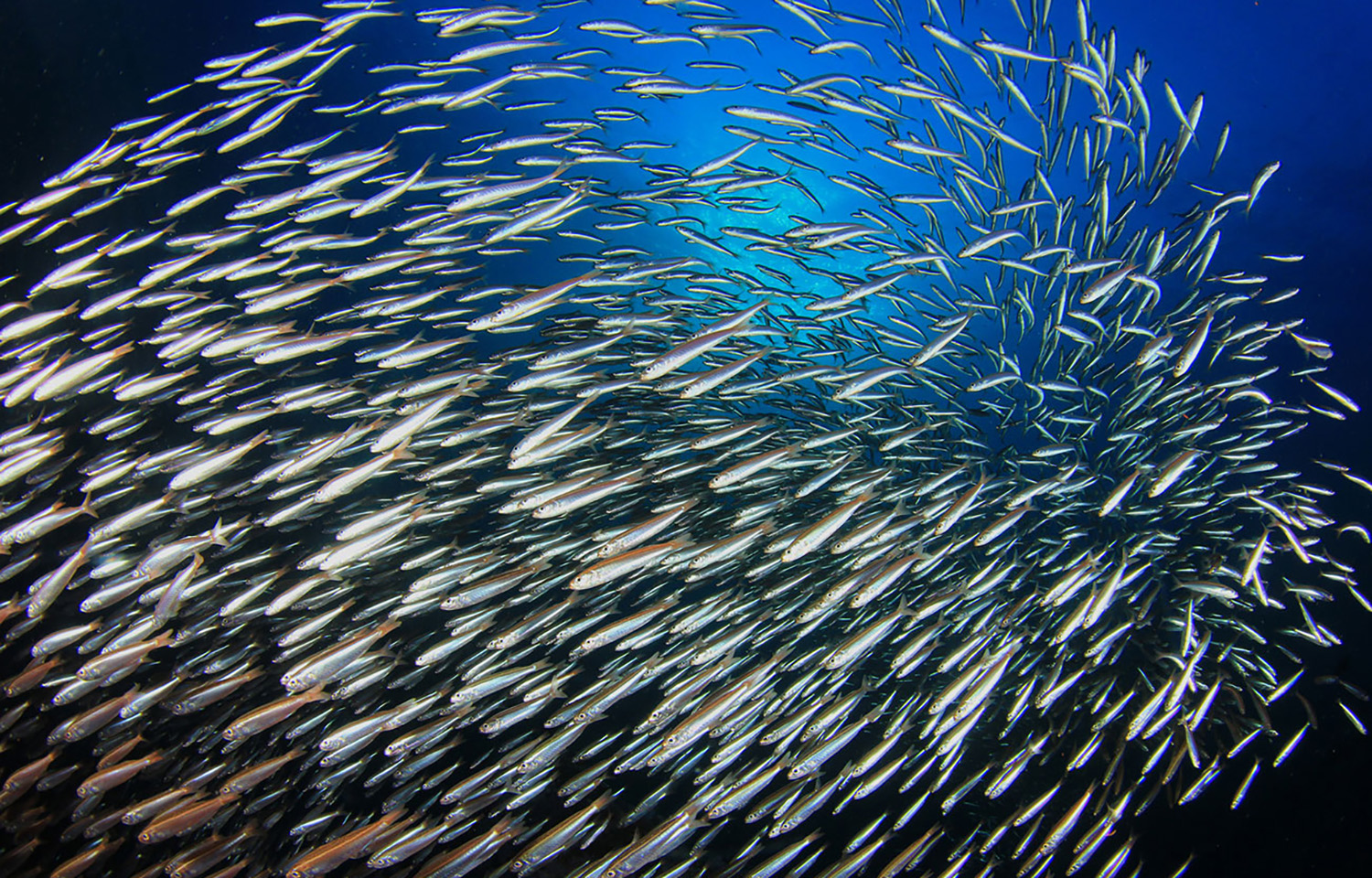
Anchovy biomass off the coast of Peru is healthy, and prospects for a successful second anchovy-fishing season in 2024 in the nation’s North-Central zone are looking positive, according to the Peruvian Sea Institute (Imarpe) – a technical branch of the Peruvian Production Ministry (PRODUCE).
Imarpe recently highlighted that anchovy landings in the North-Central zone’s first season, which wrapped up over the summer, reached 98 percent of the PRODUCE-established 2.48 million metric ton (MT) total allowable catch (TAC).
That result was a relief for the industry, considering the previous two seasons had significantly underperformed: In January 2024, PRODUCE closed the country’s second anchovy season early, following the complete cancelation of the first season of 2023.
The fishery – one of the world’s largest – is highly important for Peru as it brings in billions of dollars in revenue, and for the global seafood industry, as the country’s anchovy catch is used to produce about 20 percent of global fishmeal supplies.
Cumulative global fishmeal and fish oil production has increased this year thanks in large part to the strong first anchovy season in Peru this year, according to IFFO - The Marine Ingredients Organization, a trade group representing several leading fishmeal and fish oil companies.
With the results of the most recent scientific survey performed by Imarpe coming back positive, this year’s second season will likely be launched around the beginning of November, a spokesperson from Imarpe told SeafoodSource.
Imarpe has already concluded a second evaluation cruise for pelagic resources, and with this information, it will be able to determine exact conditions for the start of the second fishing season.
“Although the publication of the Imarpe report is pending, everything seems to indicate that anchovy biomass is healthy and should be around 10 million MT,” former Imarpe Director and Agrarian University La Molina Professor Luis Icochea said. “However, it is important to emphasize that industrial vessels are only authorized to catch up to a maximum of 35 percent of the total observable biomass so that more than 65 percent remains at sea for the continuity of the species. The only way to continue with this activity … is to carry out responsible and sustainable fishing.”
Deputy Minister of Fisheries and Aquaculture Jesús Barrientos said that though the preliminary results of Imarpe's cruises show that there is a healthy stock of anchovy, any sudden oceanographic change can alter the distribution of the anchovy and make it more difficult to catch.
“Therefore, it is important to start the fishing season at the right time,” he said.
Further emphasizing the global importance of Peru’s anchovy fishery, it was recently the subject of a documentary entitled “Leading the Way: How SNP is Advancing Anchoveta Management in Peru.” The documentary was part of Ocean Titans, a series of films put on by the World Ocean Council centered around the importance of ocean preservation.
“The abundance of the Peruvian sea is a remarkable gift from nature, nurtured by the Humboldt Current, which flows from south to north and makes these waters among the most productive in the world. As custodians of this invaluable legacy, the National Fisheries Society, along with its partner companies, has been a key player in the stewardship of the Peruvian sea for over 72 years,” the description of the documentary states.
The film credits responsible fishing across the Peruvian industrial fishing industry for successfully maintaining anchovy biomass at an average of more than 9 million MT over the past 15 years, with current levels at around 10 million MT. The management of Peru's most important fishery has been “exemplary,” it said, garnering international recognition from institutions such as the UN Food and Agriculture organization (FAO) and prestigious universities such as Yale and Columbia.
Management requires innovation and upkeep, according to the documentary, and the Peruvian fishing industry has invested around USD 500 million (EUR 460 million) in technological innovation that has improved productivity and environmental sustainability. As a result, Peru is the world leader in the production of fishmeal and fish oil – two essential marine-based ingredients for the world’s expanding aquaculture industry, as well as for human health.
“The Peruvian anchovy fishery is the largest in the world providing fish oil, which contains EPA and DHA Omega-3s,” Global Organization for EPA and DHA Omega-3s Managing Director Ellen Schutt said in a release. “Because it is so important for humans to get EPA and DHA, Peru plays a vital role in supporting the health of the world's population.”
In the documentary, marine biologist and University of Washington School of Aquatic and Fisheries Sciences Professor Ray Hilborn said that the model of anchovy fishing in Peru – which features research cruises to estimate the biomass of the resource, the establishment of TACs, and forward-thinking self-closures of the fishery – could be employed in other fisheries around the world.
“There's a number of things that other fisheries can learn from Peruvian anchoveta. One of the things the anchoveta fishery has been quite innovative in is using their commercial fisheries vessels as a way of collecting more information about the distribution and abundance of fish,” he said. “Most of the fishing vessels have very high-quality electronic fish sounders on board that they use to find the fish, so you have, in effect, a large number of research vessels traveling around the waters of Peru counting anchoveta; that's a model that could be emulated in many other fisheries management.”
Despite facing external criticism about its sustainability, the fishery is much more environmentally friendly than other alternatives, he said.
“[The fishery has] been criticized as not being sustainable because it has environmental impacts, but if we were to not harvest anchoveta and replace it … with crops, it would largely be from soy production and would take 30,000 square kilometers of new soy production in order to replace anchoveta,” Hilborn said. “Those 30,000 square kilometers would come largely in tropical rainforest, which is where the expansion of soy production has been coming from, and the loss of 30,000 square kilometers of tropical forest is a much bigger threat to global biodiversity than the impact of reducing the anchoveta population on marine predators.”
