


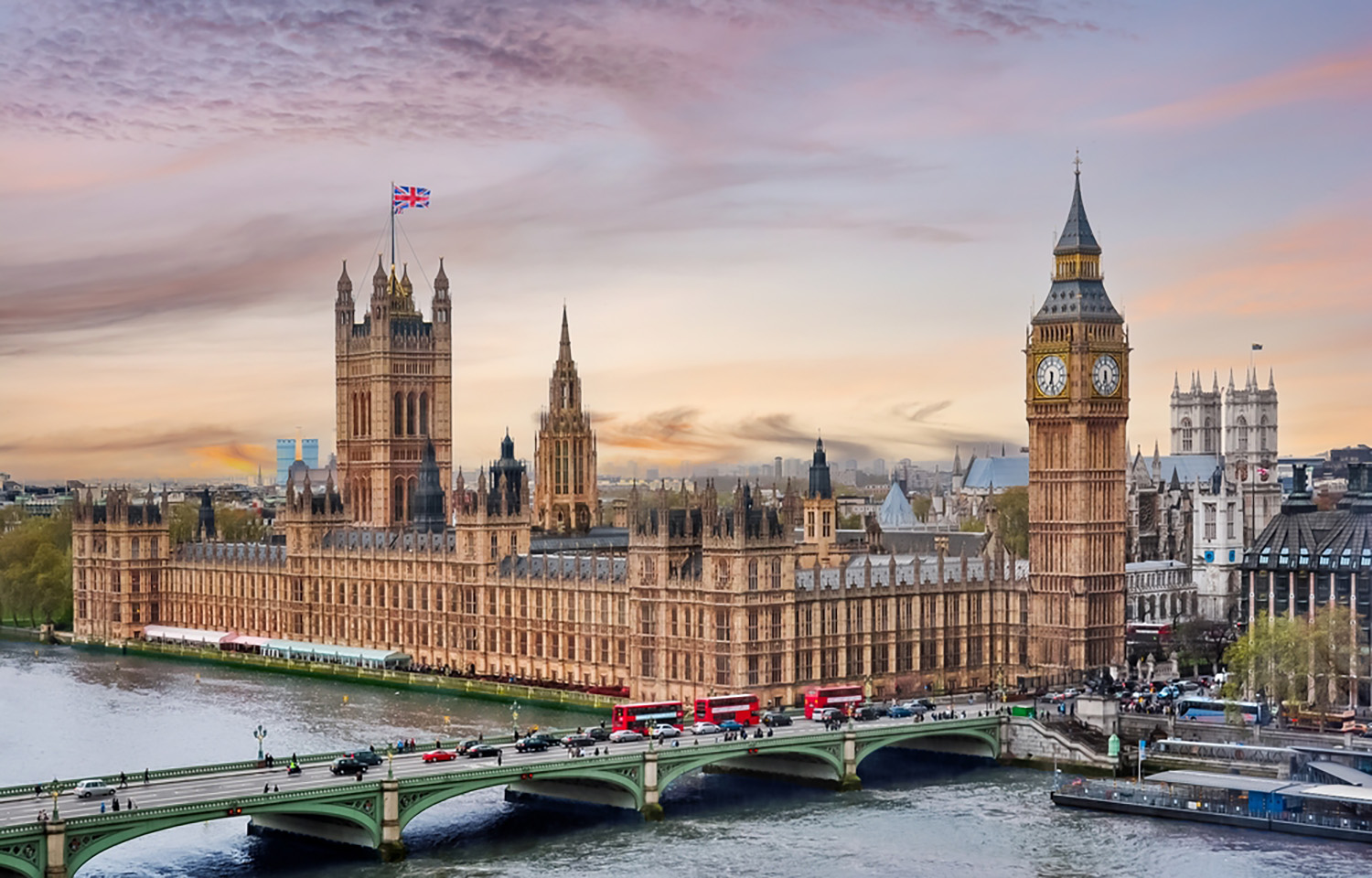
On 4 July, U.K. citizens will elect members of parliament (MPs) and their respective political parties to the House of Commons.
With the BBC projecting a change in leadership away from the Conservative Party, many industries across the nation, including the seafood sector, are bracing for changes.
The current government, led by U.K. Prime Minister Rishi Sunak, has promised, if elected again, to champion the fishing sector by building long-term sustainability and growing coastal businesses “from Shetland to Cornwall.” The party’s 2024 manifesto also claims that the Conservative government has secured 2024 quotas worth over GBP 970 million (USD 1.2 billion, EUR 1.1 billion) for U.K. fishermen.
“We will go further to seek additional opportunities for our inshore fleet in the 2026 negotiations and ensure inshore voices are better heard by their representative bodies,” the Conservative Party said.
The party’s other key promise is to maintain the momentum gained with the GBP 100 million (USD 126.5 million, EUR 118.1 million) UK Seafood Fund, advising the funds would be best used to invest in harbor and fish market upgrades, provide new equipment and technology for fish processing, and support a growing aquaculture sector.
“We will particularly concentrate funding on small- and medium-sized businesses and the inshore fishing fleet. Recognizing competing pressure on marine space, we will also seek opportunities to back the inshore fleet when making marine planning decisions,” the party said.
While not specific to seafood, the Conservatives also promise to build new trade links, with the party's manifesto highlighting the U.K. is now the fourth-biggest exporter in the world by value, jumping over France, the Netherlands, and Japan by hauling in GBP 850 billion (USD 1.1 trillion, EUR 1 trillion) in export value last year.
The Conservatives’ main opposition, the Labour Party, led by Keir Starmer, insists the upcoming election is about “change” and “turning the page” on 14 years of Conservative government.
While making no direct reference to fisheries or the wider seafood economy, its manifesto highlights the party will create a new GBP 7.3 billion (USD 9.2 billion, EUR 8.6 billion) National Wealth Fund to deliver transformative investments throughout the country. Included in the fund’s outline is an allocation of GBP 1.8 billion (USD 2.3 billion, EUR 2.1 billion) to upgrade ports and build supply chains across the U.K.
Though ensuring the U.K. remains independent and does not seek reunification with the E.U., the manifesto also promises to “use every lever available to get U.K. business the access it needs to international markets.”
To accomplish this, the Labour Party says it will lead international discussions to modernize trade rules and agreements so they work better for the country, promoting enhanced trade and cooperation, including through the World Trade Organization (WTO) and the Comprehensive and Progressive Agreement for Trans-Pacific Partnership (CPTPP).
“We will reset the relationship and seek to deepen ties with our European friends, neighbors, and allies. That does not mean reopening the divisions of the past. There will be no return to the single market, the Customs Union, or freedom of movement. Instead, Labour will work to improve the U.K.’s trade and investment relationship with the E.U. by tearing down unnecessary barriers to trade.”
Liberal Democrats, led by Ed Davey, advise in their manifesto that they want to ensure sustainability “lies at the heart” of fisheries policy, rebuilding depleted fish stocks to achieve their former abundance, including a ban on bottom trawling in marine protected areas (MPAs).
The party insists that fishers, scientists, and conservationists should all be at the center of a decentralized and regionalized fisheries management system. Additionally, through the party’s strategy to tackle climate change, it says it wants to create “a real network” of MPAs, ensuring they are fully protected from damaging and destructive activities by protecting and restoring blue carbon and ensuring climate resilience at sea.
Regarding trade, the Liberal Democrats want to unlock British businesses’ global potential by breaking down trade barriers and building stronger future relationships with the country’s closest trading partners, including “by fixing our broken relationship with Europe.”
Similarly, if elected, the Green Party of England and Wales, co-led by Carla Denyer and Adrian Ramsay, commits to turning at least 30 percent of U.K. domestic waters into fully protected MPAs by 2030. According to its manifesto, it will also seek to ban all "destructive" fishing practices from those areas and other domestic waters.
“Green MPs will champion cooperation in achieving global sanctuary for all cetaceans, alongside active support for U.N. Charters and obligations under The Law of the Sea to protect against overfishing, pollution, climate impacts, and other threats,” the Green Party manifesto said. “Elected Greens will push for a ban on bottom trawling and other destructive fishing practices in MPAs and other waters, as well as for proper implementation and enforcement of relevant international legislation to protect deep-sea species.”
The party said it will also seek to rejoin the European Union as soon as the domestic political situation is favorable and E.U. member states are willing. As a first step toward full E.U. membership and to resolve “many of the worst problems resulting from Brexit,” it would look to join the Customs Union.
The Scottish National Party (SNP) also wants to return to the E.U. In its election manifesto, leader John Swinney outlined the party’s intention to push for Scottish independence.
Regarding the seafood sector, the SNP insists Conservatives’ post-Brexit trade agreement with the E.U. has created a GBP 281 million (USD 355.5 million, EUR 331.9 million) shortfall in quota value and threatens a key export market for Scottish salmon after 2026.
“Only with independence will we get the change Scotland’s seafood sector really needs,” it states. “Until then, to protect our interests, we will press for real and meaningful engagement for Scotland through the upcoming review of the trade agreement and continue to call for our fair share of quota through a shift to zonal attachment.”
SNP’s manifesto also calls for Scotland to get a “rightful share” of marine funding, emphasizing that although Scotland possesses 63 percent of U.K. fishing waters and over 90 percent of its of aquaculture production, since Brexit, officials in Westminster have “shortchanged funding for innovation and investment” – allocating just GBP 14 million (USD 17.7 million, EUR 16.5 million) directly, instead of the GBP 62 million (USD 78.4 million, EUR 73.2 million) to which the SNP claims it is entitled.
“The U.K. government must give Scotland our rightful share of marine funding and provide certainty through multi-annual funding frameworks,” the SNP said.
As the election inches closer, both the U.K. fisheries and aquaculture sectors have issued reminders to politicians underscoring their importance to the overall economy.
A new poll commissioned by the Scottish Fishermen's Federation (SFF) found that 19 out of 20 Scots believe it’s important for the U.K. to retain control over its fisheries. The poll also found 91 percent feel fishing is a vital part of the U.K. economy, 89.7 percent agree that U.K.-produced food is just as important as U.K.-produced energy, and 93.3 percent of Scots believe U.K. fishing fleets should be given priority in U.K. waters.
With these findings, SFF is calling for candidates to prioritize policies that protect fishing grounds and ensure sustainable practices. It is also calling for a reevaluation of current policies to ensure that the fishing industry is not overlooked as renewable energy efforts continue to expand.
Trade body Salmon Scotland published its own manifesto, calling for whichever party wins on 4 July to ensure the seafood industry can more easily access labor in the U.K., requesting a change to key worker definitions and an alert to the rest of the world that the country is open to foreign workers.
The sector also wants to see an improvement in the U.K.’s relationship with the E.U., with a clear focus on the nation’s export businesses and less red tape for supply chains on both sides.
In this regard, Salmon Scotland is urging the next U.K. government to implement electronic export health certificates (EHCs) to remove unnecessary paperwork associated with exporting salmon to Europe, which it says has been costing farmers in the country an estimated GBP 3 million (USD 3 million, EUR 3.5 million) every year since Brexit.
