






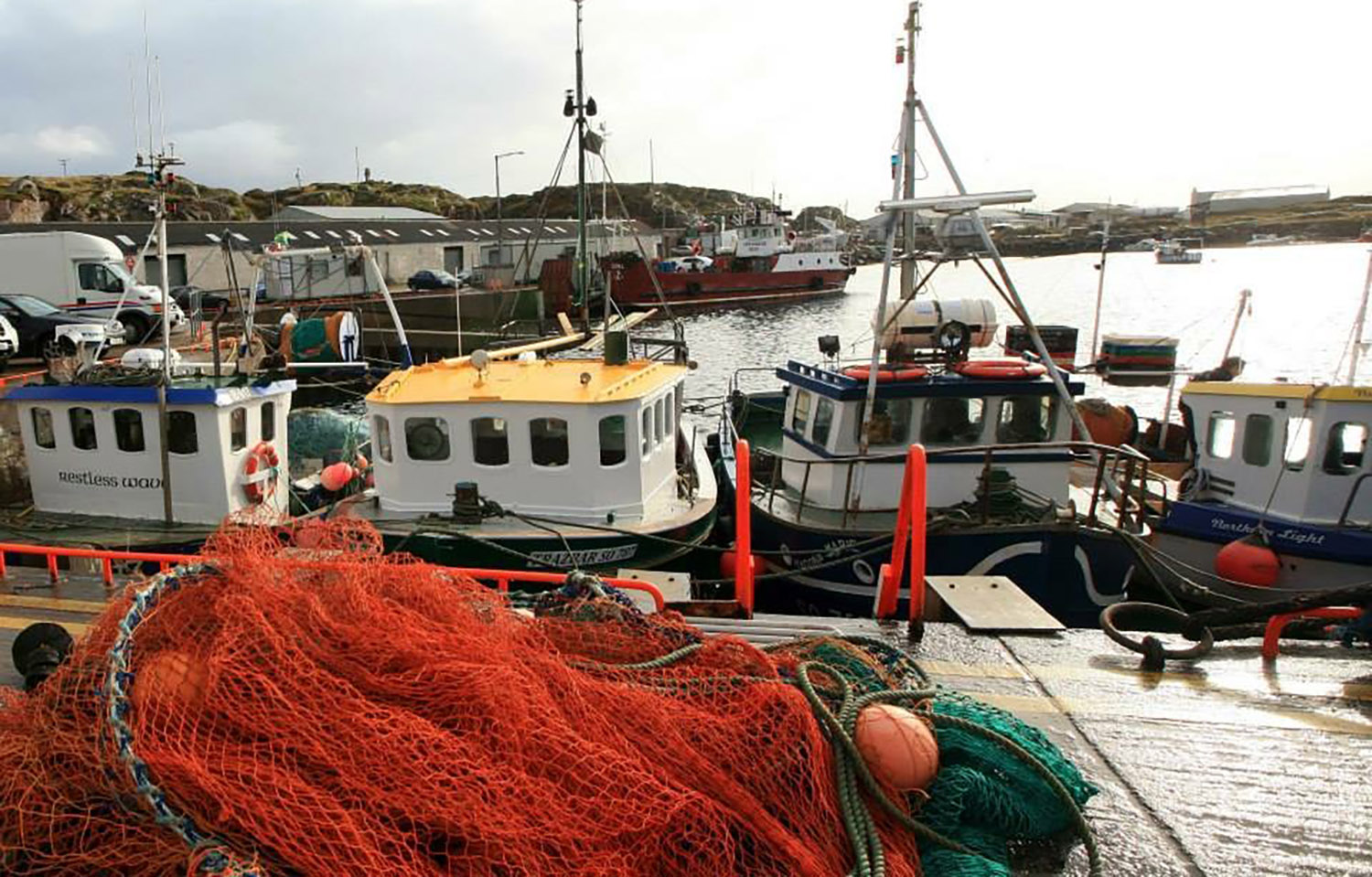
A representative of Ireland’s inshore fishing industry has accused retailers in the country of using misleading advertising on products that contain imported seafood, undermining Irish fishers’ incomes and livelihoods in the process.
Michael Desmond, the chair of the Cahersiveen, Ireland-based National Inshore Fishermen's Association (NIFA), said that products in Irish grocery stores contain misleading images that make consumers believe they are buying products of Irish origin.
“You have a name of a geographical area in Ireland; a picture of a bay, a lighthouse, and pristine waters; and prawns inside the packet, and people believe it’s Irish prawns. However, if you look at the small print, you’ll see it’s being farmed in Vietnam, Cambodia, or China, and the price is half the price of our product,” he told RTE Radio. “Their product isn’t half as good, [but] it’s impossible to compete. Additionally, if our quotas are getting smaller, our prices will have to go up.”
A similar situation has played out in U.S. restaurants, with the U.S. Federal Trade Commission recently issuing guidance warning such establishments that any décor implying the seafood they serve is local when it isn’t is illegal and could result in fines.
Desmond said that the situation has contributed to his personal income dipping 50 percent year over year for each of the past two years.
Besides what he deems unfair competition from misleading cheap seafood, he said his industry has also had to contend with weak prices for shellfish, which the industry has had to almost solely rely on due to government regulations.
“Our government banned salmon, trout, and bass fishing, and that left us totally dependent on shellfish,” Desmond said.
Desmond wants inshore fishermen to be paid subsidies in the same way the country’s farmers are paid: an annual subsidy from the E.U. and the Irish national government.
He said income support payments to inshore fishermen – who fish within 12 nautical miles of the Irish coastline – are becoming more and more essential to help fishermen survive.
“We don’t want a situation where a few companies own all the boats; it would be the end of the family run businesses around the coast,” he said.
Desmond is hoping that some relief might come in the potential reopening of the Irish pollock fishery, which was closed to inshore fishermen by an E.U. decision in December 2023.
