




The U.S. Federal Trade Commission has issued new guidance warning restaurants that any décor implying the seafood they serve is local when it isn’t is illegal and could result in fines.
The new guidance, in part, stems from lobbying by organizations including the Southern Shrimp Alliance (SSA), a U.S. domestic shrimp advocacy organization, and other groups. The SSA has pushed to combat influxes of cheaper shrimp from overseas via trade action.
“False implied claims are illegal. Everyone knows you can’t just lie in your ads,” the FTC said in a blog post.
Seafood restaurants cannot trick customers into thinking their seafood was caught nearby if it was actually imported, the FTC warned.
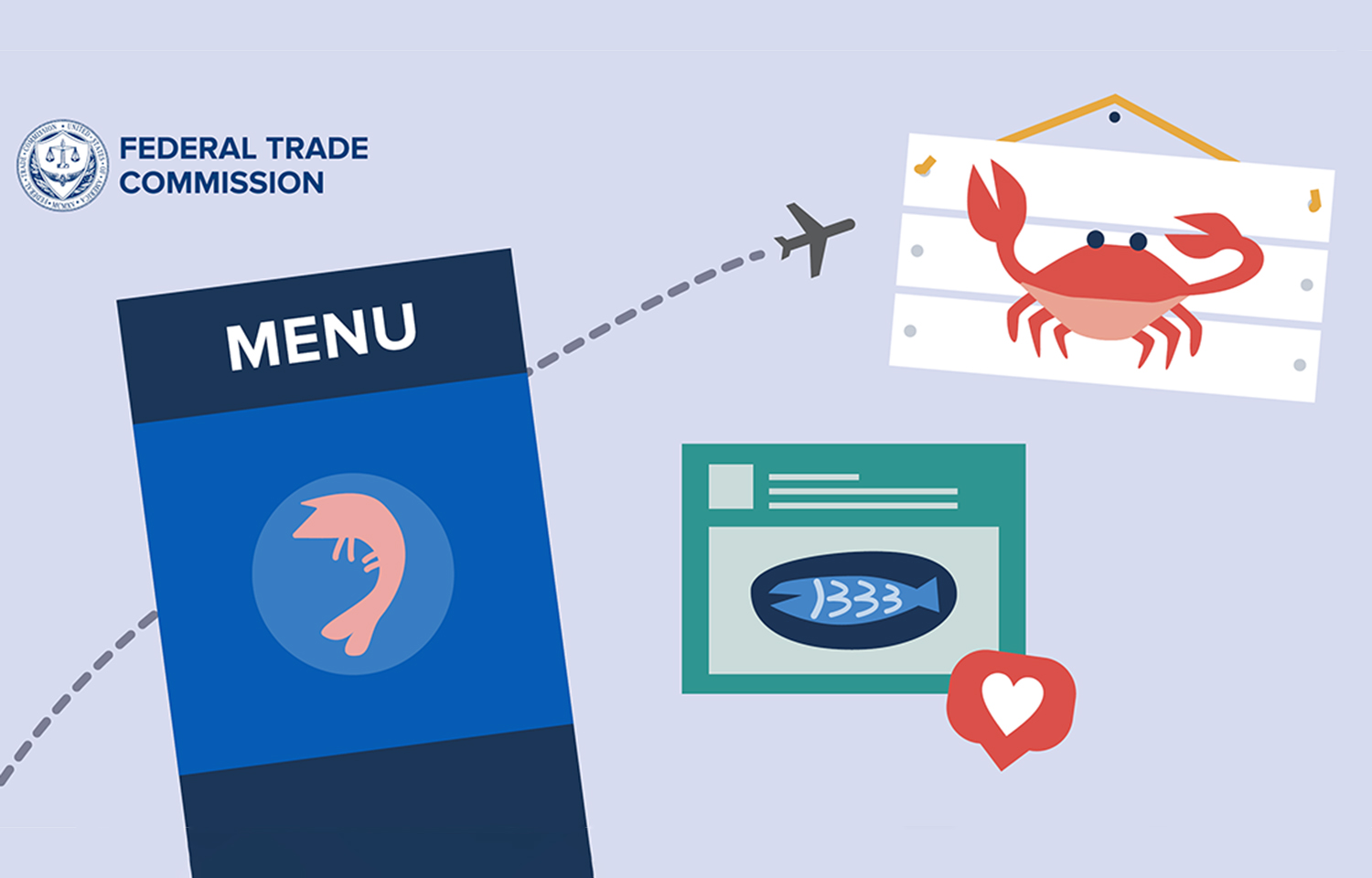
“Imagine a waterfront restaurant with beachy décor. Fishing nets hang from the ceiling, and pictures of shrimp and fishing boats cover the wall,” the FTC said. “You sit down at a table draped in red, white, and blue, and your server, dressed in a shirt that says, ‘We catch ‘em, you eat ‘em!’ hands you a menu.”
In the hypothetical example, the menu states, “Eat local! Try our seasonal fresh catch of the day!” The post’s hypothetical restaurant also features social media images displaying several posts of fishermen hooking fish and scooping nets full of shrimp.
“Given this scene, would you be surprised to find out that the seasonal fresh catch was actually farmed seafood, frozen overseas, and shipped in?” the FTC asked. “The restaurant never said it outright. But, by using photos of fishermen and fishing boats and saying things like ‘Eat local,” and ‘We catch ‘em,’ the decorations, menus, and social media may give people what the FTC calls a net impression that the restaurant serves fresh, local fish and shrimp.”
Under FTC rulemaking, those images constitute illegally misleading customers, and those images could be subject to hefty fines.
Earlier this year, Mary Mahoney’s in Biloxi, Mississippi, U.S.A. pled guilty to federal government charges that it misbranded imported seafood as local and agreed to pay USD 1.35 million (EUR 1.2 million) in fines. In that case, seafood distributor and wholesaler Quality Poultry and Seafood, which is also based in Biloxi, admitted to conspiring with the restaurant and agreed to pay USD 1 million (EUR 894,000) in forfeitures and a criminal fine of USD 150,000 (EUR 134,000).
An FTC spokesperson told SeafoodSource the agency's blog post did not use Mary Mahoney's as the basis for the hypothetical scenario described in its blog posting.
“Sometimes, people try to bend the rules by using pictures, symbols, or other things to make people believe something about what they are selling without actually saying the words. That’s an implied claim. If it’s not true, it’s just as illegal as an outright lie,” the FTC said.
The agency said the definition of advertisement can stretch beyond commercials, social media posts, websites, or labels.
“Other things like menus, restaurant décor, or even T-shirts and hats worn by servers or customers can be ads, too. The same rules apply. Don’t make claims you can’t back up,” the agency said.
The new guidance came in part as a result of the Southern Shrimp Alliance’s “years-long engagement and advocacy with the FTC,” the organization said in a press release.
In September 2020, the SSA and other U.S. shrimp associations supported proposed FTC updates pertaining to its “Made in the U.S.A.” labeling. At the time, the agency was looking to bolster the rule and mandate that anyone who labels the product they’re selling have a reasonable understanding that “all or virtually all” of the product – including shrimp – was either made or harvested in the U.S.
In its comments, the SSA said country-of-origin labeling rules administered by the U.S. Department of Agriculture and U.S. Customs and Border Protection do not require restaurants or foodservice establishments to disclose the country of origin of seafood products that they offer for sale.
“Some restaurants continue to label imported shrimp on their menus as ‘Gulf shrimp’ or under other terminology that misleads customers into believing that they are purchasing domestic shrimp,” the SSA said during its advocacy campaign. “Such deceptive practices not only cheat customers but further undermine consumers’ confidence in valid country-of-origin menu labeling claims from restaurants that do proudly source domestic seafood.”
Some U.S. states, such as Louisiana, have adopted rules requiring the country of origin of certain seafood products to be disclosed by restaurants to customers, but there is no federal requirement.
“Unlike grocery stores, which are required by law to disclose the country of origin of seafood, restaurants have been able to make various representations about their food without accountability,” SSA said after the new FTC blog post was published. "These misleading impressions harm more than just diners. They undermine U.S. commercial fishermen who work under stringent environmental, labor, and food safety laws to deliver high-quality seafood.”
SSA said the FTC guidance makes it clear that a restaurant can be held accountable for creating a false “net impression” about the origin of its seafood, whether a claim is explicit or implied.
“The FTC’s new guidance marks a critical step toward holding the restaurant industry accountable for their advertising, which includes restaurant décor,” the organization said.
The SSA has also been advocating heavily for the U.S. wild-caught shrimp industry, which according to the organization, has faced falling shrimp prices and sales due to cheaper imports, resulting in seasons with historically low prices.
“The domestic shrimp industry cannot compete when restaurants can simply lie to consumers about their shrimp being from the U.S. when it’s not,” SSA Executive Director John Williams said. “Strong enforcement against deceptive marketing levels the playing field for American fishermen and we appreciate the FTC for taking action.”
The SSA is encouraging both its members and the public to spread the news about the FTC’s guidance.
"Ddon’t hesitate to ask where [the seafood] is from. And, if it’s not from the U.S., let them know they may be in violation of the FTC’s rules," the group said.
